1 hr
Milan: Leonardo da Vinci’s Last Supper Guided Tour
- Expert local guide
- Small group
- Skip-the-line access
- Free cancellation
Last Supper Guided Tour — Timed Entry to Leonardo's Cenacolo
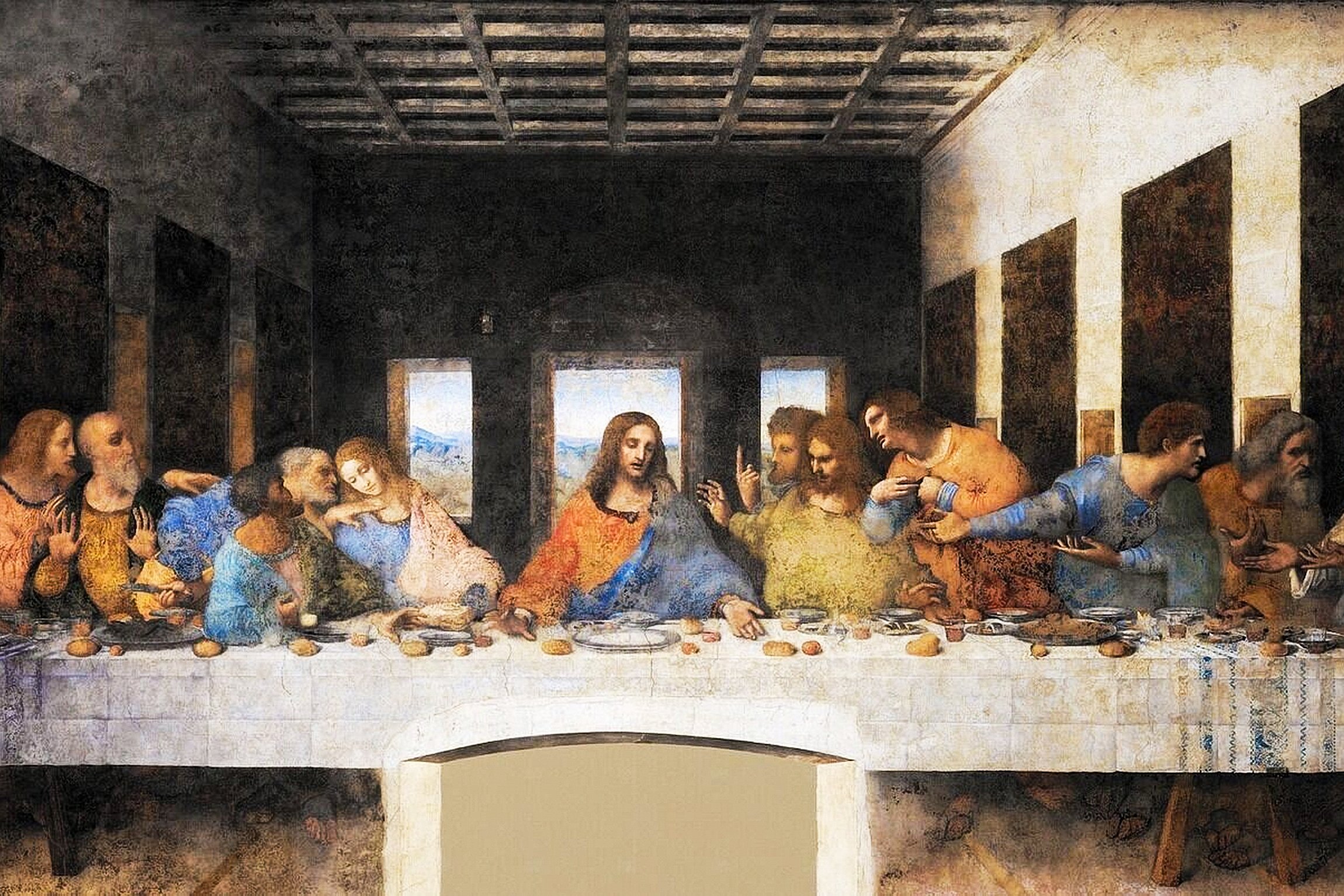
Fifteen figures in painted stillness, one wall holding the room.
Compare fares, pick the fit — all bookings are mobile-voucher and eligible for free cancellation where shown.
1 hr
3 hr
1 hr
Milan's Cenacolo Vinciano offers a straightforward choice: book a standard timed-entry ticket and go it alone, join an official last supper guided tour with expert commentary, or combine your visit with nearby Duomo and Sforza Castle stops. Each option delivers the same 15-minute encounter with the mural, so the real difference lies in context, group size, and how you'll cope if the museum's own calendar shows no availability.
| Standard Timed Entry (Self-guided, official ticket) |
Top pick Official Guided Tour (Small-group, expert-led) |
Combo Tour (Duomo/Sforza Castle) (Multi-site, guided) | |
|---|---|---|---|
| What's included | Refectory entry only, 15 min viewing | Refectory entry, guide commentary, 15 min viewing | Refectory entry plus Duomo and/or Sforza Castle access |
| Guide commentary | — None | ✓ Symbolism, technique, restoration explained | ✓ Covers Last Supper plus other landmarks |
| Group size | Individual entry, no group | Small group, typically under 20 | Larger walking-tour groups, varies by operator |
| Chance of securing entry if sold out | Low — tied to official calendar only | Higher — operators hold reserved allocations | Higher — reserved slots bundled with other sites |
| Best for | Independent visitors on a fixed budget | First-time visitors wanting context | Travelers combining sights in one day |
| See tickets & prices |
Verdict: For most first-timers weighing a last supper guided tour against the bare-bones entry ticket, the guided option earns the recommendation for its commentary and better odds when the museum's own dates are sold out, while combo tours suit those pairing the mural with Duomo or Sforza Castle in a single Milan landmarks itinerary.
Worth it for first-time visitors to Milan
For 15 EUR you get a timed 15-minute slot in front of Leonardo's refectory mural, and a good last supper guided tour turns that narrow window into something legible. The math is honest: the fee is fixed, the viewing is brief, and the fresco itself is heavily restored, more ghost than original pigment. What you actually pay for is the context. A guide reads the composition, the apostles' gestures, the vanishing point, the wartime near-destruction, so those 15 minutes land instead of blur past. Booking is scarce, so a slot on one of these Santa Maria delle Grazie tours is often the only realistic entry. Skip-the-line access matters when demand routinely outstrips capacity among Milan landmarks. Worth it if you care about Renaissance art or want the encounter framed; skippable if you resent short visits or already know the work. The last supper guided tour tickets pay off through interpretation, not duration.
Bottom line: For a first Milan visit, this last supper guided tour tour earns its 15 EUR through what the guide adds, not the clock.
Hand-picked experiences loved by thousands of travelers
6 hours
Free Cancellation
Explore Milan's iconic landmarks, including priority access to the Last Supper and the magnificent Duomo Cathedral.
1 hour
Free Cancellation
Experience Leonardo da Vinci’s legendary masterpiece with priority access and an expert guide.
3 hours
Free Cancellation
Explore Milan's iconic landmarks and secure your skip-the-line visit to see Leonardo da Vinci’s world-famous mural.
Reach Piazza Santa Maria delle Grazie 2 and locate the ticket office beside the main entrance before your slot.
Pass through the checkpoint, store any large bags, and proceed toward the climate-controlled anterooms.
Walk through two dehumidifying chambers designed to protect the mural from humidity carried in on visitors' clothing.
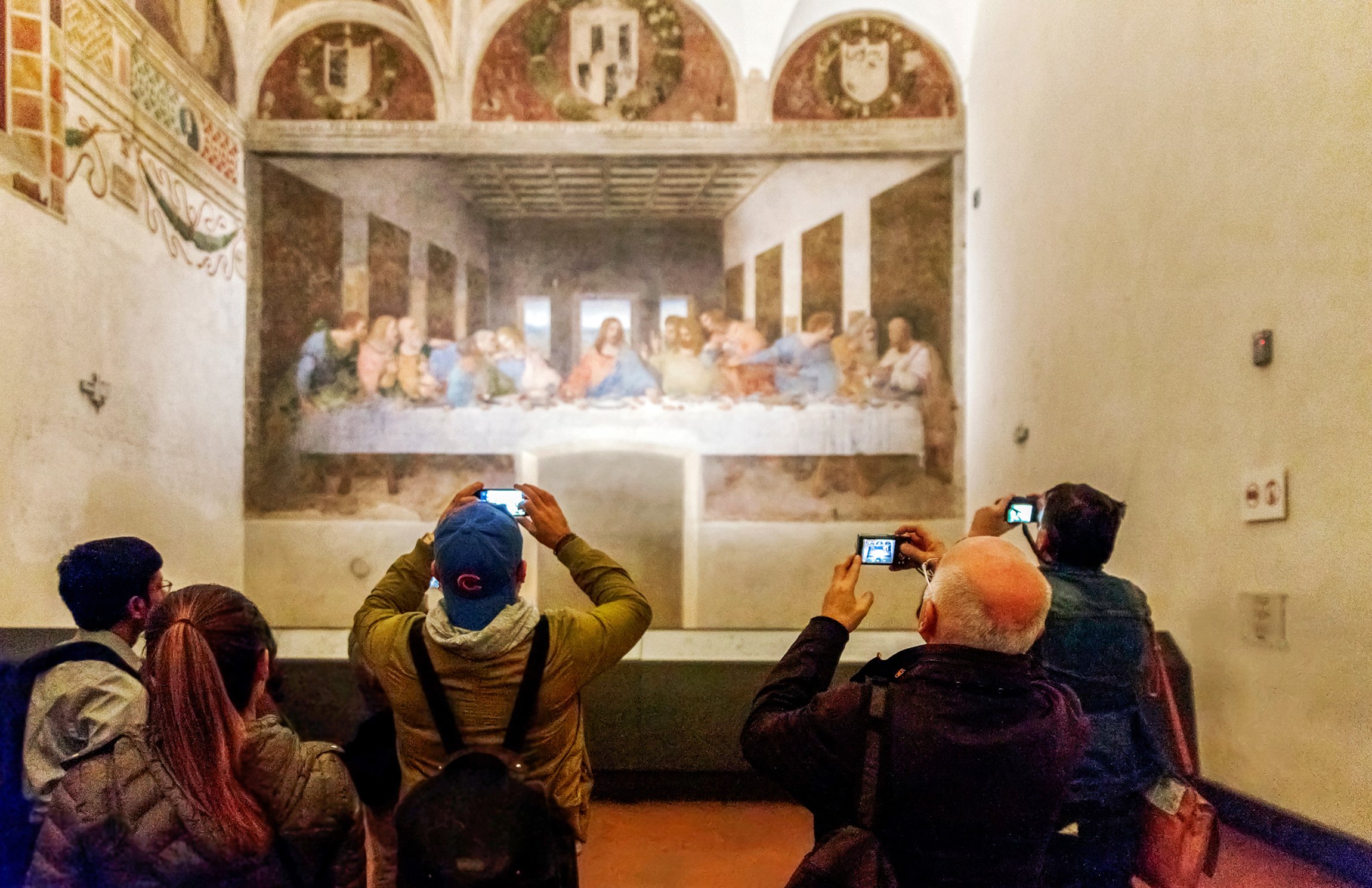
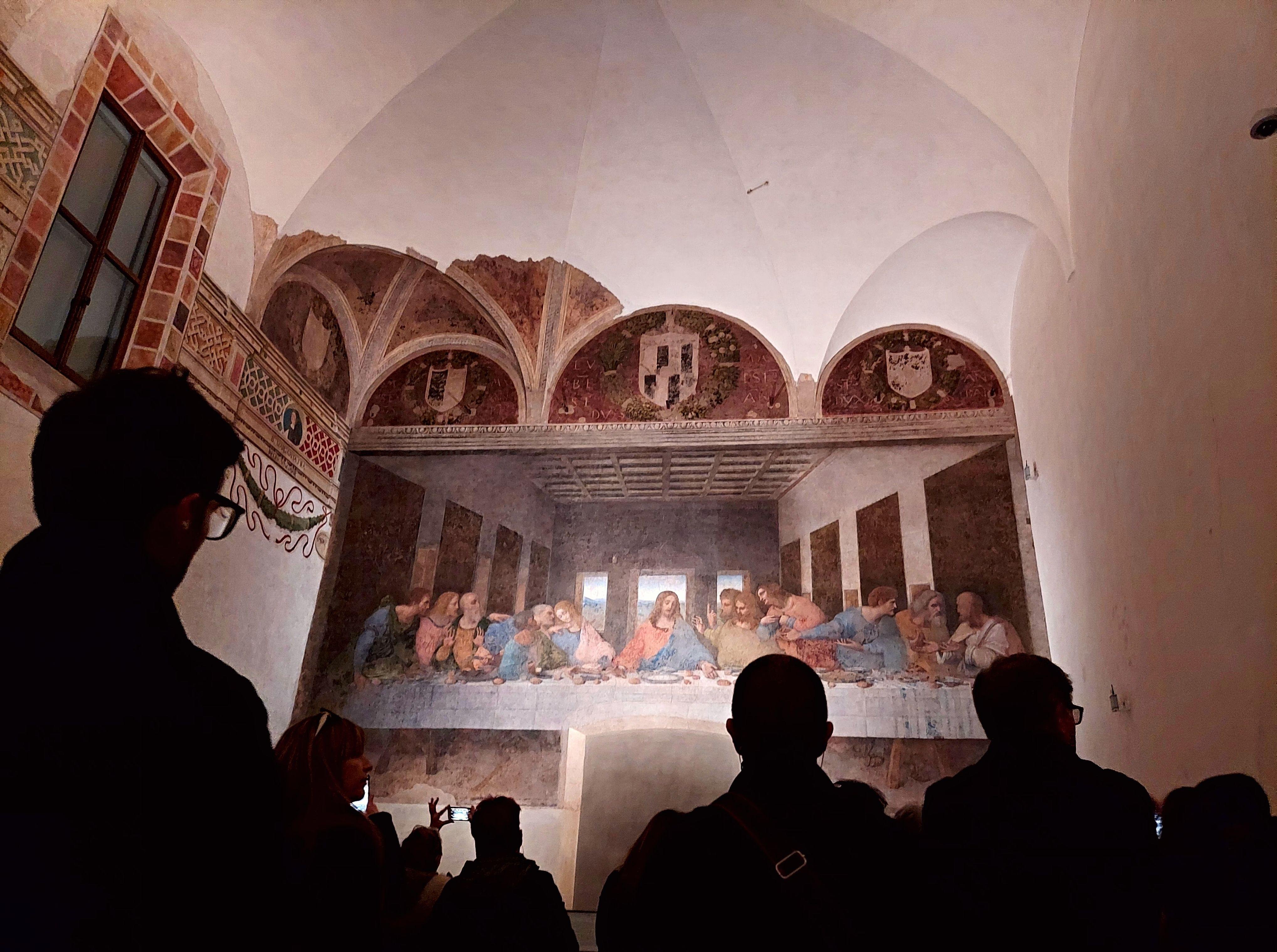
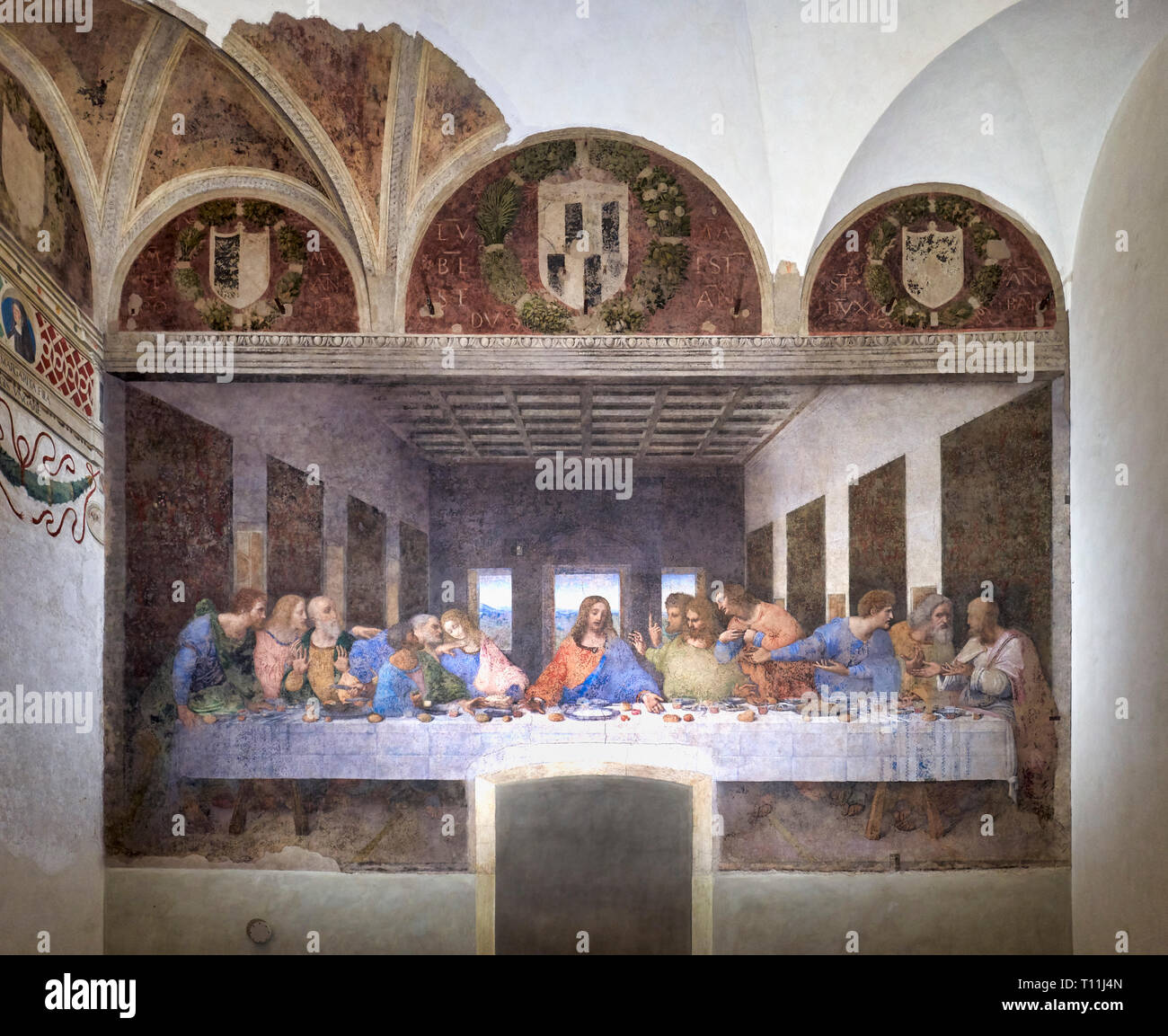
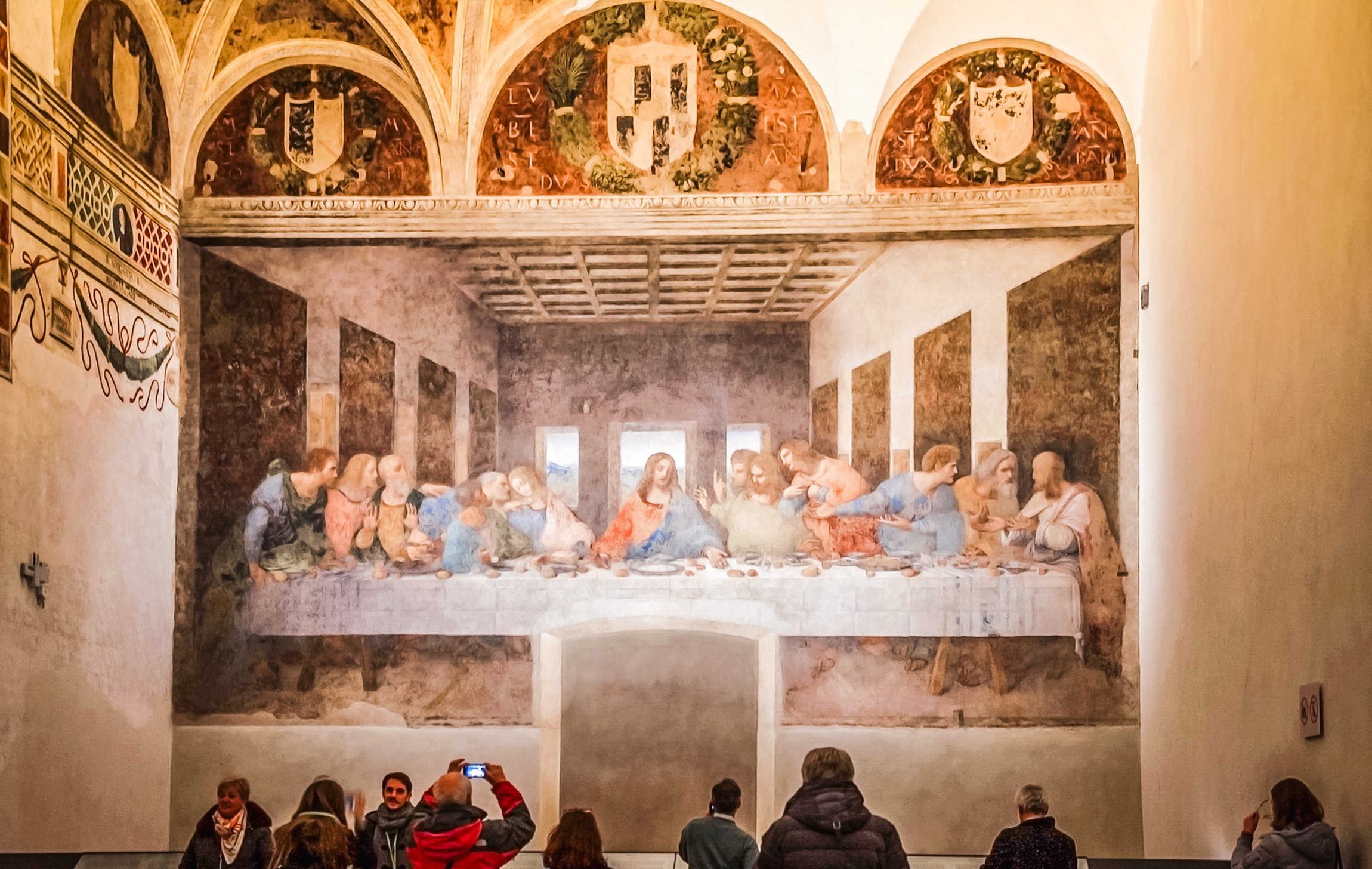
Stand in the refectory facing Leonardo's mural, with Montorfano's Crucifixion fresco on the opposite wall.
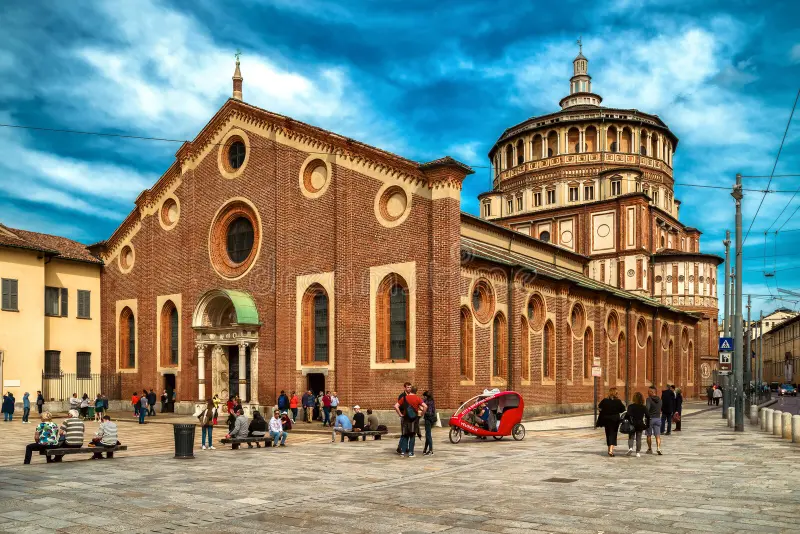
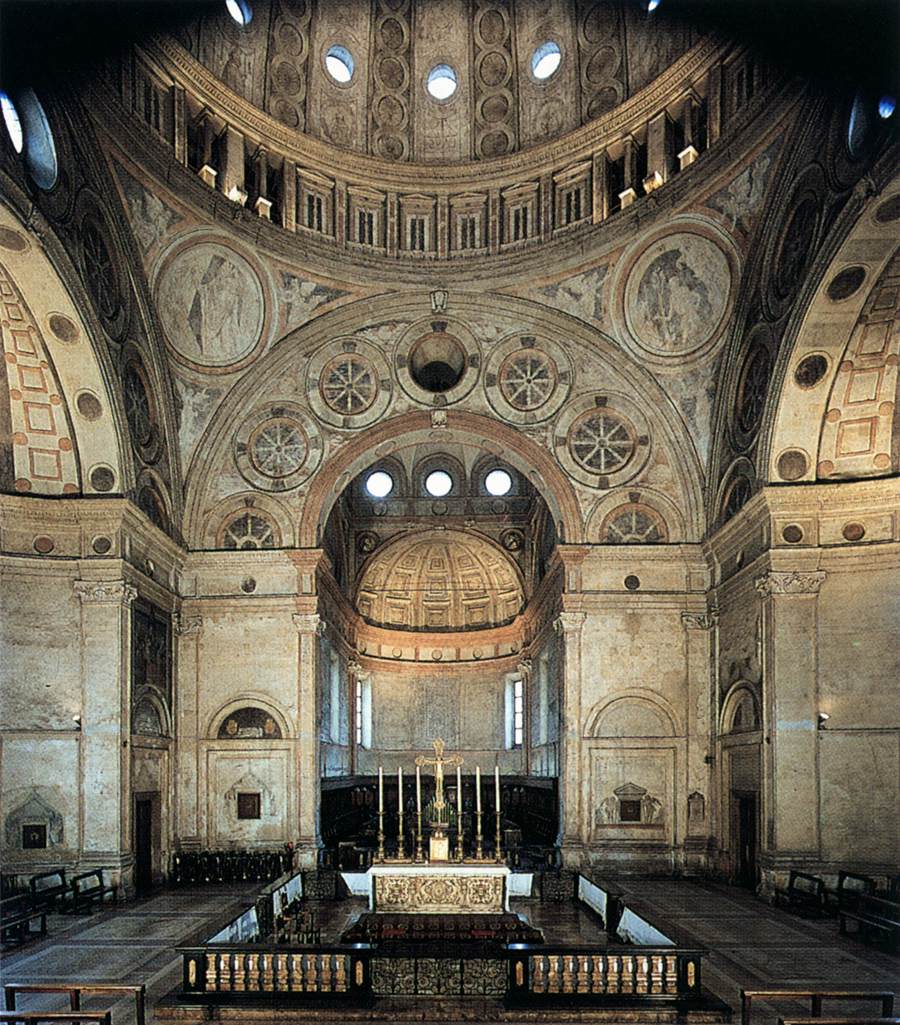
Step next door into the basilica of Santa Maria delle Grazie to see its Gothic-Renaissance dome and cloisters.
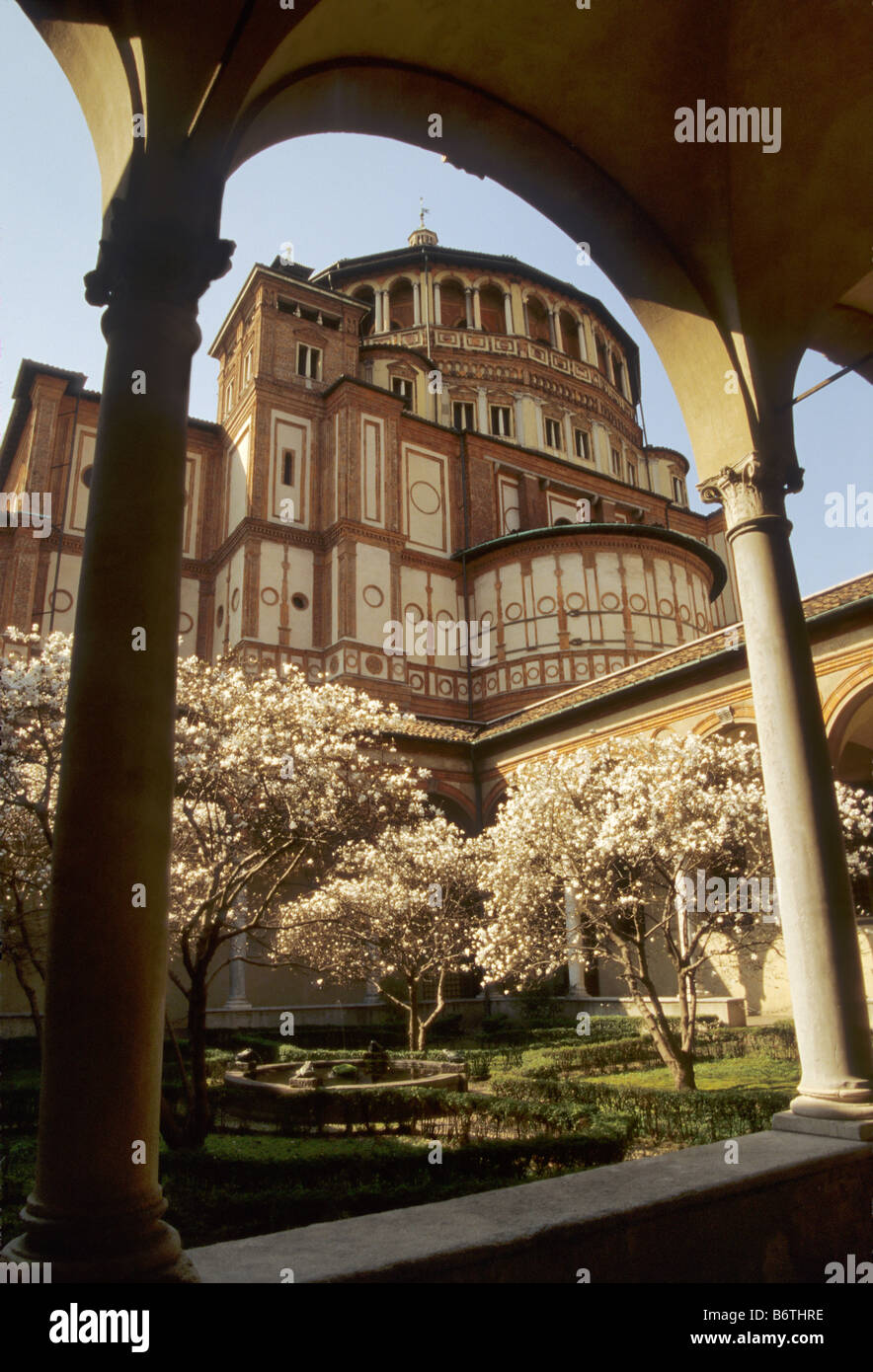
Wander the quiet cloister named for its frog-shaped fountain carvings before heading out.
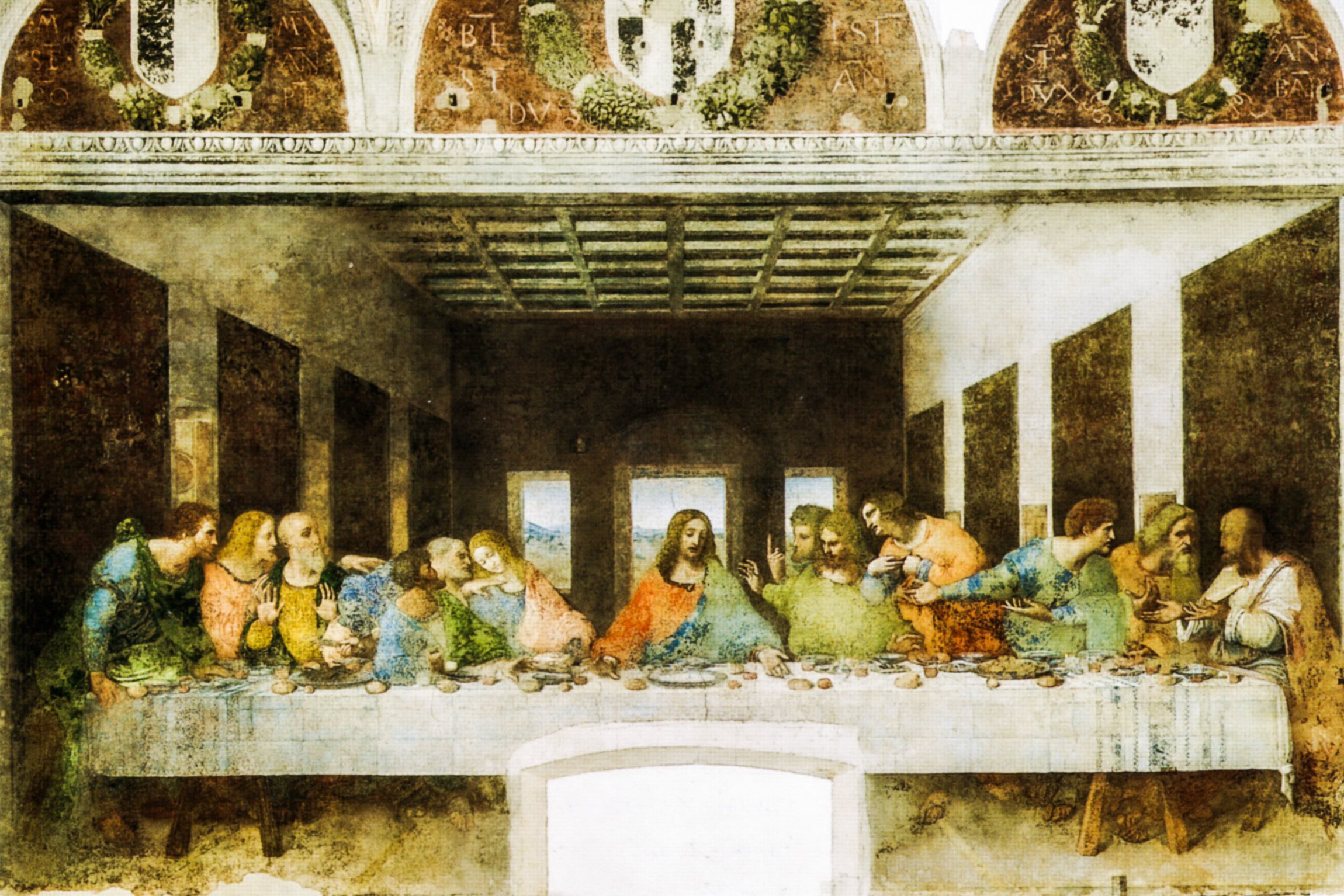
Leonardo da Vinci's tempera-and-oil painting covers the north wall of the refectory and took him roughly four years to complete between 1494 and 1498. Unlike true fresco technique, his experimental method caused the paint to begin deteriorating within decades, prompting a 21-year restoration completed in 1999.
This former Dominican dining hall holds up to around 40 visitors per timed slot and is entered through two climate-controlled anterooms that regulate humidity before guests reach the artwork.
Facing Leonardo's mural on the opposite wall, Giovanni Donato da Montorfano's 1495 fresco depicts the Crucifixion and is often overlooked by visitors focused on the more famous painting behind them.
Named for the small frog sculptures decorating its central fountain, this quiet cloister within the complex offers a calm counterpoint to the tightly timed refectory visit.
Designed in part by Donato Bramante, the polygonal apse and drum-supported dome mark a shift from the church's original Gothic nave into full Renaissance architectural language.
The basilica holds 14 side chapels decorated with frescoes and funerary monuments from Milan's Sforza-era nobility, freely open without a timed ticket.
You arrive at Piazza Santa Maria delle Grazie 2 well before your slot, ideally in the 08:15–09:30 window when the first entries carry the smallest crowds. You collect your voucher, and staff group you into a party of no more than 35. There is no drifting in late; the timed door is exact, so you wait in the courtyard beside the rose-brick basilica and watch the previous group filter out. At your minute, you pass through a sequence of sealed glass chambers, each one adjusting humidity, dust, and light before the next opens. The air changes. You step into the long refectory and the mural is already there on the north wall, larger and quieter than any reproduction suggested. You have fifteen minutes. You move to the centre line, where the perspective locks, and the painted ceiling seems to pull the room deeper. You trace the four clusters of apostles, find the spilled salt near Judas, and notice the doorway cut through Christ's feet. Turning, you take in Montorfano's Crucifixion behind you. When the far door reopens, you exit into daylight, and the last supper guided tour continues next door into the basilica and Bramante's apse.
All the details about your upcoming adventure in one place
A last supper guided tour brings you face to face with Leonardo da Vinci's fragile refectory mural inside the UNESCO-listed convent of Santa Maria delle Grazie. Because the climate-controlled viewing room admits only small groups for a brief window, these Milan Cenacolo tours pair the fresco with the Dominican church's Bramante apse and surrounding cloisters. Reserved entry means your last supper guided tour tickets clear the timed-entry queue managed by the site.
Leonardo da Vinci painted The Last Supper not in fast-drying fresco but in tempera and oil laid over a dry plaster wall, a technique that began flaking within his own lifetime. That single decision explains why the mural in the refectory of Santa Maria delle Grazie is both one of the most famous images in Western art and one of the most fragile. Commissioned by Ludovico Sforza around 1495 and finished by 1498, it covers the north wall of a Dominican dining hall on Piazza Santa Maria delle Grazie, a UNESCO-listed site since 1980. The painting matters today for how much it withstood. A refectory doorway was cut through the lower centre in the seventeenth century, removing Christ's feet. Napoleon's troops used the hall as a stable. In August 1943 an Allied bomb collapsed the refectory roof, and the wall survived behind sandbags. A twenty-year restoration, completed in 1999, stripped centuries of overpaint and returned faded colour, though roughly a fifth of the original surface is now conjecture. Only 35 visitors enter at a time, in fifteen-minute slots behind climate-controlled glass filtration chambers, which is why any last supper guided tour depends on scarce timed reservations rather than walk-up entry. Architecturally, the composition is a lesson in perspective. Leonardo set the vanishing point at Christ's right temple, so the painted ceiling coffers and tapestried walls seem to extend the real room, and the twelve apostles cluster in four groups of three at the instant of betrayal. The refectory itself, designed within Guiniforte Solari's late-Gothic convent and reworked by Bramante, gives the Cenacolo Vinciano its intimate scale. On the opposite wall, Giovanni Donato da Montorfano's Crucifixion is often overlooked, yet it frames the space Leonardo transformed. Because access is so tightly rationed, the milanese cenacolo has become a study in controlled encounter, and a considered last supper guided tour often pairs the mural with the adjoining basilica and Bramante's tribune. Visitors weighing skip-the-line Last Supper options or broader Milan landmarks find that the twenty-minute journey ends in a hush most galleries never manage. The room dims, the far wall lifts into light, and the figures resolve. Everything the guide has explained about pigment loss, sightlines, and Sforza patronage narrows to the plain fact of a table set for a farewell, held on plaster for more than five centuries.
Leonardo set the vanishing point at Christ's right temple, so the painted room seems to extend the real one.
There is no dress code for the refectory itself, but the church of Santa Maria delle Grazie next door requires shoulders and knees to be covered. Visitors moving between the church and the Last Supper entrance should dress modestly to avoid being asked to cover up before entering the basilica.
Only small handbags or daypacks are allowed inside the refectory; larger backpacks, suitcases, and bulky items must be left at the cloakroom near the ticket office before entering. Airport-style security screening and a bag check take place just before the climate-controlled double-door airlock that regulates humidity around the mural.
Photography and filming of any kind — including phone cameras, flash, tripods, and selfie sticks — are prohibited inside the refectory to protect the painting from light exposure. Staff enforce this rule throughout the timed 15-minute viewing slot, though photography remains permitted in the adjoining church and Cloister of the Frogs.
Children of any age can join a last supper guided tour, and admission is free for visitors under 18 with a booked ticket. Strollers are generally left with staff outside the refectory doors since the 15-minute viewing slot is a single standing room without seating for young children.
The refectory is accessible via ramp for wheelchair users, and visitors with disabilities may bring one accompanying caregiver at no extra charge with advance notice to the ticket office. The entry corridor includes two climate-controlled anterooms that dehumidify visitors before entering the viewing hall, so step-free routing through these chambers is built into the standard visit.
No food or drinks, including bottled water, are allowed inside the refectory or the climate-controlled anterooms leading up to the mural. Any snacks or beverages must be finished or stored in a bag before the security check, since the humidity-controlled environment around the painting cannot tolerate spills or crumbs.
Closed all day
Quiet midweek slots
Busiest day, book early
Opening hours
Tue–Sun 08:15–19:00, closed Monday;location
Public transport · 10–15 min from city centre · Single ticket around 2.20 EUR
Take Metro M1 (red line) to Conciliazione, then walk about 5 minutes north on Via Boccaccio to the piazza, or use Cadorna on lines M1/M2 for an 8-minute walk.
Walk · 20 min · Free
From the Duomo, it's a flat 20-minute walk west along central streets to Corso Magenta and the church.
Taxi · 10–15 min · Approx. 10–15 EUR
A direct taxi from the Duomo or Centrale station drops off right on the piazza outside the ZTL restricted zone.
Bike · 8–10 min · Bike-share day pass a few EUR
Bike-share docks near Cadorna station connect to the piazza via flat, mostly car-light streets.
Tickets for the Cenacolo Vinciano are non-refundable and non-transferable once a time slot has been confirmed, since visitor numbers per 15-minute slot are strictly capped for conservation reasons. The 15 EUR full-price adult ticket, which already includes the mandatory booking fee, is only reissued if the museum itself cancels or reschedules a slot.
Recommended time
45-75 minutes
Most people budget under an hour: arrive 20-30 minutes ahead for ticket validation and security, then 15 minutes inside the refectory itself with your group. A last supper guided tour rarely changes that viewing cap, but the pre-entry commentary makes the short window feel fuller, so little extra time is needed beyond the standard slot. Add a buffer if you're combining the visit with a broader Milan landmarks itinerary or the church next door; subtract nothing, since 15 minutes is fixed regardless of ticket type. Queues build steadily once the museum opens, so the gap between an early slot and a midday one is real, not marketing.
Crowd levels through the day
Weather · crowds · average price — dots go green to amber to red as each metric rises.
Mild temperatures around 15–20°C and moderate crowds make spring a comfortable season for a last supper guided tour, though weekends still sell out weeks ahead.
July and August bring heat near 30°C and the heaviest tourist volume of the year, so early 08:15–09:30 slots are the only reliable way to avoid a packed piazza outside.
September and October offer cooler air and thinner crowds than summer, making it one of the more relaxed windows for visiting the refectory.
December through February sees the fewest visitors overall, aside from a bump around Christmas week, with temperatures often near freezing.
Time slots for the Cenacolo Vinciano sell out well in advance, especially April through October, so reserve a last supper guided tour as soon as travel dates are set.
Only about 40 visitors are admitted per 15-minute slot, which is why walk-up tickets are almost never available on-site.
The ticket office sits just left of the main door on Piazza Santa Maria delle Grazie 2, separate from the church's own entrance.
Since the church and Cloister of the Frogs require no separate ticket, pair your timed slot with a free walk through the basilica afterward.
Parties of ten or more must request dates by email with full names and visit type rather than booking online.
Driving into the area means crossing Milan's restricted traffic zone, so public transport or taxi is simpler than a rental car.
The anterooms before the refectory are climate-controlled and noticeably cooler, so a light layer helps even in summer.
Piazza Santa Maria delle Grazie 2, 20123 Milano MI
Ticket office is immediately left of the main door; arrive by your slot time
Get directionsPiazzale Luigi Cadorna, Milan
About an 8-minute walk to the piazza along Via Caradosso
Get directionsIn 1463 Duke Francesco Sforza laid the foundations of the Dominican convent of Santa Maria delle Grazie. His son Ludovico il Moro reshaped the complex, and Donato Bramante crowned it with a tribune in the 1490s. The refectory that would house Leonardo's mural rose in this same period. Around 1495 Ludovico commissioned the wall, and Leonardo worked on it until roughly 1498. Leonardo rejected true fresco. He painted on dry plaster using tempera and oil, seeking softer transitions of light. The method failed. By 1517 witnesses recorded flaking, and within decades the surface deteriorated. This fragility shapes every last supper guided tour today, since visitors see a work half-lost and repeatedly rescued. Monks widened a doorway through Christ's feet in 1652, and later restorers added their own errors. The Napoleonic era brought fresh insult. French troops occupied the convent in 1796, and the refectory reportedly served as a stable and store. Damp and flooding followed. A curious visitor on a Milan Last Supper tour still senses that history of neglect in the room's austere walls, a reminder that these last supper guided tour tickets grant entry to a survivor. The gravest threat came on the night of 15 August 1943, when Allied bombing struck the convent. The refectory roof and one wall collapsed, yet sandbags stacked against Leonardo's wall preserved the painting. Photographs of the ruined hall, the mural shrouded and exposed to open sky, remain among the war's stark images of endangered Milan landmarks. Postwar stabilisation gave way to a decisive campaign. Pinin Brambilla Barcilon led a painstaking restoration from 1978, stripping centuries of overpaint and grime. The work concluded in 1999. Since then, climate-controlled entry in timed groups protects the surface, and any Cenacolo skip-the-line visit follows that regime. A well-run last supper guided tour tour now frames these survivals, from Sforza's brick to Brambilla's scalpel, and the best last supper guided tour tours treat the mural less as a finished masterpiece than as a fragile record continually reclaimed from decay.
Duke Francesco Sforza founded the Dominican convent of Santa Maria delle Grazie.
Bramante rebuilt the church tribune under Ludovico il Moro's patronage.
Leonardo painted the mural in tempera and oil on dry refectory plaster.
Monks cut a doorway through the wall, destroying Christ's feet.
Napoleonic troops occupied the refectory, which reportedly served as a stable.
Allied bombing on 15 August collapsed the roof; sandbags saved the wall.
Pinin Brambilla Barcilon led the 21-year restoration to completion in 1999.
There is no café inside the refectory itself, so the streets fanning out from Piazza Santa Maria delle Grazie carry the eating options for anyone slotting a meal around a last supper guided tour.
Sits directly across from the entrance, so it works well for a coffee and pastry before an early slot or a Bellini afterward. Piadinas and suppli cover a quick lunch. Gets busy with tour groups around midday, so grab an outside table if you can.
A relaxed spot on Corso Magenta for cappuccino, sandwiches, or a slice of tiramisu between errands. Locals and visitors mix here, and it stays open into the evening, making it flexible for either side of a visit.
Housed in the same Corso Magenta courtyard complex as a bookstore-café, good for a light lunch or glass of wine in a quieter setting once you step off the street. Suits a slower stop rather than a rushed one.
A long-running Milanese trattoria near Via Santa Maria alla Porta, known for osso buco risotto and smoked tuna carpaccio. Better suited to a proper sit-down meal before or after your entry than a quick bite, and closed Mondays.
Open from morning to midnight on Corso Magenta, useful for anyone whose timed entry falls outside normal lunch hours. Serves simple dishes like schnitzel alongside coffee and beer in a low-key, unhurried room.
Real experiences from real travelers
We reserved our last supper guided tour six weeks out and I'm glad we did, because slots vanish fast. The guide gave rich context on Cenacolo Vinciano before we entered, and the mural itself is larger and more faded than photos suggest.
Standing in the old Dominican refectory in front of the Cenacolo was quieter and more moving than I expected, with soft light and only our small group present. Our guide explained the tempera technique and why the fresco deteriorated so early.
The viewing window is only about fifteen minutes, which caught us off guard, but the Milan Last Supper tour packed a lot in beforehand. The Bramante apse next door was an unexpected highlight on a grey spring morning.
Booking a skip-the-line Last Supper slot in July saved us from the heat and the confusion at the door. The refectory stays cool and dim, and da Vinci's mural rewards patient looking once your eyes adjust.
What sold me on this last supper guided tour was the tiny group size, capped so everyone gets an unobstructed view of the Cenacolo. The UNESCO heritage context our guide shared made the fifteen minutes feel earned rather than rushed.
Access is by strict timed entry, so arrive early to clear the airlock doors that regulate humidity for the mural. The guide's background on the Sforza dynasty and the Dominican convent added real depth.
Beyond the mural, the church of Santa Maria delle Grazie itself, with its terracotta dome and calm cloister, deserves an unhurried look. Our last supper guided tickets included a walk through the nave that most rushed visitors skip.
The refectory was silent except for our guide's low voice explaining Judas, the overturned salt, and the vanishing point at Christ's temple. If you care about Milan landmarks, this is the one to prioritise.
The mural is remarkable, but the fifteen-minute cap and the multiple sealed doors make the experience feel clinical. I'd still recommend one of the last supper guided tour tours over trying to get in alone, since independent tickets are nearly impossible.
Seeing the Cenacolo Vinciano in person after years of prints was the reason I came to Milan, and it held up. The conservation lighting and the hush of the room let the composition breathe.
Everything you need to know for your journey
The Cenacolo Vinciano is open Tuesday through Sunday from 08:15 to 19:00 and is closed on Mondays.
Yes, wheelchair users and one companion can join with advance notice given to the ticket office before the visit.
Only small bags are permitted inside; large backpacks and suitcases must be stored in the cloakroom, and items like tripods, flash cameras, and food are not allowed.
No, photography of any kind, including phones and flash, is prohibited inside the refectory to protect the fragile mural.
Arriving between 08:15 and 09:30 gives the smallest crowds before tour groups build up later in the day.
There is no dress code for the refectory itself, though the adjoining church requires shoulders and knees to be covered.
No, food and drink are not permitted inside the refectory or the climate-controlled anterooms leading up to it.
The easiest route is Metro M1 to Conciliazione, then a 5-minute walk, or Metro M1/M2 to Cadorna followed by an 8-minute walk.
Yes, children of all ages can visit, and admission is free for those under 18 with a booked ticket.
Tickets are non-refundable and non-transferable once a time slot is confirmed, since the entrance fee of 15 EUR already includes the mandatory booking fee.
Sforza Castle, Sant'Ambrogio Basilica, and the Pinacoteca di Brera are all within a 15-minute walk and combine well with a Milan landmarks day.
Yes, booking ahead is strongly recommended since slots are capped for conservation and walk-up tickets are rarely available.
A 15th-century fortress built for the Sforza dukes, now housing several city museums and a moat-lined courtyard.
One of Milan's oldest churches, founded in the 4th century, with an atrium predating most of the city's Gothic architecture.
A major painting gallery housed in a 17th-century palazzo, known for its Renaissance and Baroque collections.
A quiet cloister within the Santa Maria delle Grazie complex, named for the small frog carvings on its fountain.
A large green park behind Sforza Castle with tree-lined paths and views of the Arco della Pace.
A quiet residential area around Corso Magenta with boutique hotels and B&Bs close to the piazza.
An upscale hotel near Sant'Ambrogio with modern rooms geared toward business and leisure travelers.
A small hotel set in a 19th-century townhouse directly across from the Cenacolo Vinciano entrance.
A straightforward mid-range option near Centrale station for travelers prioritizing train access.
Join thousands of happy travelers who have discovered this incredible experience
Book Your Experience Now