English| EUR
Suggested for you
More currencies
Book Now
Open today · 08:15 – 19:00

Last Minute Last Supper Tickets

Last Minute Last Supper Tickets — Timed Entry to Leonardo's Cenacolo

A refectory wall of quiet drama, fifteen faces holding their breath.

48K+ travelers chose this
Free Cancellation
Right now: Moderate — summer weekday Arrive 15 minutes before your slot; last admission is 18:45
45-60 minutes recommended
1 Languages
Max 25 per entry
Free Cancellation
Skip-the-line Instant confirmation Mobile voucher Verified partner Free cancellation
15 min
Viewing time cap
Strict limit per group
40 people
Max group size
Per timed entry slot
527 yrs
Since completion
Painted 1495–1498
15 EUR
Entrance fee
Includes booking fee
1 day
Weekly closure
Closed Mondays
Choose your ticket

Ticket options at a glance

Compare fares, pick the fit — all bookings are mobile-voucher and eligible for free cancellation where shown.

Milan: Historical Walking Tour & The Last Supper Access 3 hr
Guided Experience

Milan: Historical Walking Tour & The Last Supper Access

4.7 (6395)
€99
  • Expert local guide
  • Small group
  • Skip-the-line access
  • Free cancellation
Book this ticket
Milan Highlights & The Last Supper Walking Tour 3 hr
Guided Experience

Milan Highlights & The Last Supper Walking Tour

4.7 (5190)
€149
  • Expert local guide
  • Small group
  • Skip-the-line access
  • Free cancellation
Book this ticket

Is it worth it?

Worth it for anyone near Milan

The math on last minute last supper tickets looks brutal at first: 15 EUR per person for a strict 15-minute window works out to a euro a minute. But that framing misses what you buy. Leonardo's mural on the refectory wall cannot travel, cannot be reproduced at scale, and admits only small timed groups, so the fee is really the price of controlled access to a fragile Renaissance masterwork behind climate-sealed doors. Compared to most Milan landmarks and paid last minute last supper tickets tours that bundle guides at triple the cost, the direct 15 EUR entry is lean value. It pays off for first-time visitors, art lovers, and anyone routing through Santa Maria delle Grazie. It underwhelms only if you expect a leisurely, open-ended gallery visit rather than a single, concentrated encounter with the original.

What makes it worth it

  • Seeing the untransportable original, not a copy
  • Lean 15 EUR versus pricier guided tour bundles
  • Climate-controlled access protects a fragile mural
  • Small timed groups, no chaotic crush
  • Central Santa Maria delle Grazie location, easy to reach

Keep in mind

  • Fifteen-minute window feels short for the price
  • A euro-per-minute cost-per-minute stings some
  • Guided last supper Milan tour add-ons raise total
  • Underwhelms anyone expecting an open-ended gallery visit

Bottom line: For a face-to-face with Leonardo's original, the last minute last supper tour ticket earns its 15 EUR.

Featured Experiences

Popular tours & activities

Hand-picked experiences loved by thousands of travelers

Recommended Experience

Powered by GetYourGuide

Another traveler favorite

Powered by GetYourGuide
Milan: Leonardo da Vinci’s Last Supper Guided Tour 1 hour Free Cancellation

Milan: Leonardo da Vinci’s Last Supper Guided Tour

Experience Leonardo da Vinci’s Last Supper with priority access and an expert guide.

4.8 (1720)
FromFrom €119
See details
Milan: Da Vinci's The Last Supper Guided Experience 1 hour Free Cancellation

Milan: Da Vinci's The Last Supper Guided Experience

Uncover the secrets of Leonardo’s iconic mural on this expert-led 1-hour tour at Santa Maria delle Grazie.

4.7 (1451)
FromFrom €59
See details
Milan Highlights: Last Supper, Duomo & City Walking Tour 6 hours Free Cancellation

Milan Highlights: Last Supper, Duomo & City Walking Tour

Explore Milan's top cultural icons, including priority access to The Last Supper and the city's majestic Gothic Cathedral.

4.8 (748)
FromFrom €135
See details
Your journey

Step-by-step — what your day looks like

1

Arrive at the piazza

Reach Piazza Santa Maria delle Grazie 2 and locate the ticket entrance to the left of the church facade.

2

Security and bag check

Pass through the entry checkpoint, check any large bags at the free cloakroom, and silence phones.

3

Climate-controlled anteroom

Wait in the sealed, air-filtered antechamber that stabilizes humidity before the refectory door opens.

4

View The Last Supper

Enter the refectory for a strictly timed 15-minute viewing of Leonardo's fresco and Giovanni Donato da Montorfano's Crucifixion opposite it.

5

Visit the basilica

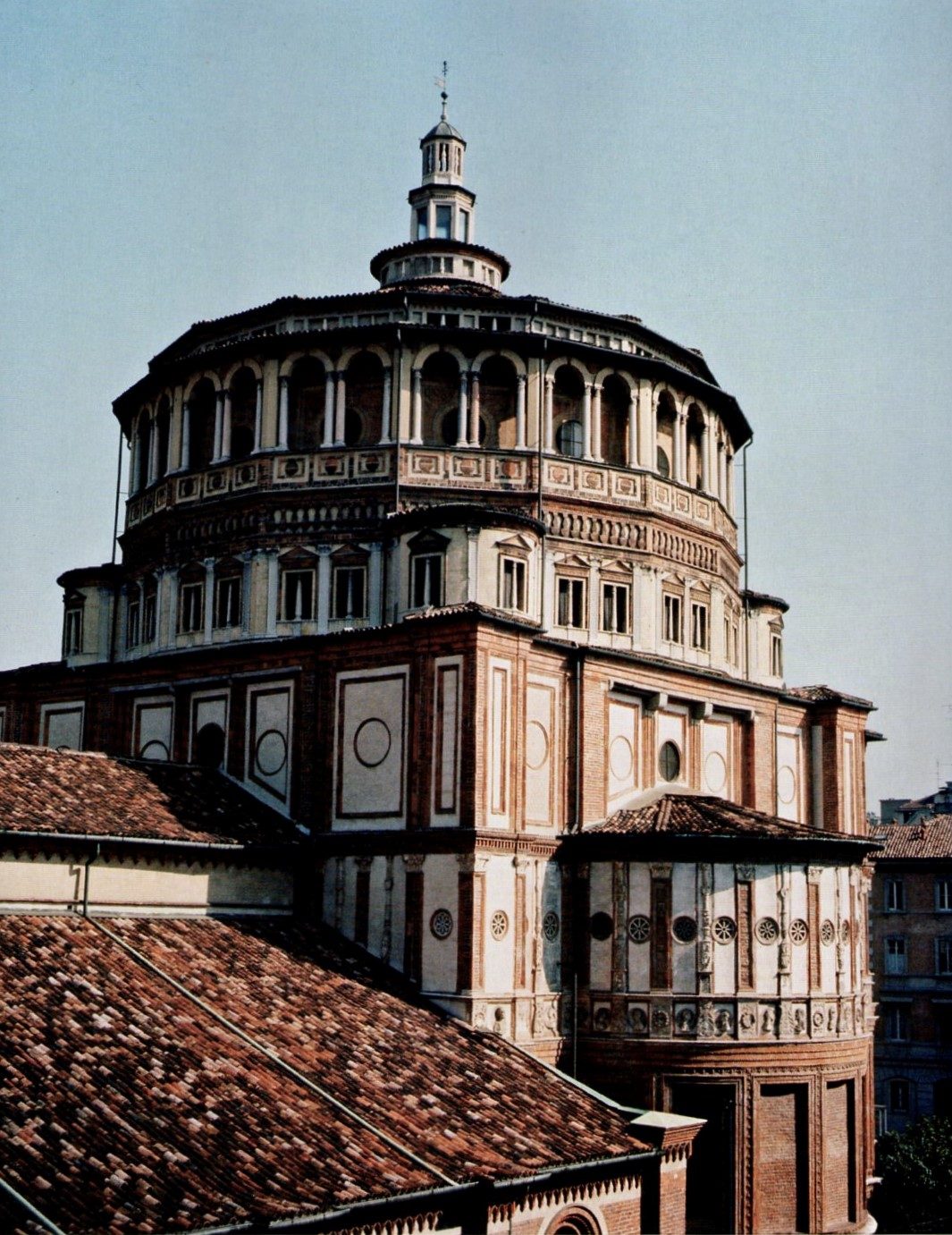
Step into the adjoining Santa Maria delle Grazie church, free to enter, to see Bramante's apse and side chapels.

What you'll see

Highlights not to miss

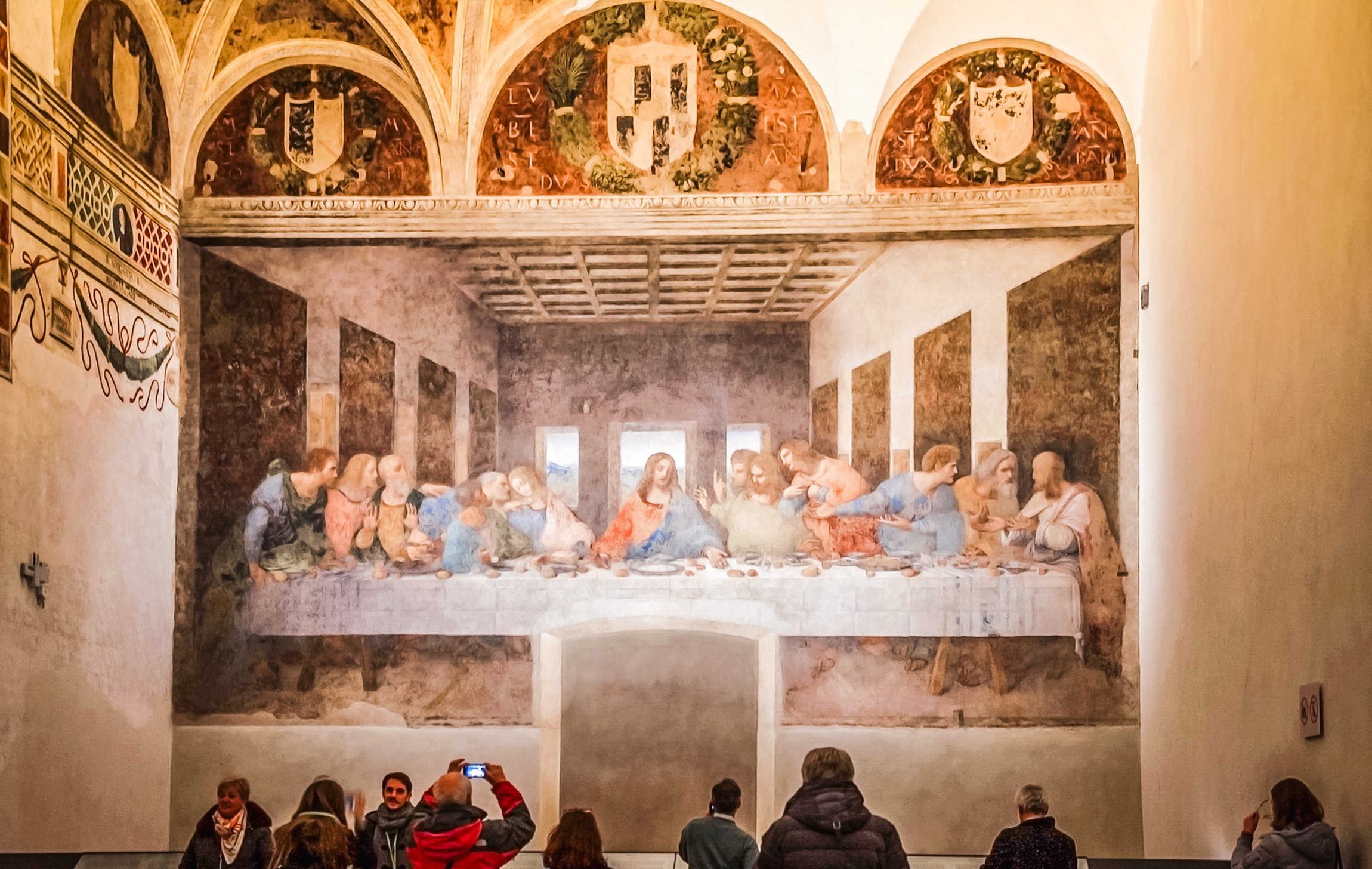
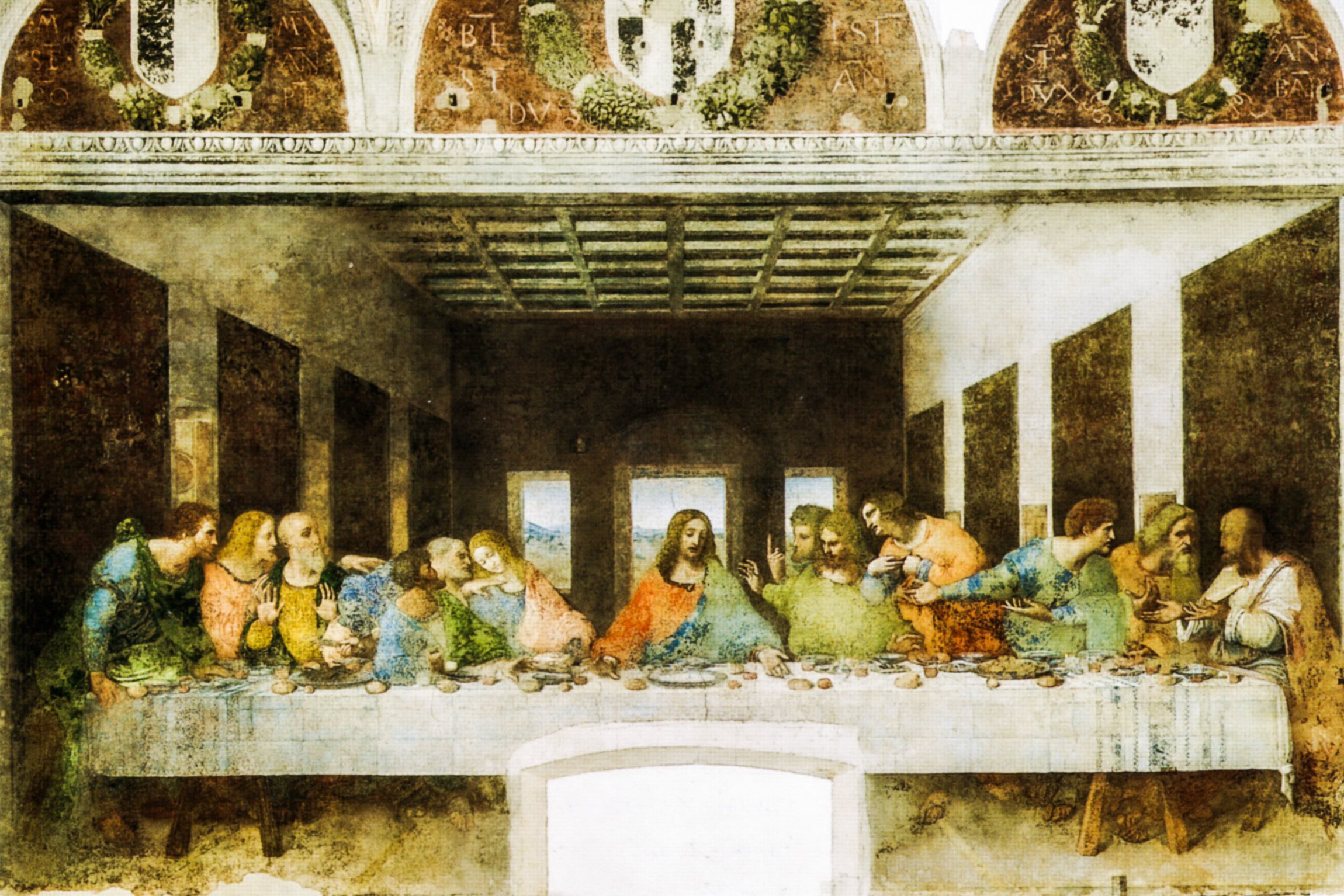
The Last Supper fresco

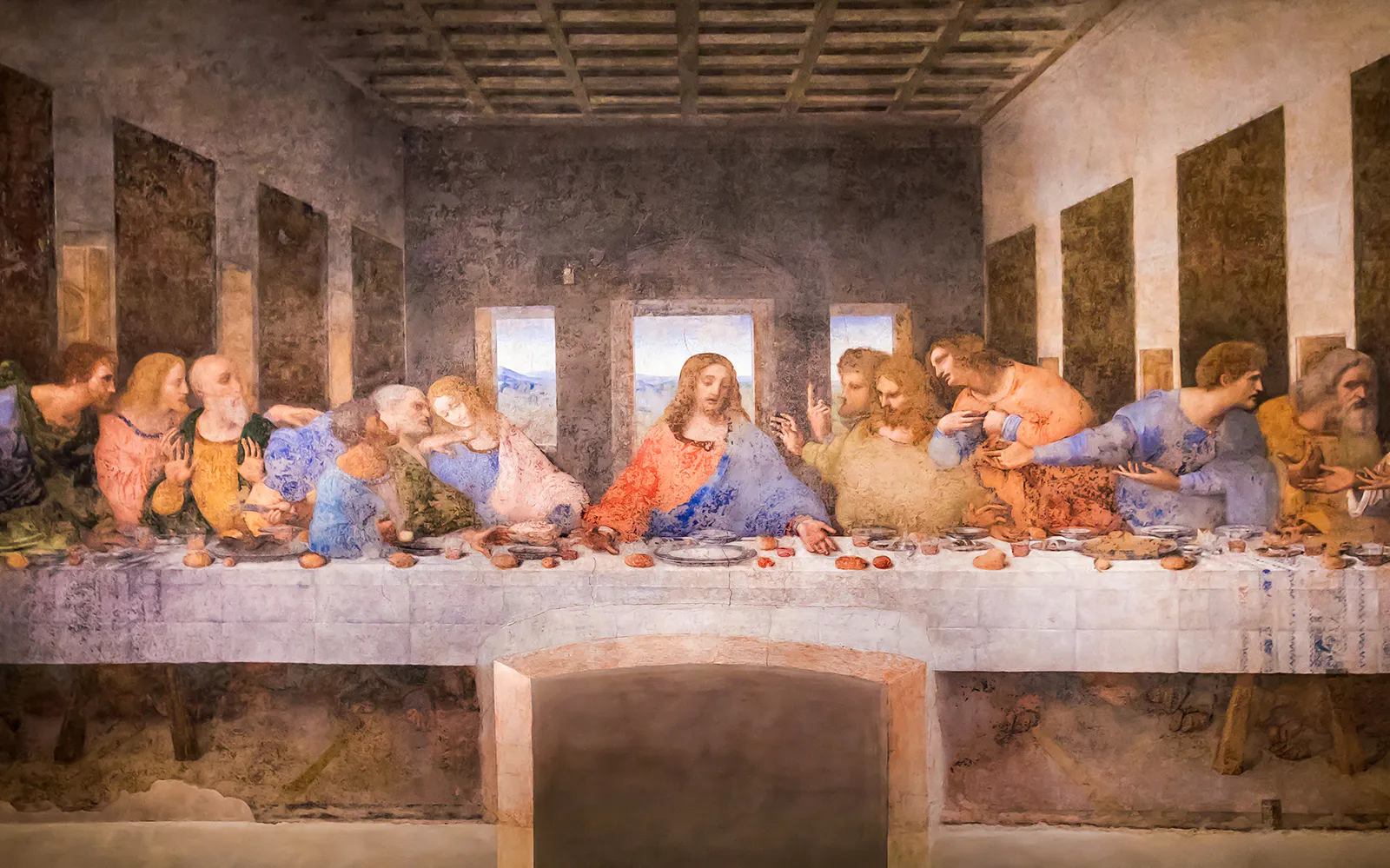
Leonardo da Vinci painted this mural directly onto the refectory's north wall between 1495 and 1498, using an experimental tempera-on-plaster technique that began deteriorating within decades of its completion. Restoration work completed in 1999 took over 20 years to stabilize the surviving pigment.

The Crucifixion by Montorfano

Facing Leonardo's masterpiece on the opposite wall, Giovanni Donato da Montorfano's 1495 fresco depicts the Crucifixion in a more traditional, durable technique that has survived in far better condition than its famous neighbor. Small painted portraits of the Sforza family were later added to its lower corners.

Bramante's apse

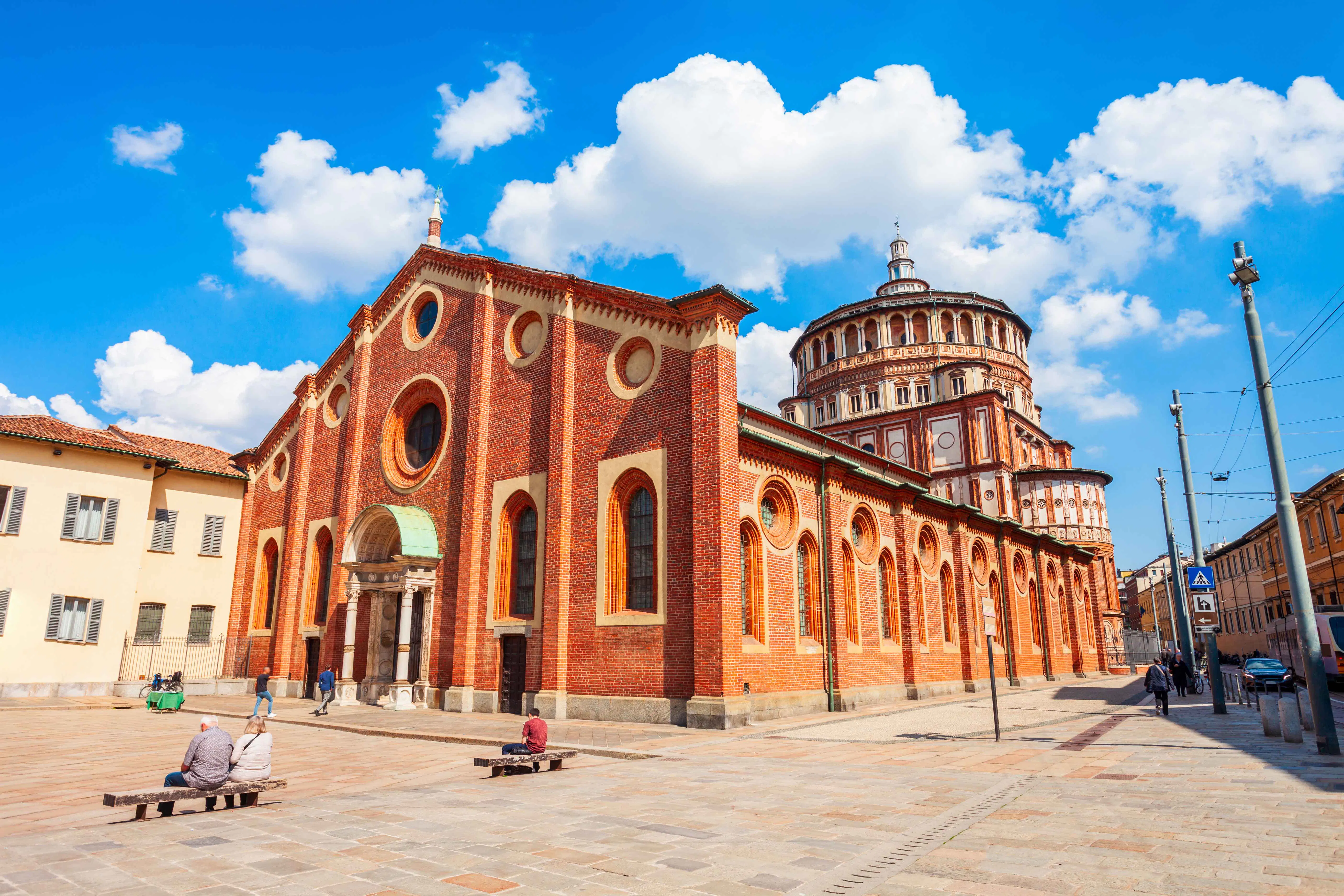
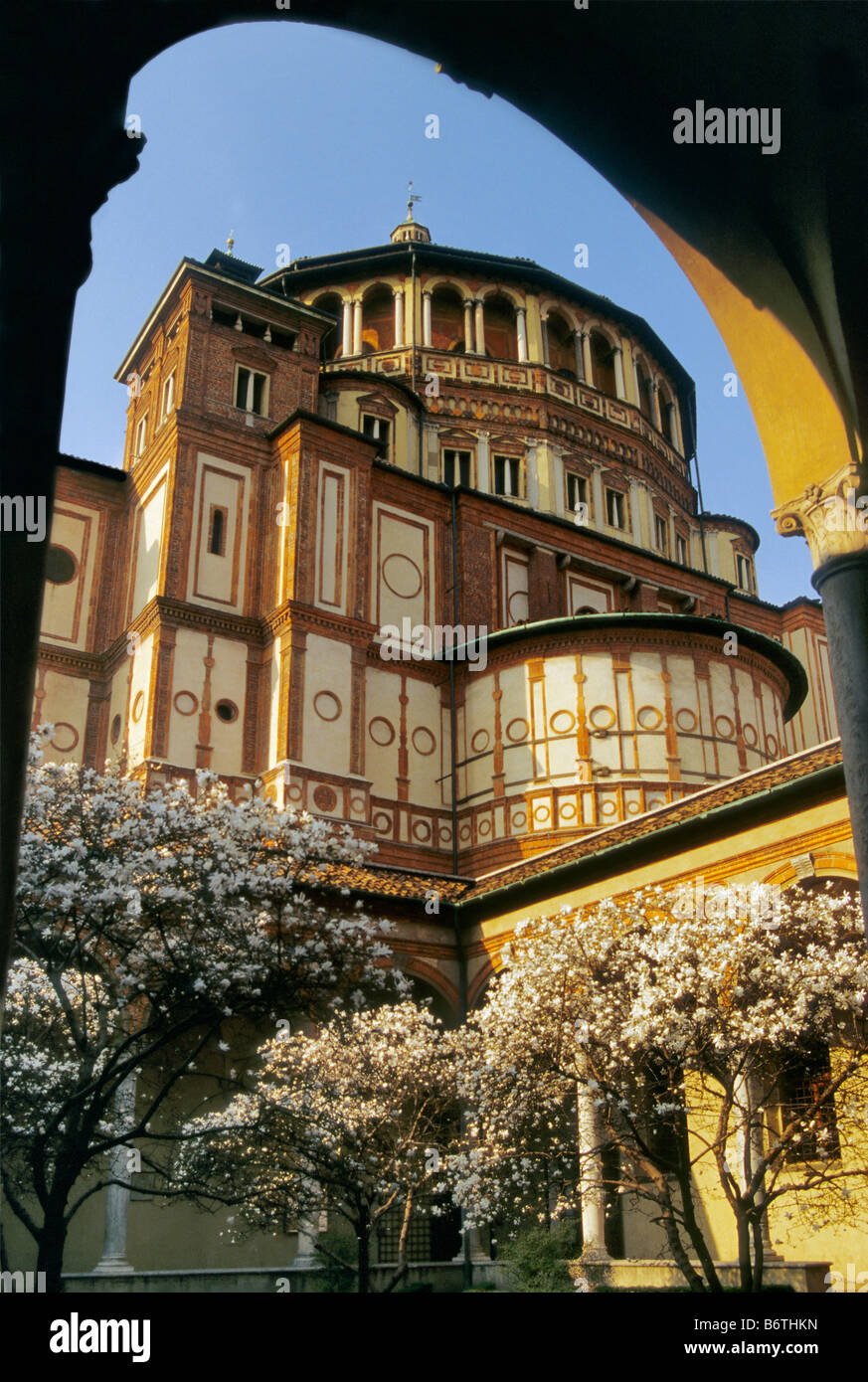
Architect Donato Bramante redesigned the tribune and apse of the church around 1490, adding a striking Renaissance dome and choir that contrast with the building's earlier Gothic nave. The dome's geometric clarity influenced later Renaissance church design across northern Italy.

Cloister of the Frogs

This small convent cloister takes its name from frog-shaped fountain spouts set into its central basin, a quiet counterpoint to the crowds queuing for the fresco nearby. It once formed part of the Dominican convent that housed the friars overseeing the refectory.

The Gothic nave

The original 15th-century nave, built in Lombard Gothic style before Bramante's Renaissance additions, still shows brick and terracotta detailing typical of Milanese church architecture of the era. Its contrast with Bramante's apse offers a visible timeline of two architectural periods in one building.

Climate-controlled anteroom

Visitors pass through a sealed, humidity-regulated antechamber before entering the refectory, part of a conservation system installed to protect the fresco from the fluctuating humidity that damaged it over centuries. The system limits each entering group to a strict 15-minute cycle.

The experience

What the visit is really like

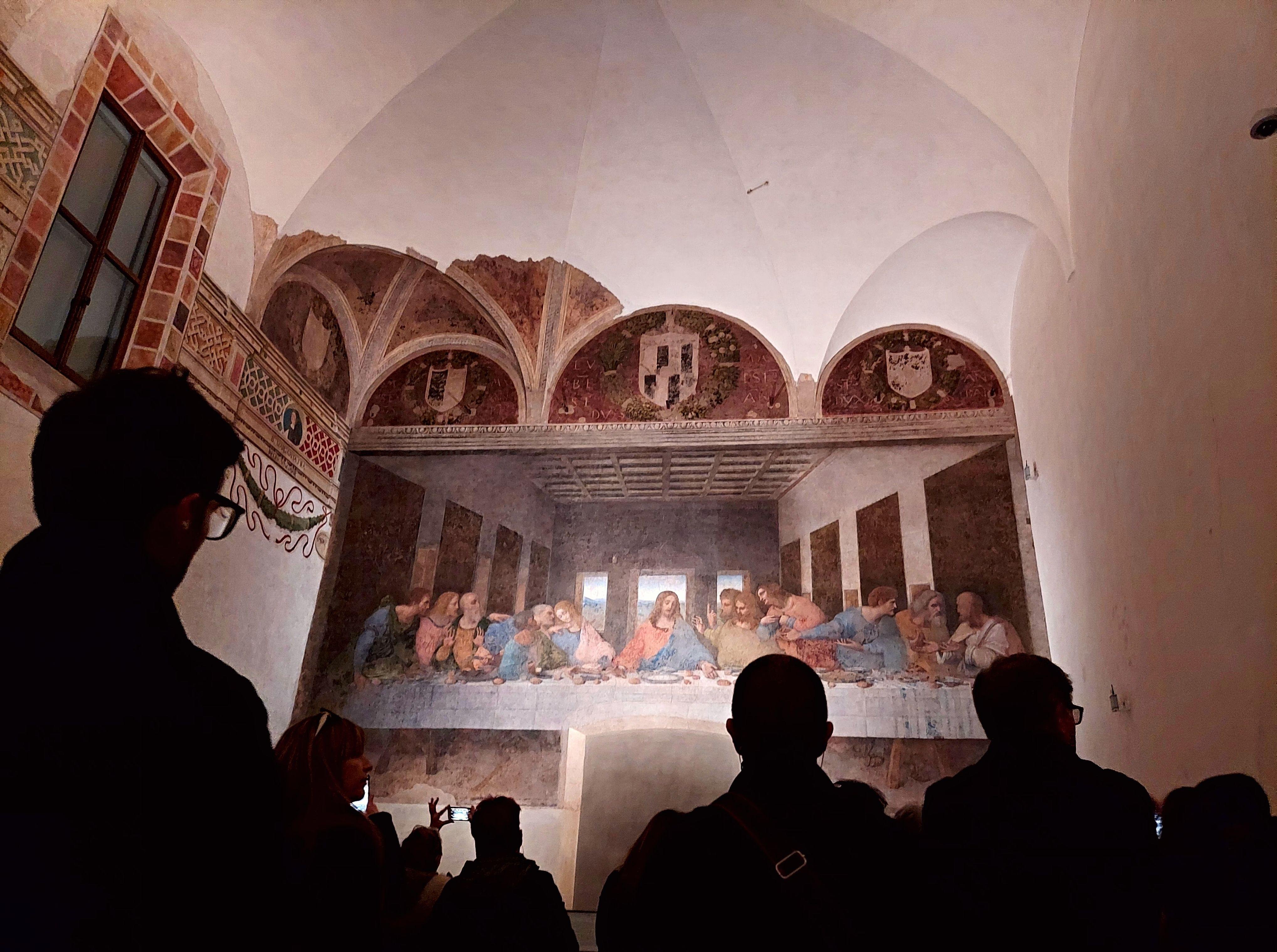
You arrive at Piazza Santa Maria delle Grazie 2 well before your printed slot, because entry here runs to the minute and latecomers forfeit the reservation. You check in at the ticket office beside the church, present your mobile voucher, and wait in the courtyard where the Bramante tribune rises in rose brick above you. When your group is called, you step through the first glass door and it seals behind you. You pass through a sequence of climate-controlled chambers, each one drawing the humidity off your clothes, the air growing cooler and stiller. A staff member counts the group — no more than a couple of dozen — and the final door slides open. You have fifteen minutes. Inside the refectory, you turn to the north wall and the painting is larger and dimmer than photographs suggest, lit low to protect the pigment. You step closer and pick out the recoiling hands, the tipped wine, Christ's open palms at the centre. You turn to the opposite wall, easily missed, where Montorfano's crowded Crucifixion faces Leonardo across the room. You circle back for a last look before the far door opens. Because slots sell out fast, many travellers land last minute last supper tickets only by checking cancellations the night before. You exit into the cloister, blinking in the July light, and the visit is over almost before it began — brief, deliberate, and unrepeatable.

Everything You Need to Know

Your complete experience guide

All the details about your upcoming adventure in one place

Last Minute Last Supper Tickets at Santa Maria delle Grazie

Leonardo da Vinci's mural fills the refectory wall of this UNESCO heritage Dominican convent, and last minute last supper tickets open the door to that quiet space when advance slots have already sold out. Because the refectory admits only small groups on strict timed entries, these last minute last supper tickets tours pair your Cenacolo Vinciano visit with the adjoining Renaissance church and its Bramante apse. Guided Milan Cenacolo access means a knowledgeable escort walks you through the fresco's composition and its Sforza-era setting.

Leonardo da Vinci painted The Last Supper directly onto a dry plaster wall, abandoning the reliable fresco method, and the experiment began flaking within his own lifetime. That fragility is the paradox at the heart of any visit: the most studied wall in Milan is also among the most endangered, sealed now behind a climate-controlled antechamber where filtered air holds the humidity steady. Anyone weighing last minute last supper tickets is, in effect, requesting a few minutes with a survivor. The painting occupies the north wall of the refectory at Santa Maria delle Grazie, a Dominican convent whose brick-and-terracotta church, crowned by a Bramante tribune, has stood on the Corso Magenta side of central Milan since the fifteenth century. Leonardo worked on the mural between roughly 1495 and 1498 under commission from Ludovico Sforza, then Duke of Milan. UNESCO inscribed the church and the Cenacolo Vinciano on its World Heritage list in 1980, recognising both the building and the painting as a single, indivisible landmark. Milan sightseeing rarely offers a work so bound to its original room. What holds the eye is architecture as much as narrative. Leonardo aligned his painted perspective with the real vanishing point of the refectory, so the illusory hall behind the apostles seems to extend the friars' own dining room. Christ sits at the centre, framed by a lit doorway, his figure the still axis around which twelve apostles break into four agitated groups. The instant depicted is the announcement of betrayal — hands recoil, lean, gesture, and grip. Judas, clutching a purse, is folded into the crowd rather than isolated, a compositional choice that unsettled centuries of viewers. The wall has endured near-erasure more than once. Napoleonic troops used the refectory as a stable; an Allied bomb in August 1943 collapsed the roof and an adjacent wall, leaving the painting exposed to the open sky behind sandbags for months. A long restoration, completed in 1999, stripped away layers of earlier overpainting and returned muted, uneven original colour, at the cost of accepting how little of Leonardo's hand truly remains. Visitors browsing options for skip-the-line Santa Maria delle Grazie access are looking at the result of that patient recovery. Context explains the crowds. Only a small group enters at a time, for a strictly limited stay, which is why demand outpaces supply almost daily and why searches for last minute last supper tickets spike through the summer season. The refectory's conservation regime — the airlocks, the capped numbers, the fixed slots — is not ceremony but necessity, the price of keeping a dry-wall experiment legible five centuries on. For those planning Milan landmarks around a single image, the Cenacolo remains the rare one that cannot travel, cannot be reproduced at scale, and cannot be rushed.

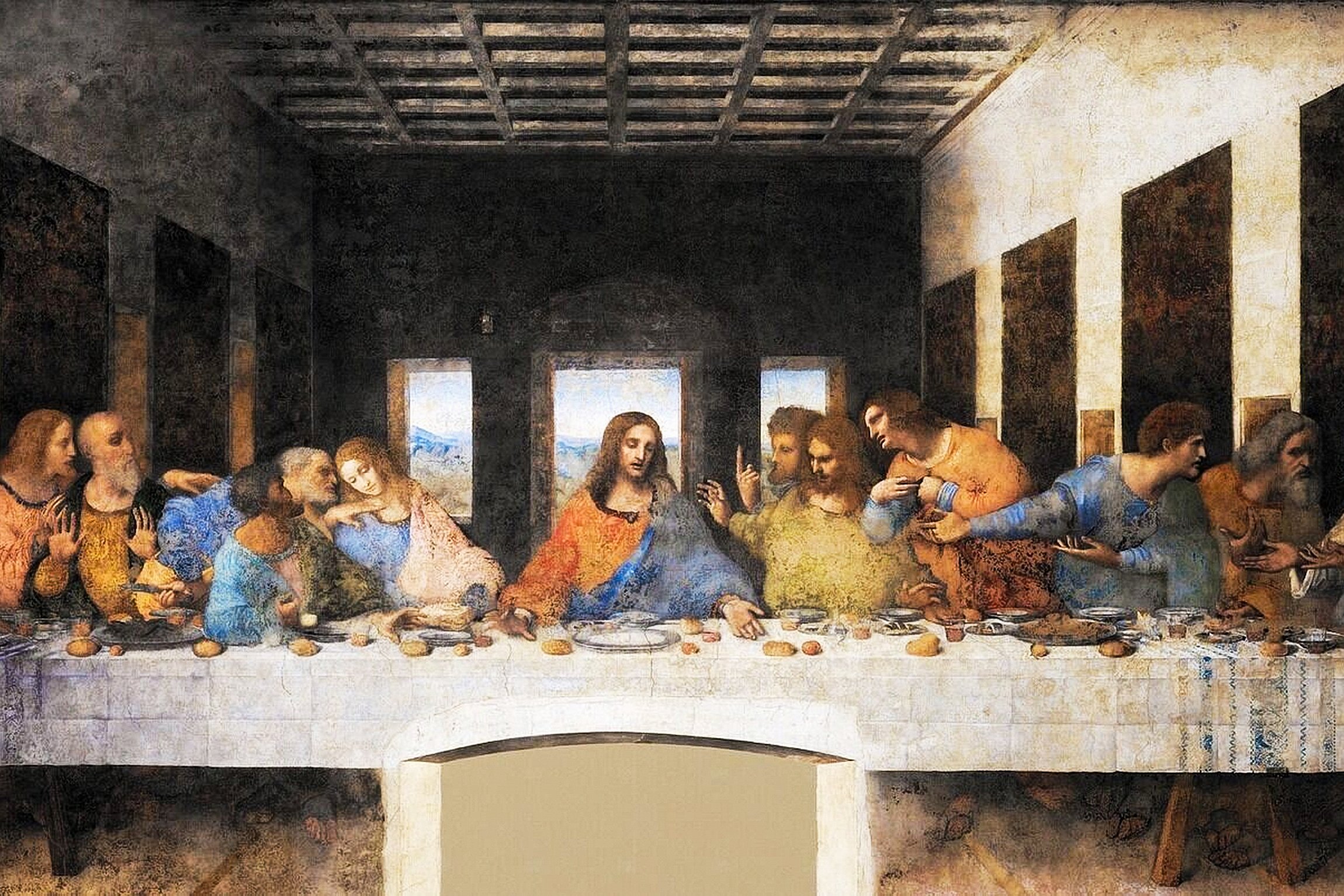
The most studied wall in Milan is also among the most endangered, a dry-plaster experiment kept legible five centuries on.

Dress code

There is no formal dress code enforced inside the refectory itself, but since Santa Maria delle Grazie is an active church, modest clothing covering shoulders and knees is expected if you also step into the adjoining basilica. Most visitors wear ordinary daytime clothing for the 15-minute Last Supper viewing slot.

Bags & security

Visitors pass through an airlock-style anteroom with humidity and temperature controls before entering the refectory, and staff enforce a strict timed-entry system with no lingering past your 15-minute slot. Large bags, backpacks, and suitcases are not allowed inside the viewing room and must be checked at the free cloakroom near the entrance on Piazza Santa Maria delle Grazie 2.

Photography

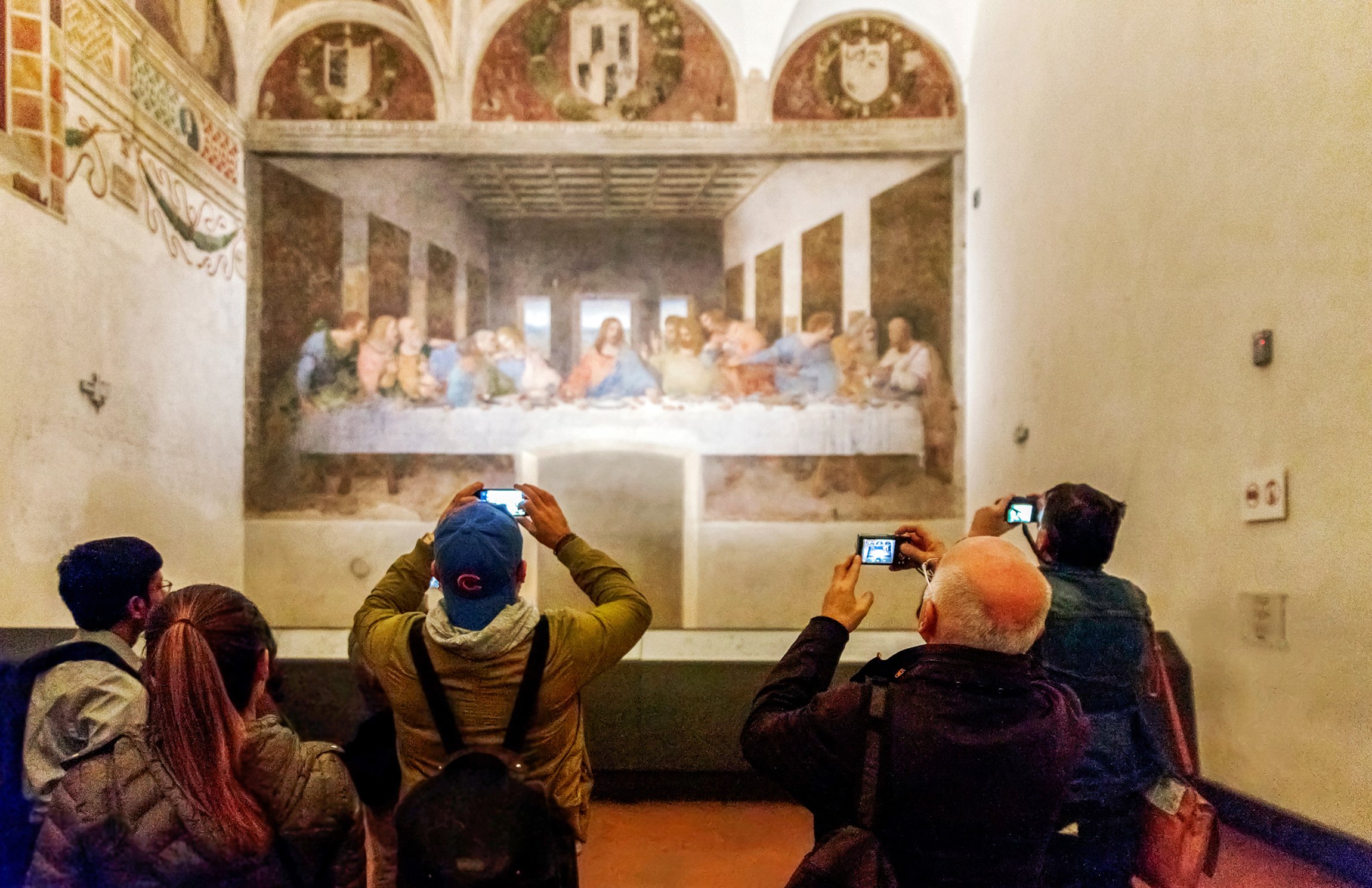
Photography, filming, and flash of any kind are strictly prohibited inside the refectory where The Last Supper is displayed, and staff actively enforce this throughout the 15-minute slot. Phones should be silenced and put away rather than raised for photos; this rule protects both the fresco's conservation and the flow of visitor groups.

Families & strollers

Children under 18 receive free admission to the Cenacolo Vinciano but still need a reserved seat in a specific 15-minute slot, so book a ticket for them even at no cost. The viewing room is small and requires quiet, still attention for the full quarter-hour, which works better for children old enough to stand calmly rather than very young toddlers.

Accessibility

The refectory housing The Last Supper is accessible via a ramp for wheelchair users, and staff can accommodate mobility needs if notified in advance by phone at +39 02 92800360. Because entry is timed and groups move through the climate-controlled anteroom together, visitors with mobility devices should mention this when booking so staff can plan the group flow.

Food & drink

No food or drink of any kind, including bottled water, may be brought into or consumed inside the refectory or the climate-controlled anteroom leading to it. This rule applies even during authorized private events held outside normal hours, underlining how strictly the museum protects the fresco's environment.

Not allowed

× Cameras and phone photography × Flash equipment × Video recording devices × Food and beverages × Large backpacks × Suitcases and wheeled luggage × Umbrellas × Sharp objects × Aerosol sprays × Tripods and selfie sticks × Loud audio devices without headphones × Pets other than service animals

What to bring

✓ Printed or digital ticket confirmation ✓ Valid photo ID matching the name on the ticket ✓ Face mask (optional, not required) ✓ Comfortable shoes for walking to nearby sights ✓ Small bag or wallet only ✓ Water bottle for outside the queue area

Opening hours

Mon Closed

Weekly closure day

Tue 08:15 – 19:00

Last admission 18:45

Wed 08:15 – 19:00

Last admission 18:45

Thu 08:15 – 19:00

Occasional afternoon closures for staff meetings

Fri 08:15 – 19:00

Last admission 18:45

Sat 08:15 – 19:00

Busiest day of the week

Sun 08:15 – 19:00

Last admission 18:45

Closures & exceptions

  • ·Every Monday — Weekly closure
  • ·Jan 1 — New Year's Day
  • ·May 1 — Labour Day
  • ·Dec 25 — Christmas Day

At a glance

Hours

Tue–Sun 08:15–19:00, closed Monday

Getting there

Public transport · 10-15 minutes from Cadorna · Single metro/tram ticket around €2.20

Take Milan Metro Line 1 (red) to Conciliazione or Line 2 (green) to Cadorna, both roughly 5-10 minutes' walk to the piazza; tram lines 16 also stop nearby.

Car · 20-40 minutes depending on traffic · Area C fee plus hourly parking rates

Driving into central Milan means entering the Area C congestion zone, which requires a paid entry ticket on weekdays; limited paid parking exists near Corso Magenta.

Walk · 25-30 minutes · Free

From the Duomo, it's a flat walk west along Via Meravigli and Corso Magenta straight to the piazza.

Taxi · 10-15 minutes from Duomo · Metered fare, roughly €12-18

Taxis can drop off directly on Piazza Santa Maria delle Grazie, avoiding transit transfers.

Cancellation policy

Tickets to the Cenacolo Vinciano are non-refundable and non-changeable once purchased, as the 15 EUR fee is tied to a fixed 15-minute entry slot. Only official cancellations by the museum (e.g. unscheduled closures) qualify for a refund or rebooking.

Plan your time

How long do you need?

Recommended time

45 minutes to 1 hour on-site

The 15-minute viewing window inside the refectory is only part of the visit: budget 20-30 minutes before your slot for check-in, ID verification, security screening, and the staggered wait-room entry that groups visitors in batches of roughly 40 before doors open. Book last minute last supper tickets for the first sessions of the day where possible, since the 08:15-09:30 window sees smaller tour groups and faster processing through security. Add extra time if you also want to walk through the adjoining basilica, as staggered entry means later slots often back up behind delayed groups even though each viewing itself never runs over. Arriving right at your assigned time, rather than early or late, keeps the whole sequence moving smoothly for everyone in the batch.

Crowd levels through the day

Opening rush (08:15-09:30) Light
Mid-morning (09:30-11:30) Moderate
Midday (11:30-14:00) Heaviest
Early afternoon (14:00-16:00) Heavy
Late afternoon (16:00-17:30) Moderate
Last entries (17:30-18:45) Light
Plan ahead

When to go — year at a glance

Weather · crowds · average price — dots go green to amber to red as each metric rises.

Spring

March to May brings mild temperatures around 15-20°C and moderate crowds before peak summer tourism arrives. Early morning slots remain the easiest to secure during this shoulder season.

Summer

June to August is Milan's busiest tourist period, with July and August seeing the heaviest demand for slots and hot, humid days near 30°C. Booking well ahead is essential, and early or late slots help avoid the midday heat.

Autumn

September and October offer cooler weather around 15-22°C and a dip in tourist volume after the summer peak, making it a favorable window for last minute last supper tickets seekers.

Winter

December to February is the quietest season, with cold temperatures near 0-8°C, though the days around Christmas week see a short local spike in demand.

Insider tips

Helpful tips for your visit

Book by the quarter

Reservations for the Cenacolo Vinciano open three months at a time, with the next block typically released in a single morning window, so mark the release date on your calendar rather than waiting for last minute last supper tickets.

Check the Wednesday releases

Extra tickets for the following week are added online every Wednesday at noon, which is often the best route for last minute last supper tickets tours when the quarterly block has sold out.

Use your exact legal name

Every ticket must carry the visitor's full name exactly as it appears on ID, so double-check spelling when booking last minute last supper tickets tickets for a group.

Pair it with the free church

Since the basilica next door is free and unticketed, build it into the same stop rather than treating it as a separate outing.

Groups of ten or more need email booking

Larger parties should contact the museum directly by email with names, dates, and visit type rather than trying to book online.

Mind the 15-minute window

Staff move visitors through in strict timed groups, so latecomers risk losing their slot entirely; arriving with margin protects the reservation.

Watch for schedule notices

The museum occasionally closes for short windows on weekdays for staff meetings, so check the official site the week of your visit.

Where to meet

Meeting points

Cenacolo Vinciano entrance

Piazza Santa Maria delle Grazie 2, 20123 Milano MI

Ticket office is to the left of the main church entrance; arrive 15 minutes before your slot

Get directions

Group email booking contact

cenacologruppi@adartem.it

For parties of ten or more requesting dates by email

Get directions
The story

The history behind the site

Leonardo da Vinci began The Last Supper around 1495, working on a wall of the refectory at Santa Maria delle Grazie. He finished it in 1498. The commission came from Ludovico Sforza, Duke of Milan. Leonardo rejected true fresco, which demanded rapid work on wet plaster. Instead he painted on dry plaster, layering tempera and oil over a sealing ground. The method let him work slowly and revise. It also doomed the surface. Flaking began within two decades of completion. The mural's decline is documented early. By 1517 the paint was lifting. A 1652 doorway cut through the wall removed Christ's feet. Later cleanings and repaintings added damage. Napoleon's troops used the refectory as a stable around 1800. Humidity and neglect deepened the loss. Anyone weighing last minute last supper tickets is looking at a work that has survived centuries of near-ruin rather than a pristine Renaissance surface. The gravest threat came on the night of 15 August 1943. Allied bombing struck the convent. The refectory's roof and other walls collapsed. The wall bearing Leonardo's mural, protected by sandbags and scaffolding, stood. Rain and open air battered it for months before a temporary roof rose. That survival explains why searches for last minute last supper tickets now lead to a sealed, climate-controlled chamber rather than an ordinary hall. The definitive restoration, led by Pinin Brambilla Barcilon, ran from 1978 to 1999. Twenty-one years of work stripped away earlier overpainting and stabilised Leonardo's remaining pigment. The completed conservation set the strict access regime that shapes every last minute last supper tickets tour today: timed entry, filtered air, and small groups of visitors ushered through a buffer zone. That protocol governs the milan da vinci mural experience and every skip-the-line cenacolo booking alike. Today's last minute last supper tickets tours move roughly twenty-five people at a time past the fragment for a brief window. A visitor planning last minute last supper tickets tickets is joining a lineage of pilgrims, restorers, and soldiers who kept the milan landmark from vanishing. The mural at Piazza Santa Maria delle Grazie 2 endures as a survivor of technique, war, and time.

1495–98

Leonardo painted The Last Supper for Ludovico Sforza using an experimental dry-plaster tempera-and-oil method.

1517

Observers recorded the paint already flaking from the wall within twenty years.

1652

A new doorway cut into the wall destroyed the lower portion showing Christ's feet.

c. 1800

Napoleonic troops occupied the refectory, reportedly using it to stable horses.

1943

Allied bombing on 15 August destroyed the refectory's roof and other walls, sparing the sandbagged mural.

1978–99

Pinin Brambilla Barcilon led a 21-year restoration that stabilised the pigment and set today's access rules.

2026

Visitors enter a sealed climate-controlled room in groups of about twenty-five for timed viewing.

Gallery

Moments from the experience

Food & drink

Where to eat nearby

There is no café inside the museum, so anyone booking last minute last supper tickets should plan breakfast on Corso Magenta or Piazza Santa Maria delle Grazie before their slot, since the surrounding blocks are dense with bars and trattorias.

Bar Le Grazie

Café directly opposite

Right across the piazza from the entrance, so it is the default stop before an 08:15 slot. Order a cappuccino and cornetto at the counter and drink it standing up if it is busy. Quick, reliably open early, and geared toward pre-visit tourists.

Cafe Le Grazie

Casual cafe — across the street

A relaxed room with sandwiches, pastries and gelato, good for a sit-down breakfast rather than a rushed espresso. Praised for tiramisu and fresh pastries. Best used before or after the visit, not mid-queue.

Caffè Napoli

Coffee bar on Corso Magenta

A small, no-frills espresso bar a short walk down Corso Magenta, closer to a local's stop than a tourist one. Good for a fast, strong coffee if Bar Le Grazie is crowded. Not set up for a full sit-down meal.

Via Dalla Spiga Bistro

€€

Bakery and bistro

An artisanal bakery-bistro on Corso Magenta serving croissants and espresso in the morning and club sandwiches or focaccia later. Suits a grab-and-go breakfast or a light lunch afterward. Seasonal dishes rotate through the day.

Trattoria La Colonna

€€€

Trattoria — 5 min walk

A long-running Milanese trattoria near S. Maria alla Porta serving osso buco risotto and smoked tuna carpaccio in a vintage two-room setting. Better suited to a proper lunch after the visit than a quick stop. Reservations recommended at midday.

Customer Reviews

What travelers say

Real experiences from real travelers

4.5
Based on undefined reviews
1 ★ 520
2 ★ 410
3 ★ 940
4 ★ 2600
5 ★ 12400
E
Elena R.
Italy · 2026-06-14

Grabbed a cancelled slot

We had almost given up on seeing the mural, then found last minute last supper tickets released the evening before our visit. The refectory was cooler than the street outside and the Leonardo da Vinci fresco filled the whole end wall in faded ochres and greens. Standing there in that quiet 15-minute window felt oddly intimate.

M
Marcus D.
Germany · 2026-05-30

Bramante dome surprised me

Most people rush straight for the Cenacolo, but the church itself with Bramante's ribbed tribune is worth lingering over first. Our guide met us in the piazza around 4pm when the brick was glowing warm. A well-run Milan Last Supper tour that respected the timed entry.

P
Priya S.
United Kingdom · 2026-07-08

Hot outside, calm inside

July in Milan is sticky and the piazza had no shade while we waited, so bring water. Once the climate-controlled doors sealed behind us the humidity buffer meant the mural stayed protected and the room was pleasantly still. The skip-the-line Last Supper access saved us from the standby crowd entirely.

T
Tomás V.
Spain · 2026-04-22

Refectory light is special

Late afternoon sun came sideways through the high windows and lit Leonardo's perspective lines beautifully. If you can only manage last minute last supper tickets tours on short notice, take the latest slot you can get. The Santa Maria delle Grazie complex is a UNESCO heritage site and it shows in the care taken.

A
Aiko T.
Japan · 2026-03-11

Faded but powerful

I expected the mural to look brighter, but the muted, flaking surface tells the story of five centuries of survival, including wartime bomb damage to the refectory. Seeing the Cenacolo Vinciano in person after only knowing photos was moving. Booking a Milan landmarks itinerary through one operator made the logistics painless.

C
Carlos M.
Brazil · 2026-02-05

Cold day, quick entry

Milan in February was grey and drizzly, which kept the piazza quiet. We snagged last minute last supper tickets tickets that a group had released and were inside within twenty minutes. The dehumidified antechamber before the mural room is part of the preservation process, so don't be impatient with the pauses.

S
Sophie L.
France · 2026-06-27

Ultima Cena at last

The local phrasing biglietti Ultima Cena helped when I asked at the desk. Our small-group last minute last supper tickets tour was calm and the guide pointed out how Leonardo painted the exact moment of Christ's announcement. The convent cloister next door was empty and green in the morning light.

D
David K.
United States · 2026-01-19

Worth the scramble

Everyone says these sell out months ahead, so I was thrilled to catch a released pair on the app the night before. The Santa Maria delle Grazie tour started with the church interior and finished at the mural, a good build-up. Winter light through the high windows was soft and low.

H
Hannah W.
Australia · 2025-11-16

Short but managed expectations

The viewing is genuinely brief and the group ahead of us ran a little long, so we felt slightly rushed. That said, the fresco itself, with its ghostly apostles and collapsing perspective, held my attention completely. A Milan Last Supper tour is convenient but know going in that everyone gets the same tight slot.

G
Giulia F.
Italy · 2025-09-03

Late summer evening slot

We took an early-evening entry in September when the piazza had cooled and the brick façade turned rose-coloured. Finding last minute last supper tickets that late in the day meant almost no queue at all. The refectory was hushed and the scale of Leonardo's wall is hard to grasp until you're standing in front of it.

FAQ

Frequently asked questions

Everything you need to know for your journey

Around the corner

Nearby landmarks worth a detour

Santa Maria delle Grazie church

0 minutes

church

The adjoining basilica is free to enter and features Donato Bramante's celebrated tribune and apse alongside Gothic-Renaissance architecture.

Cloister of the Frogs

1 minute

landmark

A quiet convent cloister named for its frog-shaped fountain spouts, accessible from within the church complex at no charge.

Sant'Ambrogio Basilica

15 minutes

church

One of Milan's oldest churches, founded in the 4th century, with a Romanesque atrium and layered historical crypts.

Castello Sforzesco

12 minutes

landmark

A 15th-century castle complex housing several city museums and a large public park behind it.

Parco Sempione

15 minutes

park

A large green space behind Castello Sforzesco with the Arco della Pace at its far end.

Where to stay

Where to stay nearby

Magenta district

5-10 minutes

district

A residential-commercial area near Corso Magenta with a mix of boutique hotels and serviced apartments close to the piazza.

Starhotels Anderson

10 minutes

mid-range

A modern hotel near Cadorna station with straightforward access to metro lines toward the city center.

Magna Pars Suites Milano

8 minutes

luxury

A design-forward suite hotel set in a former perfume factory near Corso Magenta.

Ostello Bello Grande

15 minutes

budget

A centrally located hostel option with dorm and private rooms within walking distance of Cadorna.

Ready for Adventure?

Join thousands of happy travelers who have discovered this incredible experience

Book Your Experience Now