English| EUR
Suggested for you
More currencies
Book Now
Open today · 08:15 – 19:00

Private Last Supper Tour

Private Last Supper Tour — Reserved Timed Entry to Leonardo's Refectory

Fifteen minutes with a fading wall, centuries held in plaster.

84K+ travelers chose this
Free Cancellation
Right now: Moderate — summer holiday season Book any private last supper tour slot well ahead; last entry is 18:45
1-1.5 hours recommended
1 Languages
Max 25 per session
Free Cancellation
Skip-the-line Instant confirmation Mobile voucher Verified partner Free cancellation
460×880cm
Mural size
Painted directly on wall
1495-98
Years painted
Da Vinci's largest work
21 yrs
Restoration length
1978-1999 major restoration
15 min
Viewing time cap
Per visitor group
1980
UNESCO listing
World Heritage Site
Choose your ticket

Ticket options at a glance

Compare fares, pick the fit — all bookings are mobile-voucher and eligible for free cancellation where shown.

Private Early Morning Last Supper Tour in Milan 1 hr 30 min
Luxury / Private

Private Early Morning Last Supper Tour in Milan

4.5 (11)
€155
  • Private experience
  • Personal attention
  • Premium amenities
  • Free cancellation
Book this ticket
Milan: Semi-Private Last Supper & Duomo Cathedral Tour 2 hr 30 min
Luxury / Private

Milan: Semi-Private Last Supper & Duomo Cathedral Tour

4.8 (192)
€165
  • Private experience
  • Personal attention
  • Premium amenities
Book this ticket

Is it worth it?

Worth it for anyone who values the original

At 15 EUR including the reservation fee, a private last supper tour is priced fairly for what is essentially the only way to stand before Leonardo's mural in its Dominican refectory. What you pay buys guaranteed timed entry into a strictly capped 15-minute window, plus context most self-guided visitors miss. What you get is scarcity: slots vanish weeks out, so the fee is really the price of access to one of Milan's rarest landmarks. For art lovers, a Cenacolo Vinciano tour pays off completely; the difference between the faded original and any reproduction justifies every euro. Casual tourists still leave satisfied, though the brevity stings. Budget families should weigh the per-head cost against the short viewing. Skip-the-line last supper tickets remove the queue gamble entirely, and private last supper tour tours add a guide who fills those fifteen minutes with substance.

What makes it worth it

  • See Leonardo's authentic mural, not a reproduction
  • Guaranteed timed entry into a scarce slot
  • Guide adds context to brief viewing
  • Private last supper tour tickets skip queues
  • Fair 15 EUR reservation-inclusive fee

Keep in mind

  • Viewing capped at strictly 15 minutes
  • Tickets sell out weeks ahead
  • Per-head cost adds up for families
  • Closed Mondays limits scheduling flexibility

Bottom line: For the chance to stand before the real thing, a private last supper tour earns its 15 EUR.

Featured Experiences

Popular tours & activities

Hand-picked experiences loved by thousands of travelers

Recommended Experience

Powered by GetYourGuide

Another traveler favorite

Powered by GetYourGuide
Milan: Da Vinci's Last Supper and City Walking Tour 3 hours Free Cancellation

Milan: Da Vinci's Last Supper and City Walking Tour

Explore Milan's iconic landmarks and secure your skip-the-line access to view Leonardo da Vinci's masterpiece, The Last Supper.

4.8 (731)
FromFrom €79
See details
Milan: Leonardo’s Last Supper Skip-the-Line Guided Tour 1 hour Free Cancellation

Milan: Leonardo’s Last Supper Skip-the-Line Guided Tour

Experience Da Vinci's iconic mural with priority entry and expert commentary in the heart of Milan.

4.8 (1720)
FromFrom €119
See details
Milan: Leonardo da Vinci’s Last Supper Guided Tour 1 hour Free Cancellation

Milan: Leonardo da Vinci’s Last Supper Guided Tour

Experience Leonardo da Vinci’s world-famous mural with an expert guide at a UNESCO World Heritage site.

4.7 (10476)
FromFrom €149
See details
Your journey

Step-by-step — what your day looks like

1

Arrive at ticket office

Collect physical ticket with booking reference and photo ID at Piazza Santa Maria delle Grazie

What you'll see

Highlights not to miss

The Last Supper mural

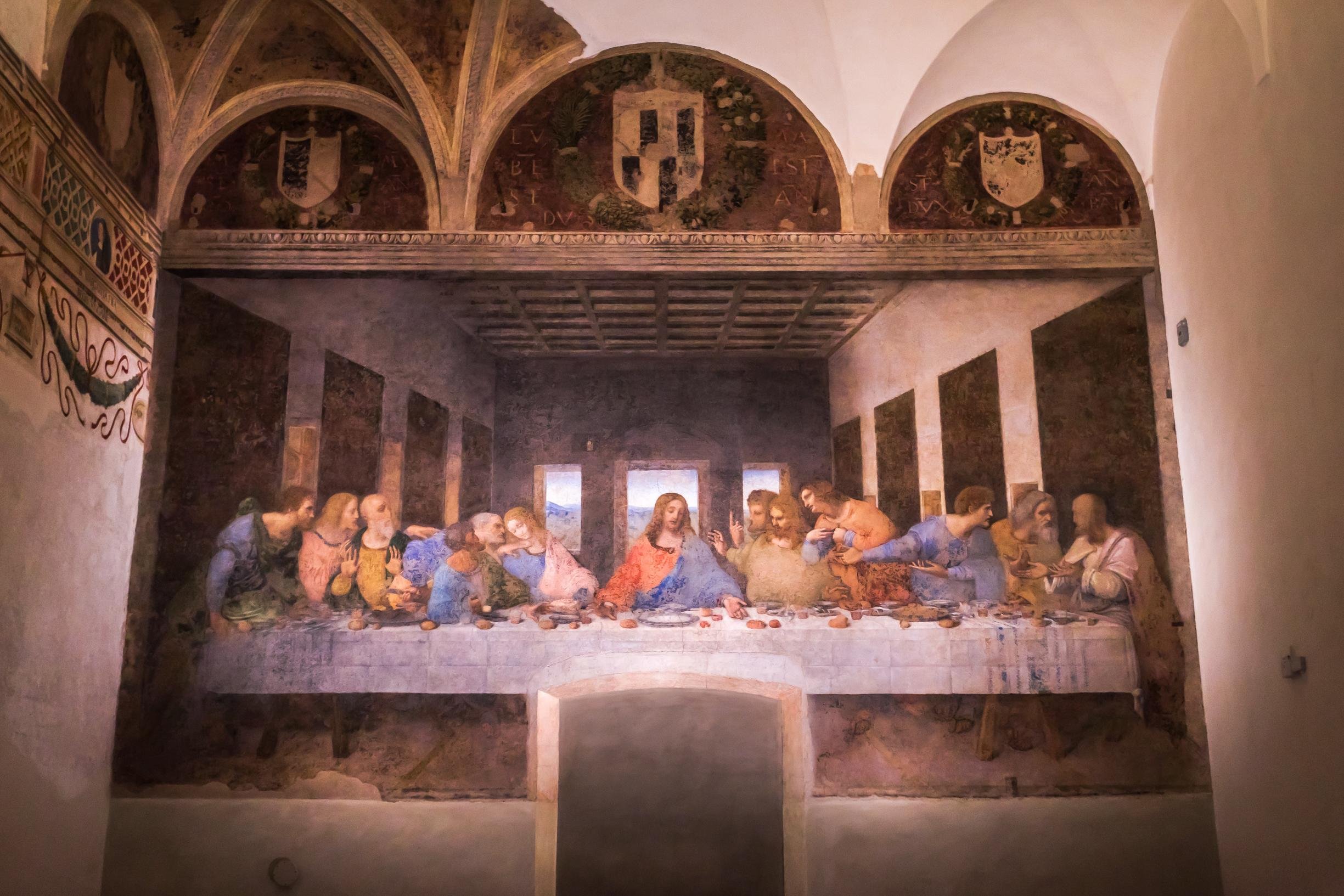
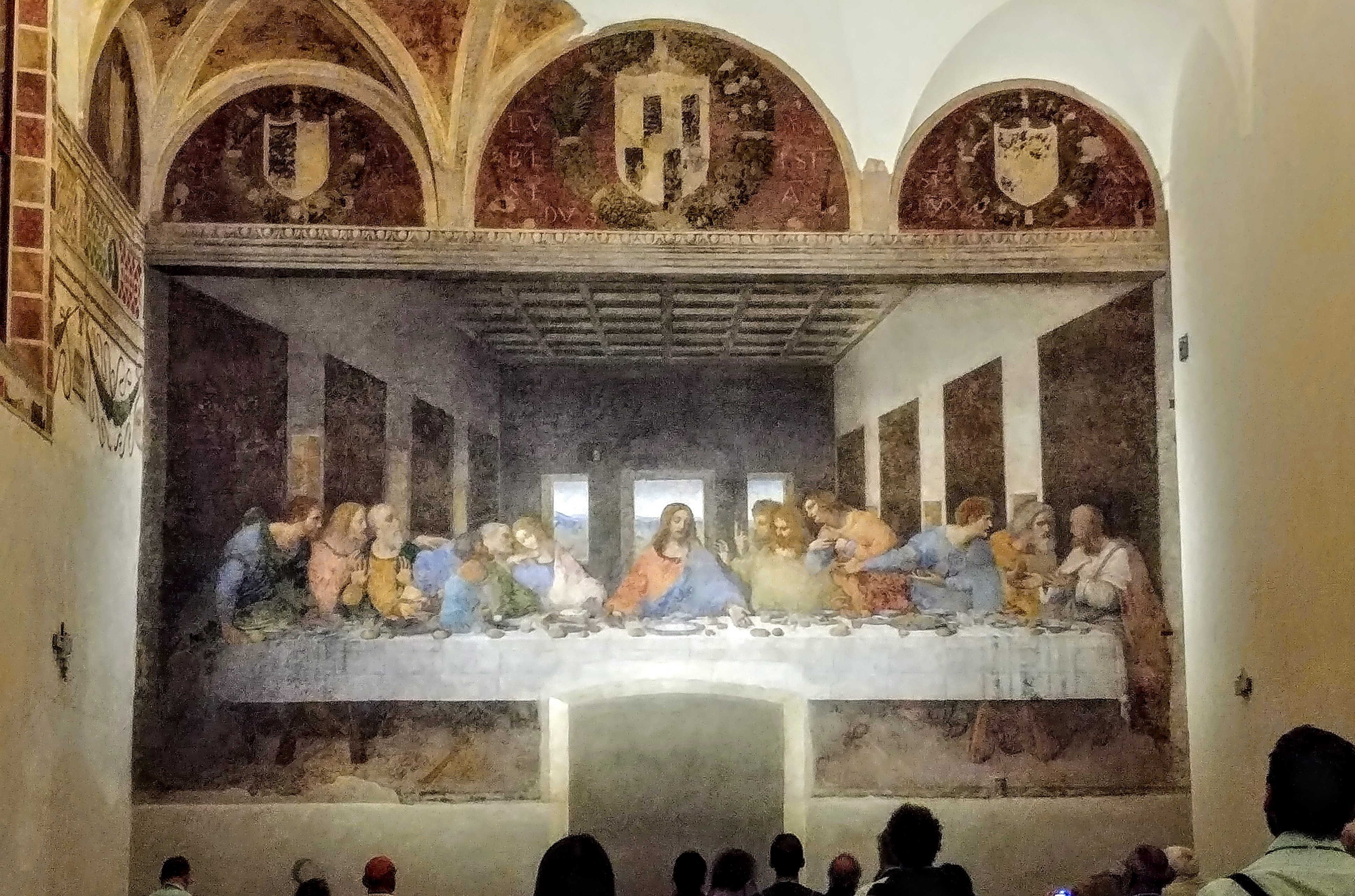
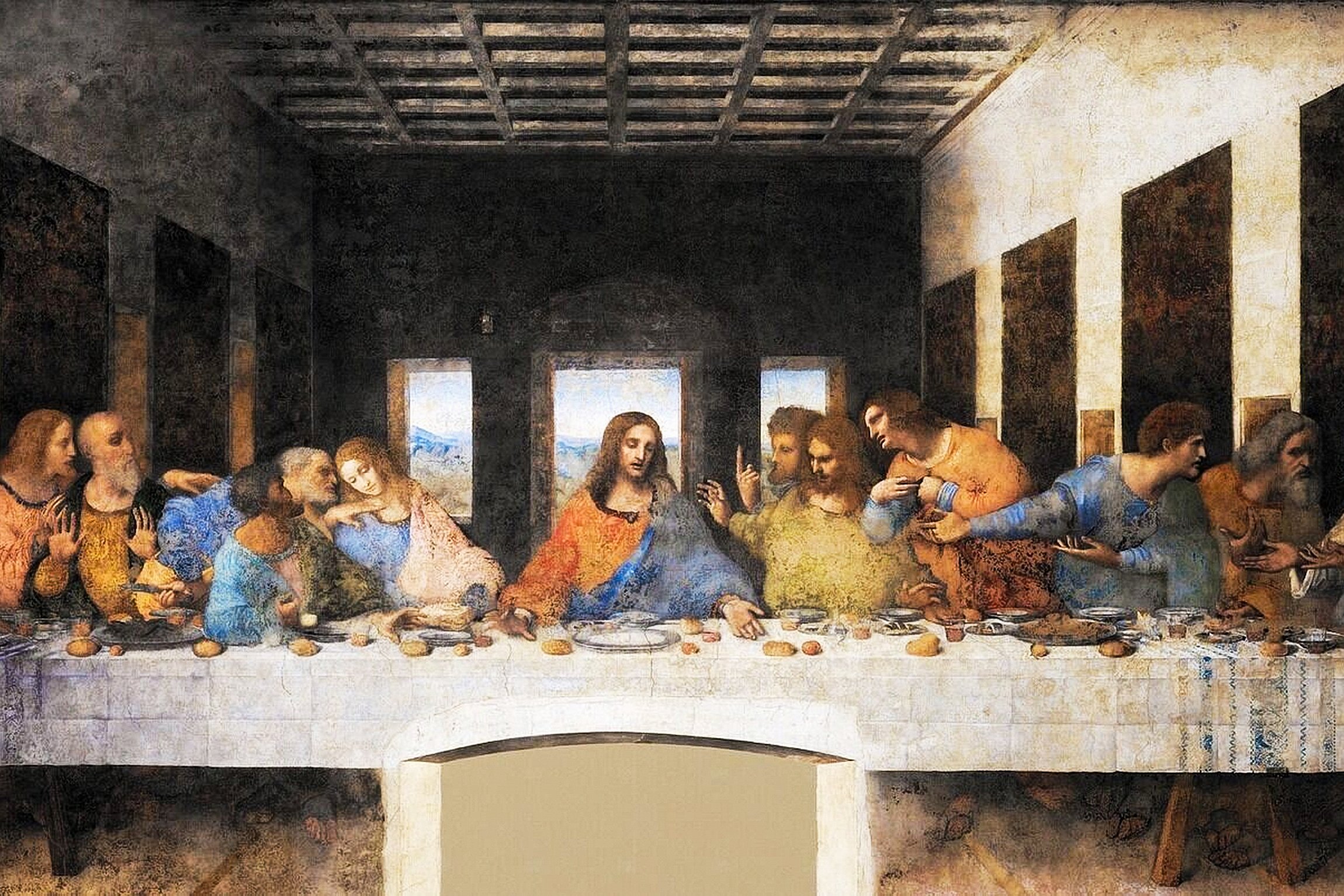
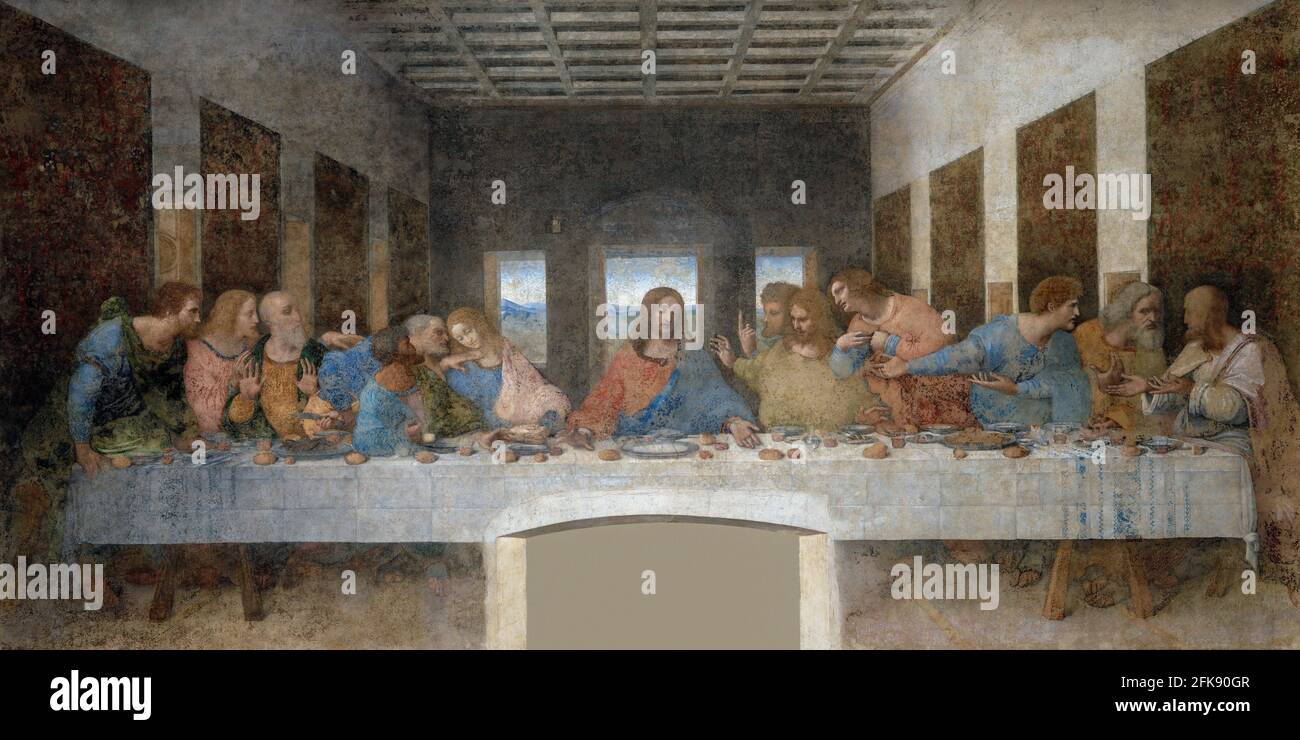
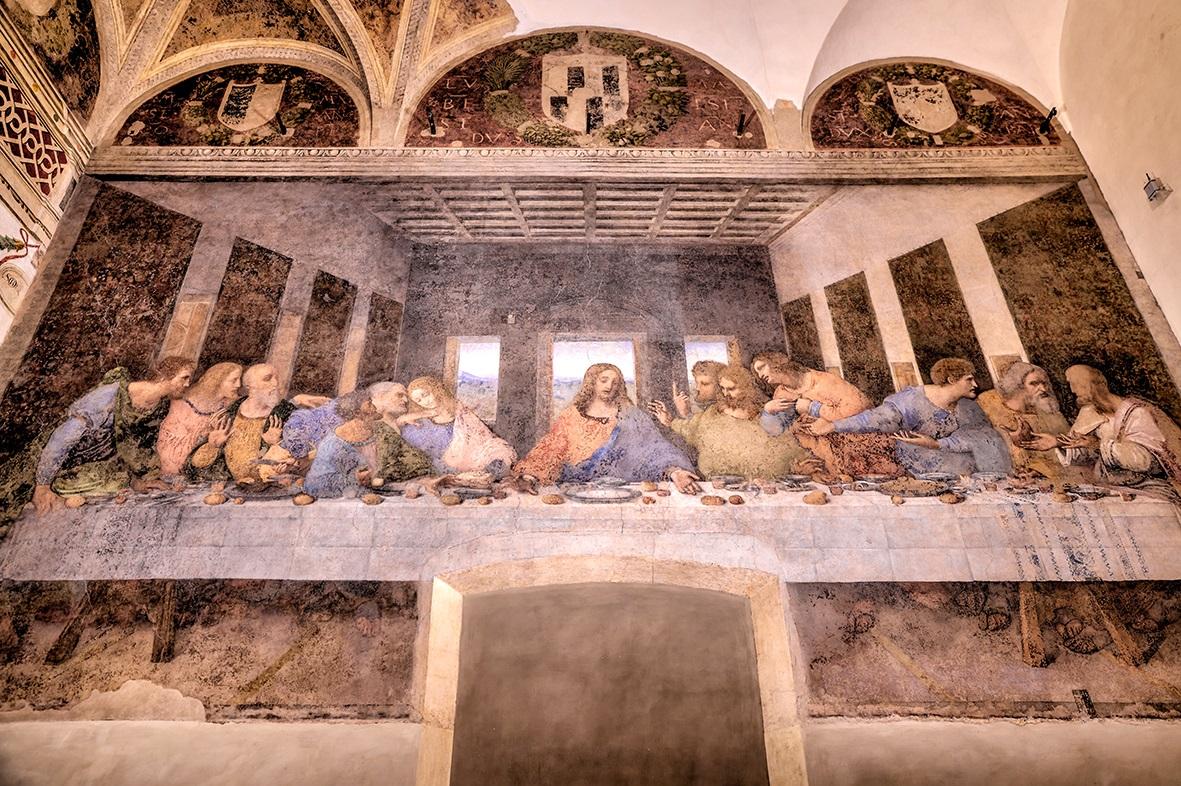
Leonardo da Vinci painted this tempera and oil work directly onto the refectory wall between 1495 and 1497, choosing an experimental technique instead of true fresco that has made conservation an ongoing challenge for over five centuries. The composition captures the moment Christ announces that one apostle will betray him, with each figure's reaction rendered in distinct gesture and expression.

The Refectory Hall

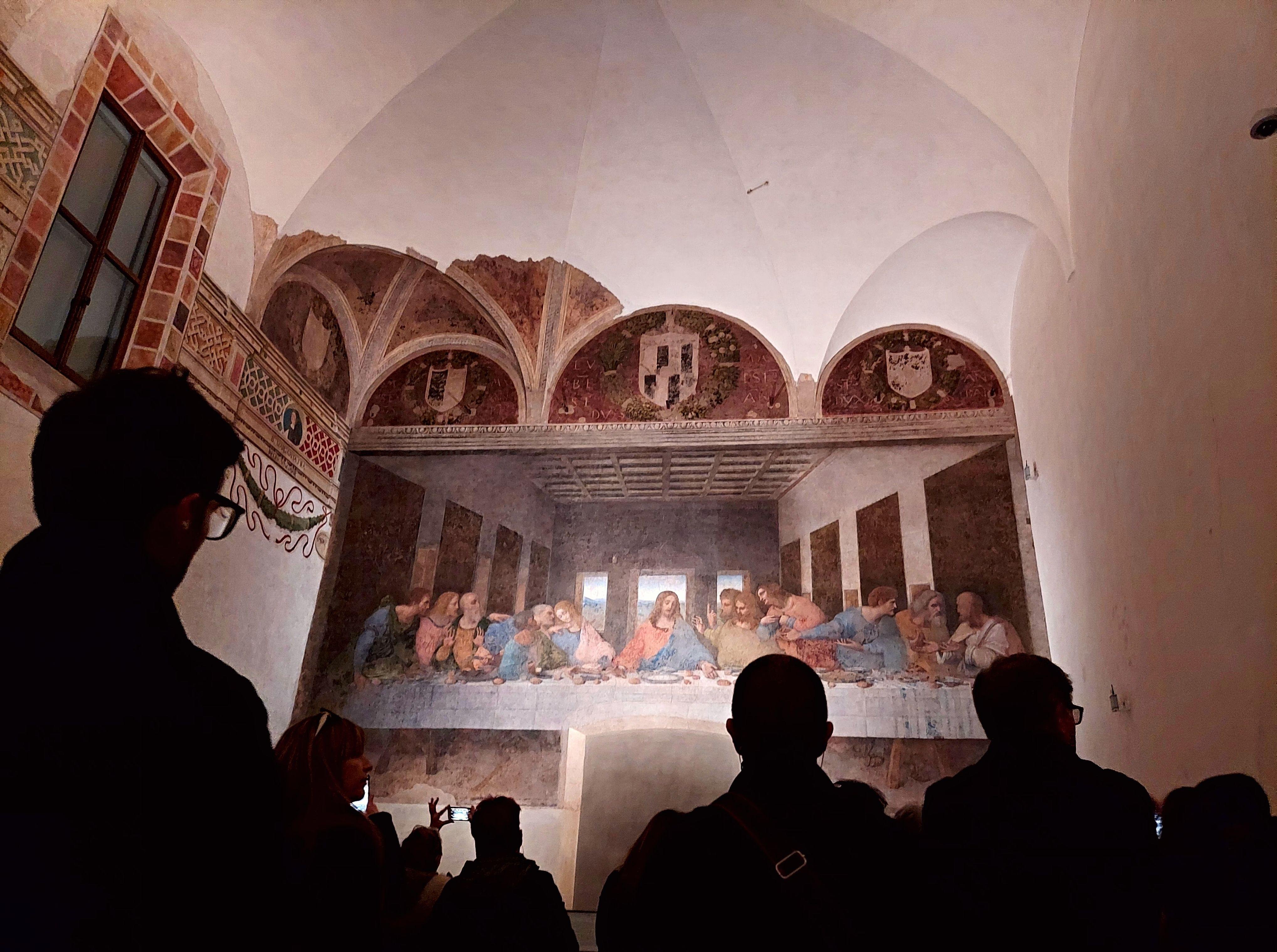
This former monastic dining hall was designed for Dominican friars, and Leonardo used linear perspective so the painted room appears to extend the real architecture of the space. The hall is climate-controlled today to protect the deteriorating pigment layers from humidity damage.

Montorfano's Crucifixion

Facing the Last Supper on the opposite wall is Giovanni Donato da Montorfano's 1495 fresco of the Crucifixion, often overlooked by visitors focused on Leonardo's work. Ludovico Sforza and his family were later added to this fresco by Leonardo himself, though those additions have faded significantly.

Church facade and Bramante apse

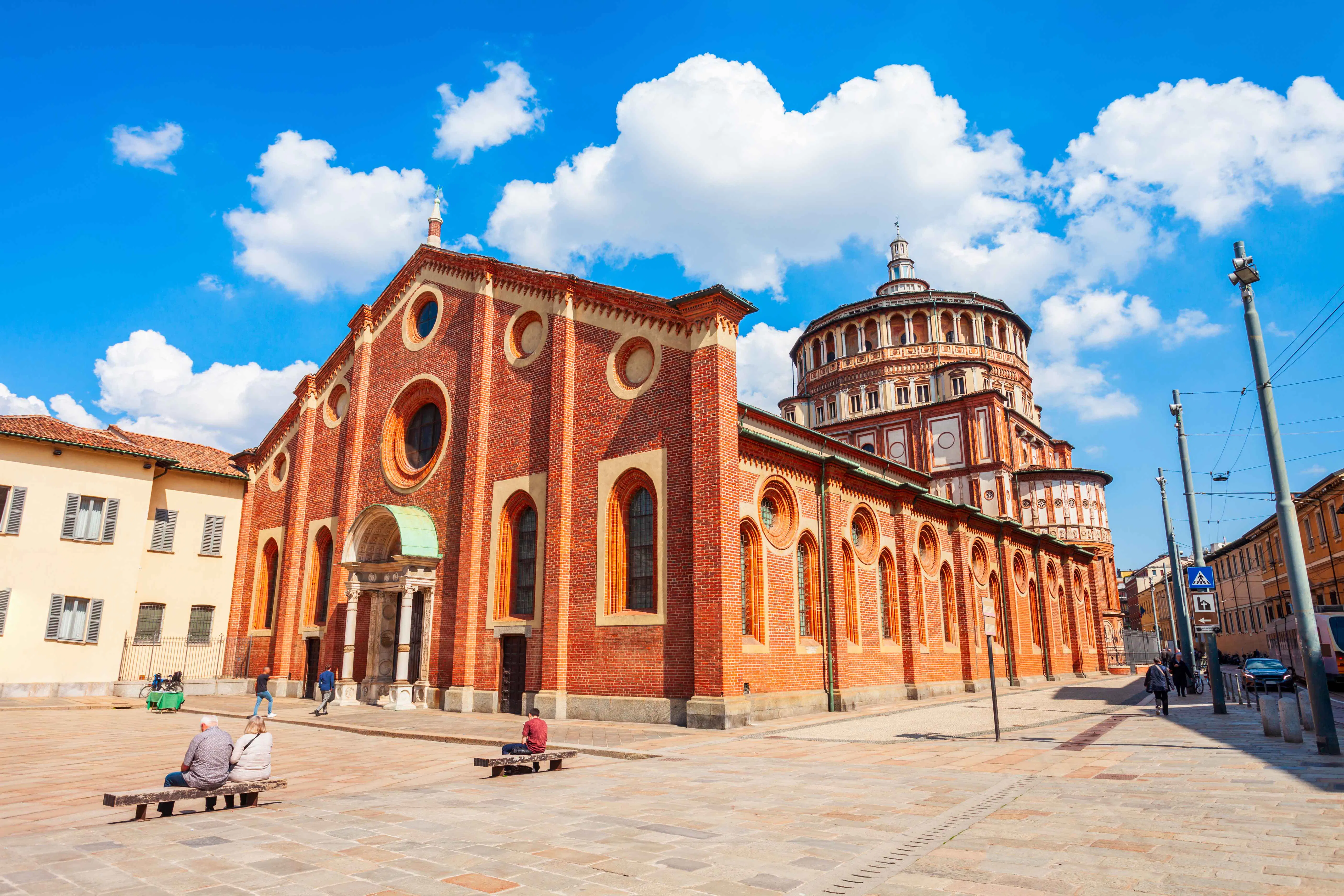
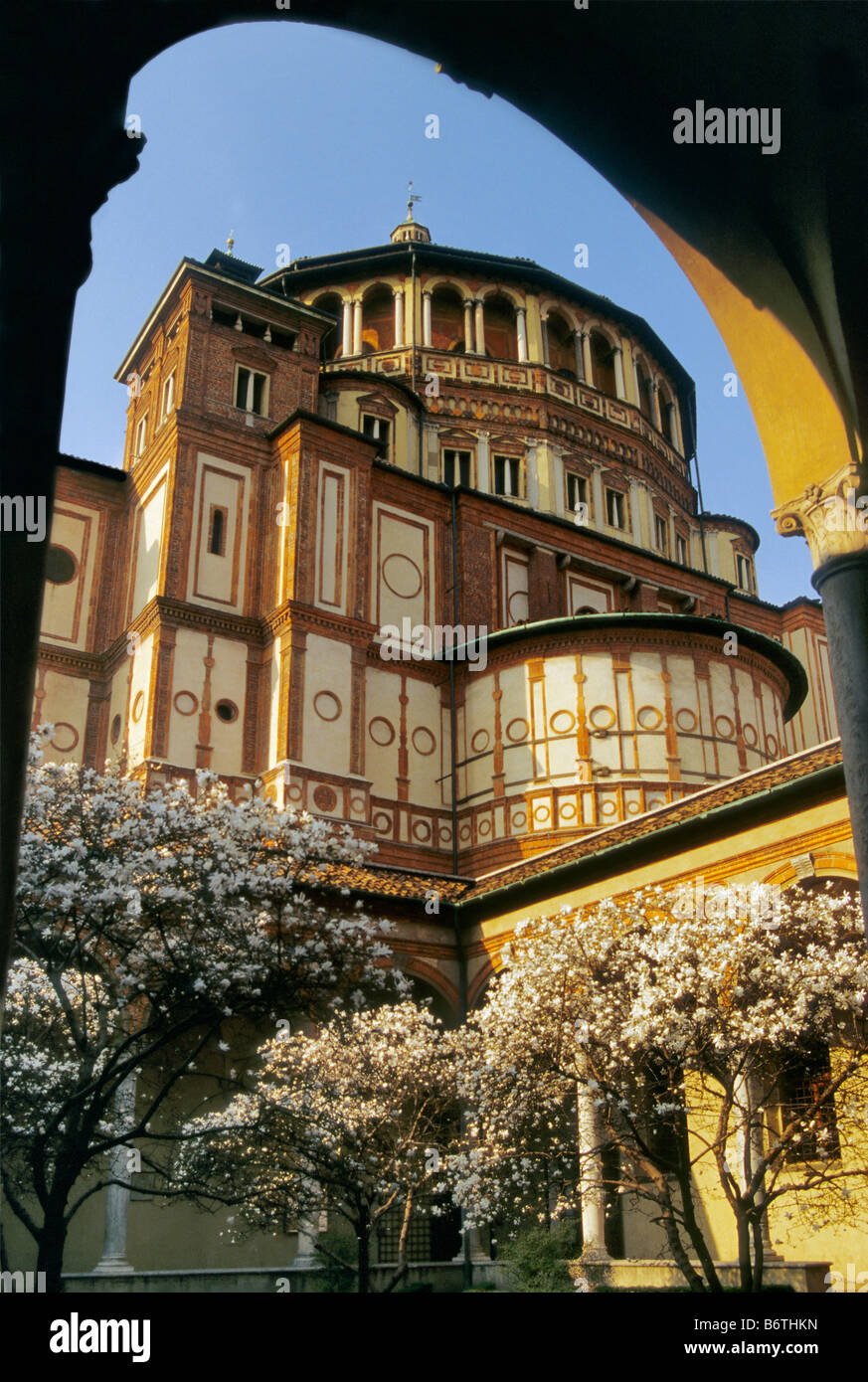
Donato Bramante redesigned the church's tribune and cloister around 1492, adding a striking terracotta-domed apse that contrasts with the plainer Gothic nave built decades earlier. The exterior brickwork is considered a key transition point between Gothic and Renaissance architecture in Lombardy.

Cloister of the Frogs

Named for the small frog sculptures found in its central fountain, this quiet cloister offers a rare pocket of calm steps away from the crowded ticket queues. It remains freely accessible without a timed reservation.

Side chapels of the nave

The church nave holds several side chapels decorated with Renaissance and Baroque artwork, largely overlooked by visitors rushing to the refectory slot. These free-access spaces preserve funerary monuments and altarpieces spanning multiple centuries of Milanese patronage.

The experience

What the visit is really like

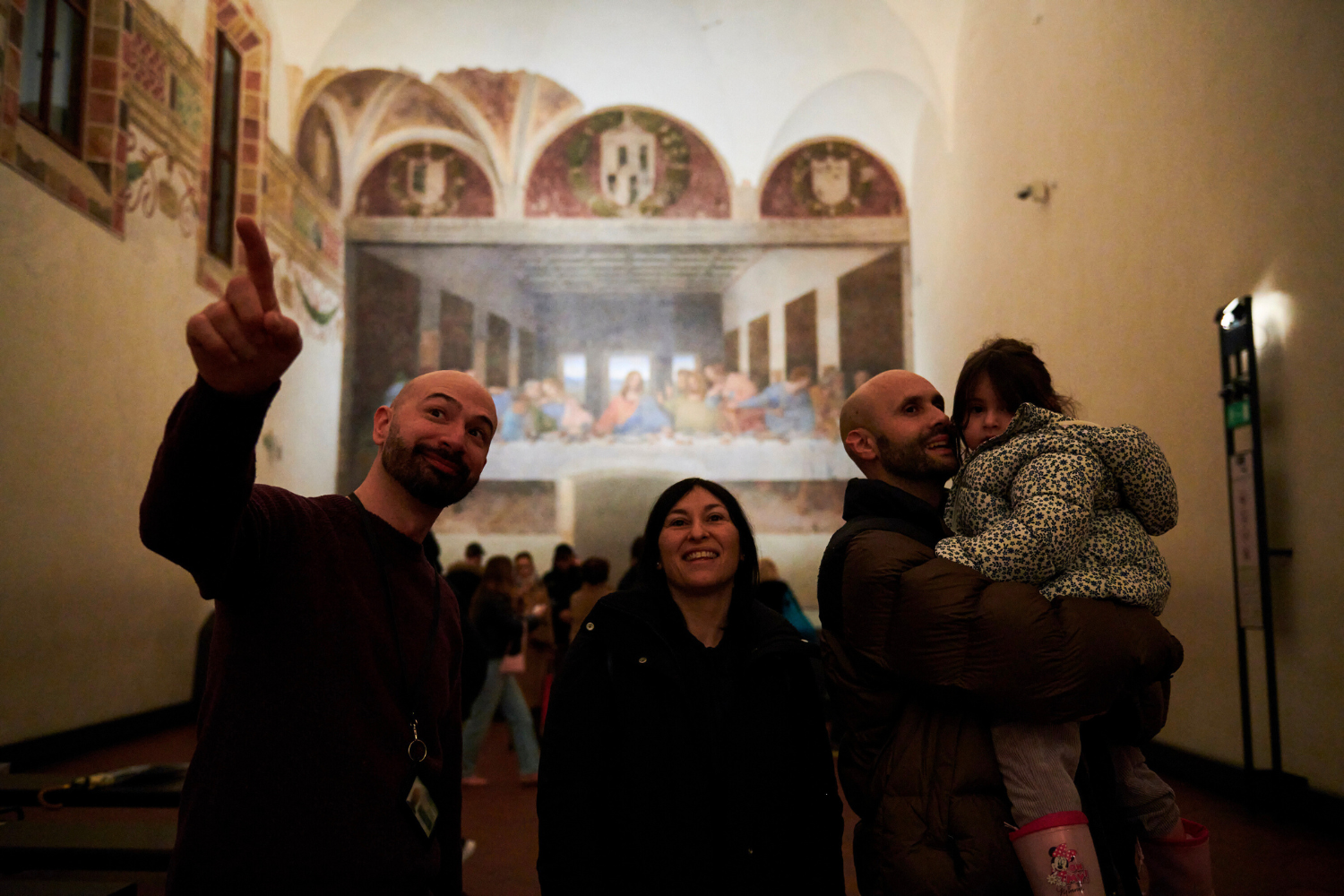
You arrive at Piazza Santa Maria delle Grazie 2 with your voucher ready and your reserved slot fixed to the minute. The early window between 08:15 and 10:00 rewards you — the first groups of the day move through before the tour buses reach Corso Magenta. You pass through the ticket hall, then into a sequence of climate-controlled antechambers where the air is deliberately dried to protect the pigment ahead. Glass doors open in stages. You wait in the first buffer room, then the second, each pause letting the humidity you carried in settle before you reach the mural. When the final door slides back, you step into the refectory and the wall is there at the end, larger and paler than photographs suggest. On a private last supper tour del cenacolo, a guide points you to the vanishing point behind Christ, then to Judas leaning back into shadow. You have your minutes and no more. You track the four clusters of apostles, the overturned salt, the light falling from painted windows that echo the room's real ones. You turn, once, to see the Crucifixion by Montorfano filling the opposite wall — often overlooked, still vivid where Leonardo's has faded. Then the exit doors cue your group forward. You leave through the bookshop, out into the piazza, the brick apse of Bramante rising to your left as you go.

Everything You Need to Know

Your complete experience guide

All the details about your upcoming adventure in one place

Private Last Supper Tour at Santa Maria delle Grazie

A private last supper tour brings you face to face with Leonardo da Vinci's mural inside the refectory of Santa Maria delle Grazie, a UNESCO World Heritage site in the heart of Milan. Your guided visit to the Cenacolo Vinciano pairs skip-the-line refectory access with expert commentary on the tempera masterpiece and the Dominican convent that houses it. Many travelers combine private last supper tour tickets with a wider look at Milan landmarks, since the surrounding district holds some of the city's finest Renaissance architecture.

Leonardo da Vinci painted The Last Supper not in fresco but in experimental tempera on dry plaster, a choice that began flaking within his own lifetime. That single technical gamble is why the mural on the north wall of the refectory at Santa Maria delle Grazie remains one of the most fragile masterworks in Europe, and why a private last supper tour is capped at twenty-eight minutes of viewing per timed group. The wall measures roughly four and a half by nine metres. Leonardo worked on it between 1495 and 1498 for Ludovico Sforza, Duke of Milan, who intended the Dominican convent as a family mausoleum. The refectory itself survived what the painting nearly did not. In August 1943 an Allied bomb destroyed the eastern wall and much of the roof, yet sandbags and scaffolding stacked against Leonardo's wall held it upright under open sky for months. The convent church beside it, with its terracotta drum and apse attributed to Bramante, forms a UNESCO World Heritage site inscribed in 1980. A tour del cenacolo vinciano threads both spaces, from the ribbed brick of the cloister to the controlled climate of the viewing hall. What makes the room extraordinary is Leonardo's perspective. He set the vanishing point behind the head of Christ, so the painted architecture appears to extend the real refectory, as if the apostles dined at the far end of the monks' own hall. The twelve figures break into four groups of three, each caught in the instant after the words "one of you will betray me." Judas, clutching a purse, recoils into shadow rather than sitting apart, a compositional decision that departed sharply from earlier conventions. Seven centuries of humidity, over-painting, and a doorway cut through Christ's feet in 1652 have thinned the original surface. The definitive restoration led by Pinin Brambilla Barcilon, completed in 1999 after twenty-one years, stripped away centuries of retouching to recover what pigment remained. Milan today guards the result behind filtered air and staggered admission, which is why a Milan Last Supper tour must be reserved rather than bought at the door. The surrounding neighbourhood repays attention. Corso Magenta, the streetcar rattling past, and the quiet piazza in front of the church place Leonardo's wall within a working district rather than a museum campus. Visitors weighing a private last supper tour tickets purchase are effectively securing one of the scarcest admissions in Italian art, a fixed number of bodies allowed daily before a surface that grows fainter each decade. The mural is not a reproduction, not a fresco in the strict sense, but a survivor — and every skip-the-line last supper booking is a place in a very short queue before it.

Sandbags and scaffolding held Leonardo's wall upright under open sky after the 1943 bomb took the rest of the room.

Dress code

Santa Maria delle Grazie is an active place of worship, so shoulders and knees should be covered when entering the church and refectory complex. Staff can refuse entry to visitors in tank tops or short shorts, so a light scarf or cover-up is a practical addition on a private last supper tour in warmer months. There is no strict uniform requirement, just modest, respectful attire.

Bags & security

Only small daypacks are allowed inside the refectory; suitcases, large backpacks, and bulky bags must be left at the limited on-site lockers near the ticket office. Every visitor passes through a metal detector and bag check before entering the climate-controlled viewing room. Because storage space is scarce, travelling light speeds up the security process considerably.

Photography

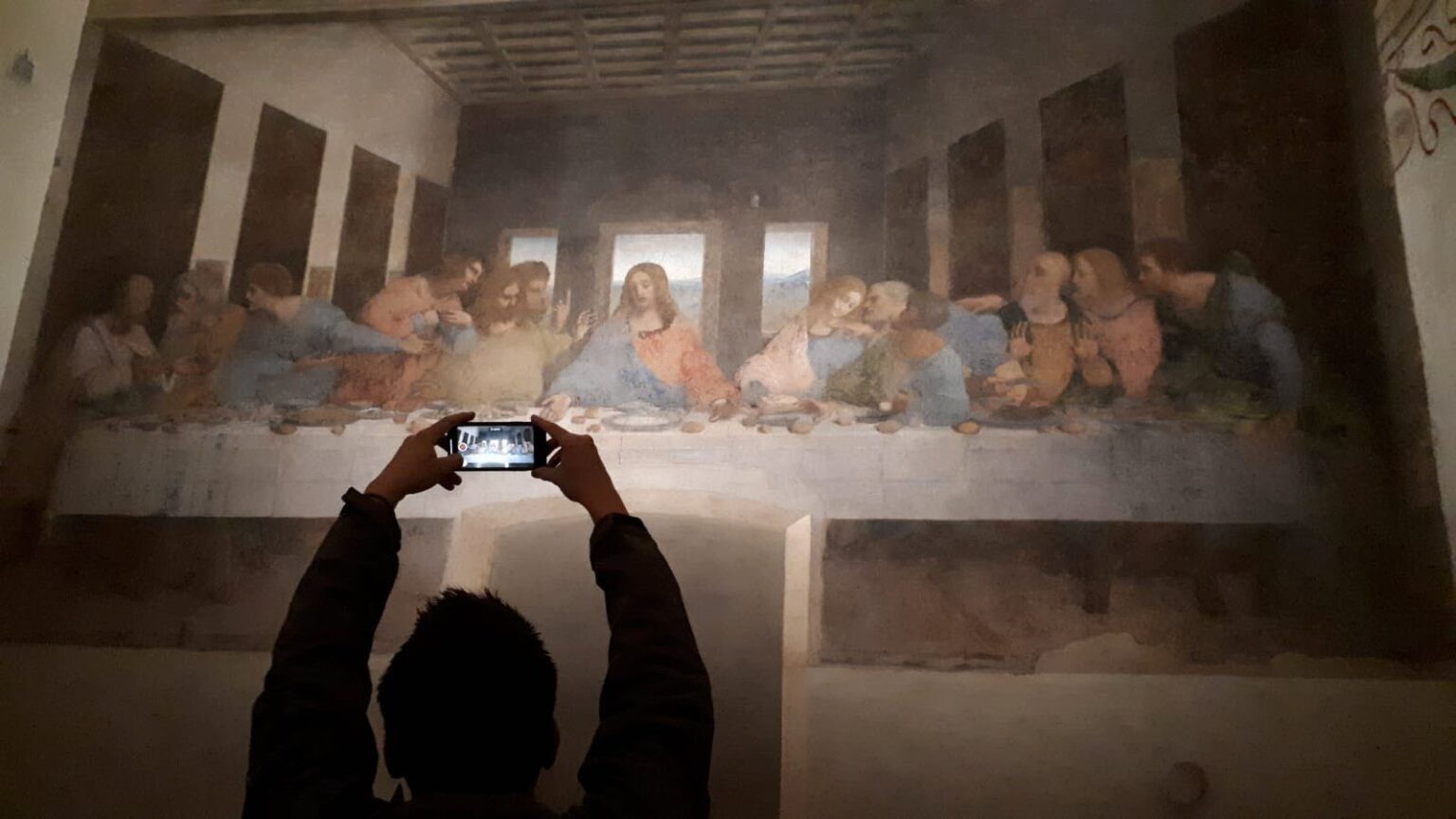
Photography without flash is generally permitted for personal use inside the refectory, though rules can be tightened by staff without notice, and tripods or video recording are not allowed. Flash is strictly banned because it damages the fragile 15th-century mural surface. Photography is freely permitted in the church, side chapels, and Cloister of the Frogs.

Families & strollers

Children of all ages are welcome, though the 15-minute viewing window and hushed atmosphere can be demanding for very young kids. Strollers are permitted inside the refectory alongside water bottles.

Accessibility

The entrance and visitor route are designed for wheelchair users and those with motor disabilities, with a ramp and elevator serving the refectory. A tactile model of the Last Supper is available inside for visitors with sensory impairments. Visitors needing assistance should request it at the ticket desk when collecting their pass.

Food & drink

Food and open beverages are not permitted anywhere inside the refectory viewing room, though sealed water bottles are allowed. Eating or drinking must wait until visitors exit back into the piazza or cloister area. This rule protects the climate-controlled environment that preserves the mural.

Not allowed

× Large backpacks × Suitcases × Food × Open beverages × Flash cameras × Tripods × Selfie sticks × Sharp objects × Umbrellas (wet) × Pets (except service animals) × Loud music or speakers × Vaping devices × Cigarettes

What to bring

✓ Valid photo ID ✓ Printed or digital reservation confirmation ✓ Small daypack only ✓ Light scarf or shawl for shoulders ✓ Sealed water bottle ✓ Comfortable walking shoes

Opening hours

Mon Closed

Weekly closure day

Tue 08:15 – 19:00

Quiet weekday, fewer groups

Wed 08:15 – 19:00

Extra slots sometimes released midday

Thu 08:15 – 19:00
Fri 08:15 – 19:00

Weekend crowds begin building

Sat 08:15 – 19:00

Busiest day of the week

Sun 08:15 – 19:00

First Sunday monthly can be busy

Closures & exceptions

  • ·Every Monday — Weekly closure
  • ·Jan 1 — New Year's Day
  • ·May 1 — Labour Day
  • ·Dec 25 — Christmas Day

At a glance

Hours

Tue–Sun 08:15–19:00, closed Monday;location

Getting there

Public transport · 15-20 min from Duomo · Single ATM ticket around 2.20 EUR

Take Metro M1 (red line) to Conciliazione, a roughly 6-minute walk to the piazza, or M2 (green line) to Cadorna followed by a 10-minute walk. Tram lines 16 and 18 stop directly at Corso Magenta–Santa Maria delle Grazie.

Car · 20-30 min depending on traffic · Area C fee plus hourly parking rate

Driving into the area means entering Milan's paid Area C zone on weekdays, so a congestion charge applies. Paid blue-line parking is available on Via Fratelli Ruffini, with nearby multi-storey Sant'Ambrogio and Carducci car parks.

Walk · 15 min from Duomo · Free

From the Duomo, it's about a 15-minute walk west along Corso Magenta directly to the piazza, passing several Milan landmarks along the route.

Taxi · 10-15 min from city center · Metered fare, typically 10-15 EUR

Taxis can drop passengers directly at Via Ruffini 1, opposite the ticket office, making this the most direct door-to-door option for those short on time.

Cancellation policy

Timed-entry reservations for the Last Supper are non-transferable once booked, and refunds are generally not issued for missed slots or late arrival. The 15 EUR admission including reservation fee is typically forfeited if a visitor fails to arrive within the required arrival window before their assigned entry time.

Plan your time

How long do you need?

Recommended time

45-75 minutes onsite

A private last supper tour is built around a single fixed constant: exactly 15 minutes inside the refectory, no matter how the ticket was booked. Around that core, plan for arrival 20-30 minutes ahead, ticket validation, and a security check, which together push the real onsite time to roughly 45-75 minutes rather than just the viewing itself. Queues are shortest in the 08:15-10:00 opening window, before day-trip groups converge on the refectory later in the morning; arriving right at 08:15 also means calmer security lines and less crowding in the entrance courtyard. Add extra buffer if you plan to linger afterward in the adjoining Santa Maria delle Grazie basilica.

Crowd levels through the day

Opening (08:15-09:00) Light
Mid-morning (09:00-10:00) Light-moderate
Late morning (10:00-12:00) Busy
Early afternoon (12:00-14:00) Fullest
Mid-afternoon (14:00-16:30) Busy
Late slots (16:30-19:00) Moderate
Plan ahead

When to go — year at a glance

Weather · crowds · average price — dots go green to amber to red as each metric rises.

Spring

April to early June brings comfortable temperatures around 18–24°C and moderate crowds ahead of peak summer season. Cherry blossoms in nearby Sforza Castle gardens add a scenic bonus for a private last supper tour scheduled in this window.

Summer

June through August is Milan's busiest and warmest stretch, with temperatures often exceeding 30°C and the longest queues of the year at the ticket office. Early morning slots become essential to avoid midday heat and school-holiday crowds.

Autumn

Late September to mid-October offers mild weather and thinner tourist numbers than summer, making it one of the most comfortable seasons for exploring Milan landmarks on foot. Foliage in nearby parks adds visual appeal without the July crowding.

Winter

December through February sees the fewest visitors and lower ticket competition, though the week between Christmas and New Year draws a temporary spike. Cold mornings around 2–8°C call for warm layers since the refectory itself stays climate-controlled and cool.

Insider tips

Helpful tips for your visit

Book months ahead

Official tickets release in quarterly batches and popular dates for a private last supper tour sell out within hours, so set a calendar reminder for the release day.

Check Wednesday releases

The museum periodically opens additional slots, and checking around midday on Wednesdays can surface last-minute availability others miss.

Bring only a small bag

Lockers near the entrance have limited capacity, so arriving with just a daypack avoids delays during the security check.

Layer for the refectory

The viewing room is climate-controlled and noticeably cooler than the piazza outside, so a light jacket or shawl keeps things comfortable.

Pair with a guide

A licensed guide can make efficient use of the fixed viewing window by pointing out apostle symbolism and the Montorfano fresco on the opposite wall.

Consider group sales for larger parties

Groups of ten or more can arrange bookings by email in advance, which is useful for family reunions or private last supper tour groups organized independently.

Explore the free church afterward

The church nave, side chapels, and Cloister of the Frogs require no separate ticket and can be visited at leisure after the timed slot.

Where to meet

Meeting points

Ticket office

Piazza Santa Maria delle Grazie 2, 20123 Milano

Located beside the main entrance, activate ticket 30 minutes prior

Get directions
The story

The history behind the site

Leonardo da Vinci began the mural in 1495 and finished around 1498. He rejected true fresco. Instead he painted on dry plaster, layering tempera and oil for depth. The gamble failed. By 1517 the surface was already flaking, and observers recorded decay within Leonardo's own lifetime. This fragility defines the private last supper tour experience: visitors see a wounded original, not a stable copy. The refectory of Santa Maria delle Grazie treated the wall carelessly for centuries. In 1652 monks cut a doorway through the lower center, severing the painted feet of Christ. The mutilation remains visible today. Worse came in 1796, when Napoleonic troops occupied the convent and reportedly used the refectory as a stable, hurling objects at the apostles. Nineteenth-century floods brought damp and mold, and a 1901 restoration by Luigi Cavenaghi only slowed the loss. Each intervention layered new confusion over Leonardo da Vinci's fading hand. The gravest threat arrived on the night of 15 August 1943. Allied bombs struck the complex, collapsing the refectory roof and one wall. The Cenacolo Vinciano survived only because caretakers had sandbagged and scaffolded the wall in advance. For months it stood exposed to weather beneath a temporary cover. That survival is the emotional core of any Milan Santa Maria delle Grazie tour, and it explains why every skip-the-line Cenacolo visit is timed and limited to protect the surface. The decisive rescue was scientific. Between 1978 and 1999, Pinin Brambilla Barcilon led a painstaking restoration, removing centuries of overpaint, glue, and grime under microscope. She recovered original pigment long thought lost, though the result divided scholars who felt too little authentic paint remained. Milan reopened the room in 1999 under strict climate control, and demand for private last supper tour tickets has been tightly rationed ever since. Today a booked private last supper tour tour moves through filtered airlocks that hold humidity steady. What endures is a palimpsest of loss and recovery, one of the essential Milan landmarks. UNESCO listed the church and refectory in 1980. Modern private last supper tour tours frame the work not as pristine masterpiece but as survivor, and thoughtful private last supper tours let travelers read the scars alongside the composition. The refectory at Piazza Santa Maria delle Grazie 2 keeps that fragile testimony under guard.

1495–98

Leonardo painted the mural in dry tempera and oil, a technique that began deteriorating almost immediately.

1652

Monks cut a doorway through the wall, destroying the painted feet of Christ.

1796

Napoleonic troops occupied the refectory and reportedly used it to stable horses.

1800s

Repeated flooding and damp spread mold across the already fragile surface.

1901

Luigi Cavenaghi carried out an early consolidation to slow the decay.

1943

Allied bombing on 15 August collapsed the roof, but the sandbagged wall survived.

1978–99

Pinin Brambilla Barcilon's restoration removed overpaint and revealed the surface seen today.

1980

UNESCO inscribed the church and refectory as a World Heritage Site.

Gallery

Moments from the experience

With kids

Visiting with kids

A private last supper tour works well for families, but success hinges on preparing kids for a strict, silent 15-minute viewing rather than a wander-and-chat museum visit. Younger children often struggle more with the wait beforehand than the viewing itself.

Strollers

The refectory and church are wheelchair and stroller accessible via ramps, so you can bring one right up to the entrance. Staff may ask you to park it just outside the viewing room during the timed slot since space inside is tight.

Best ages

Children under 18 enter free but still need a reserved slot, and kids from around 7 or 8 upward generally cope best with 15 minutes of quiet, still viewing. Toddlers and preschoolers can manage if a parent holds them and treats it like a quiet game rather than a lecture.

Facilities

There are no baby-change facilities inside the refectory itself, so handle diaper changes before joining the queue outside. The nearest cafes around Piazza Santa Maria delle Grazie 2 are the practical fallback for changing bags and quick stops.

Pacing

Budget the full 30 minutes before entry for security checks and ID verification, since latecomers are turned away with no refund. Bring a small quiet activity, like a picture book about Da Vinci, to bridge this wait without screens or noise.

Rainy-day plan

If weather turns, the wait can move under the church portico rather than in the open piazza, so check with staff on arrival. A skip-the-line Milan landmarks pairing with the nearby Duomo, a short walk away, gives kids an active break before or after the hushed refectory visit.

Food & drink

Where to eat nearby

Food and drink are not permitted inside the refectory, so plan any meal for before or after your private last supper tour among the cafes and trattorias clustered along Corso Magenta and around the piazza itself. It's a short, walkable stretch — no need to venture far from Santa Maria delle Grazie.

Cafe Le Grazie

€€

Cafe right on the piazza

Sits steps from the entrance and serves from morning until evening, making it the easiest choice for an espresso or light lunch before your slot. It fills up around midday with visitors waiting for entry, so arrive early if you want a table.

L'Uccellina

€€€

Grill restaurant — 5 min walk

On Corso Magenta, known for Florentine-style steaks alongside handmade pasta and risottos. Better suited to a relaxed sit-down lunch or dinner than a quick pre-visit bite, and it can get busy in the evening.

Bar Dosso 18

Cafe/bar — short walk

A modern coffee shop and bookstore combination opening onto the historic Casa degli Atellani courtyard. Good for a fast coffee or pastry between checking your private last supper tour tickets and heading to the entrance.

Ghe Sem

€€

Chinese-Italian bistro — 8 min walk

Dim sum reimagined with Milanese fillings on Via Vincenzo Monti, open for lunch and dinner. A change of pace if you want something other than classic Italian near the landmark.

Pasticceria Marchesi

€€

Historic pastry shop — 10 min walk

A Milan institution on Corso Magenta known for pastries, chocolate, and its bar counter. Popular with tour groups doing Milan landmarks, so mornings can mean a short line at the counter.

Customer Reviews

What travelers say

Real experiences from real travelers

4.5
Based on undefined reviews
1 ★ 520
2 ★ 410
3 ★ 940
4 ★ 2600
5 ★ 12400
M
Marta R.
Spain · 2026-06-14

Worth the small group

Our private last supper tour meant just six of us in the refectory, and having a guide explain the vanishing point and the flaking pigment up close changed how I saw the whole thing. The room was cooler than the summer street outside, almost hushed. Booking the Milan Last Supper tour weeks ahead was the only way we got a slot.

D
David H.
United States · 2026-05-29

Fifteen minutes that lasted

The timed entry gives you a short window with Leonardo's mural, so a knowledgeable guide made every minute count. Standing before the Cenacolo Vinciano in that dim refectory, you notice how much has faded and how much survives. Our visit to Santa Maria delle Grazie also included the Bramante apse, which I had not expected.

Y
Yuki T.
Japan · 2026-07-08

Beautiful but brief

The mural itself is quieter and more washed-out than photos suggest, which the guide had warned us about. I appreciated the skip-the-line Last Supper access because the standard queue looked long even at opening. Go early on a July morning before the heat builds in the piazza.

L
Lucas F.
Brazil · 2026-03-17

A guide makes the difference

Without context the fresco would have passed in a blur, but our guide walked us through the restoration debates and the perspective tricks. The private last supper tour let us ask questions the larger groups could not. The church next door with its light-filled dome was a lovely surprise.

S
Sophie L.
France · 2026-04-22

Small numbers, big payoff

Twenty-five people are allowed in per slot, so a private setup felt calm rather than rushed. I loved seeing Leonardo's composition in the actual refectory where the monks once ate. One of the more rewarding Milan landmarks we saw on the whole trip.

A
Anna K.
Germany · 2026-02-11

Booked months out

We nearly missed it entirely and only got in because our operator held private last supper tour tickets. The winter light through the church windows was soft and grey, and the refectory felt almost private with our tiny group. Bring patience for the entry procedure, it is strict.

M
Michael O.
United Kingdom · 2025-11-30

Impressive despite the fading

The Last Supper is smaller in impact than its fame, but the guide's storytelling about Leonardo and the Sforza court held it together. Late November meant thin crowds outside Santa Maria delle Grazie and a quiet cloister to wander afterward. The private last supper tour tour also covered the surrounding Dominican complex nicely.

E
Elena V.
Italy · 2026-06-30

Local and still amazed

Even as a Milanese I had never booked a proper guided slot until this summer. Seeing the mural explained brushstroke by brushstroke in the cool refectory, away from the June heat, was moving. These private last supper tour tours book out fast, so plan ahead.

P
Priya M.
India · 2026-01-19

Quiet January visit

The refectory was calm on a cold morning and our small group had space to actually look. Our guide connected the fresco to the wider Milan landmarks we had seen, which tied the trip together. Do not expect vivid color, expect faded genius.

C
Carlos G.
Mexico · 2025-09-08

Short slot, strong guide

Fifteen minutes flies by, so having someone point out Judas and the spilled salt matters. The September sun outside the UNESCO-listed church was intense, so the shaded interior felt welcome. I would recommend the private last supper tour for anyone who wants context over a rushed glance.

FAQ

Frequently asked questions

Everything you need to know for your journey

Around the corner

Nearby landmarks worth a detour

Sforza Castle

10 min walk

landmark

A 15th-century fortress built by the Sforza family, now housing several city museums and sculpture collections including Michelangelo's unfinished Rondanini Pietà. Its courtyards and towers are freely accessible.

Museo Nazionale della Scienza e della Tecnologia

5 min walk

museum

Italy's largest science and technology museum, home to a substantial collection of Leonardo da Vinci's design models and a decommissioned submarine.

Basilica di Sant'Ambrogio

10 min walk

church

An early Christian basilica founded in the 4th century, one of the oldest churches in Milan with a distinctive Romanesque atrium and bell towers.

San Maurizio al Monastero Maggiore

8 min walk

church

Known as the Sistine Chapel of Milan for its extensive fresco cycles covering nearly every interior wall, once the church of a cloistered convent.

Parco Sempione

12 min walk

park

A large landscaped park behind Sforza Castle featuring the Arco della Pace triumphal arch and the Torre Branca observation tower.

Where to stay

Where to stay nearby

Corso Magenta district

2-5 min walk

district

A quiet, upscale residential area lined with 19th-century palazzi, close to the piazza and well connected by tram and metro.

Magna Pars Hotel

10 min walk

luxury

A design hotel set inside a former perfume factory, blending industrial architecture with contemporary Italian styling.

Antica Locanda Leonardo

3 min walk

boutique

A small family-run guesthouse in a 19th-century building steps from the Last Supper, popular for its garden courtyard.

Mercure Milano Centro

15 min walk

mid-range

A centrally located chain hotel offering straightforward comfort within walking distance of both the Duomo and the refectory.

Ready for Adventure?

Join thousands of happy travelers who have discovered this incredible experience

Book Your Experience Now