English| EUR
Suggested for you
More currencies
Book Now
Open today · 08:15 – 19:00

Duomo And Last Supper Combo

Duomo And Last Supper Combo — Reserved Entry & Guided Tours

Two Milanese masterworks in one morning, cathedral to cenacle.

88K+ travelers chose this
Free Cancellation
Right now: Moderate — summer holiday season Book your Duomo and Last Supper combo slot in advance; same-day tickets rarely exist in July
3-4 hours recommended
1 Languages
Max 18 guests
Free Cancellation
Skip-the-line Instant confirmation Mobile voucher Free cancellation Verified partner
Choose your ticket

Ticket options at a glance

Compare fares, pick the fit — all bookings are mobile-voucher and eligible for free cancellation where shown.

Milan: Duomo and The Last Supper Express Guided Tour 3 hr
Guided Experience

Milan: Duomo and The Last Supper Express Guided Tour

4.7 (1324)
€126
  • Expert local guide
  • Small group
  • Skip-the-line access
  • Free cancellation
Book this ticket
Milan: Semi-Private Last Supper and Duomo Cathedral Tour 2 hr 30 min
Luxury / Private

Milan: Semi-Private Last Supper and Duomo Cathedral Tour

4.8 (192)
€165
  • Private experience
  • Personal attention
  • Premium amenities
Book this ticket

Is it worth it?

Worth it for most first-time visitors

The duomo and last supper combo pairs two Milan landmarks into one efficient day, and the value math holds. Leonardo's mural costs 15 EUR per person, reservation mandatory, and you get roughly 15 minutes inside the refectory at Santa Maria delle Grazie. That short window puts people off, but you're standing before the only surviving Cenacolo Vinciano, a UNESCO heritage work that shaped Renaissance painting. Skip-the-line Last Supper access is genuinely scarce; slots sell out weeks ahead, so bundling it with the Duomo saves you a second booking scramble and a cross-city trip. Duomo and last supper combo tickets pay off for first-timers wanting both without logistical friction. If you've seen the mural before, or you resent paying for a quarter-hour, book them separately instead. For culture-driven visitors, the combined Milan landmarks itinerary earns its planning effort.

What makes it worth it

  • One booking covers two headline Milan sights
  • Skip-the-line access to a scarce, sold-out mural
  • Efficient cross-city itinerary saves a return trip
  • Standing before the only surviving Cenacolo Vinciano
  • UNESCO heritage work at genuine 15 EUR value

Keep in mind

  • Only about 15 minutes inside the refectory
  • Reservation mandatory, slots vanish weeks ahead
  • Combo adds cost over a single-site visit
  • Less rewarding if you've seen the mural before

Bottom line: For first-time visitors, the duomo and last supper combo tour justifies its price and planning; repeat visitors should book each site alone.

Featured Experiences

Popular tours & activities

Hand-picked experiences loved by thousands of travelers

Recommended Experience

Powered by GetYourGuide

Another traveler favorite

Powered by GetYourGuide
Milan Highlights & The Last Supper Guided Walking Tour 3 hours Free Cancellation

Milan Highlights & The Last Supper Guided Walking Tour

Discover Milan's iconic landmarks and Leonardo da Vinci's masterpiece on a guided three-hour walking tour.

4.7 (5190)
FromFrom €149
See details
Milan Highlights: Walking Tour & Last Supper Entry 3 hours Free Cancellation

Milan Highlights: Walking Tour & Last Supper Entry

Explore Milan's Renaissance heritage with a guided walk and guaranteed skip-the-line access to Da Vinci's masterpiece.

4.7 (6395)
FromFrom €99
See details
Milan: The Last Supper & City Walking Tour 3 hours Free Cancellation

Milan: The Last Supper & City Walking Tour

Explore Milan's iconic landmarks and secure priority entry to Da Vinci's The Last Supper with a local expert guide.

4.8 (731)
FromFrom €79
See details
Your journey

Step-by-step — what your day looks like

1

Ticket activation

Show ID at the Cenacolo Vinciano office 30 minutes before your slot to activate the ticket

What you'll see

Highlights not to miss

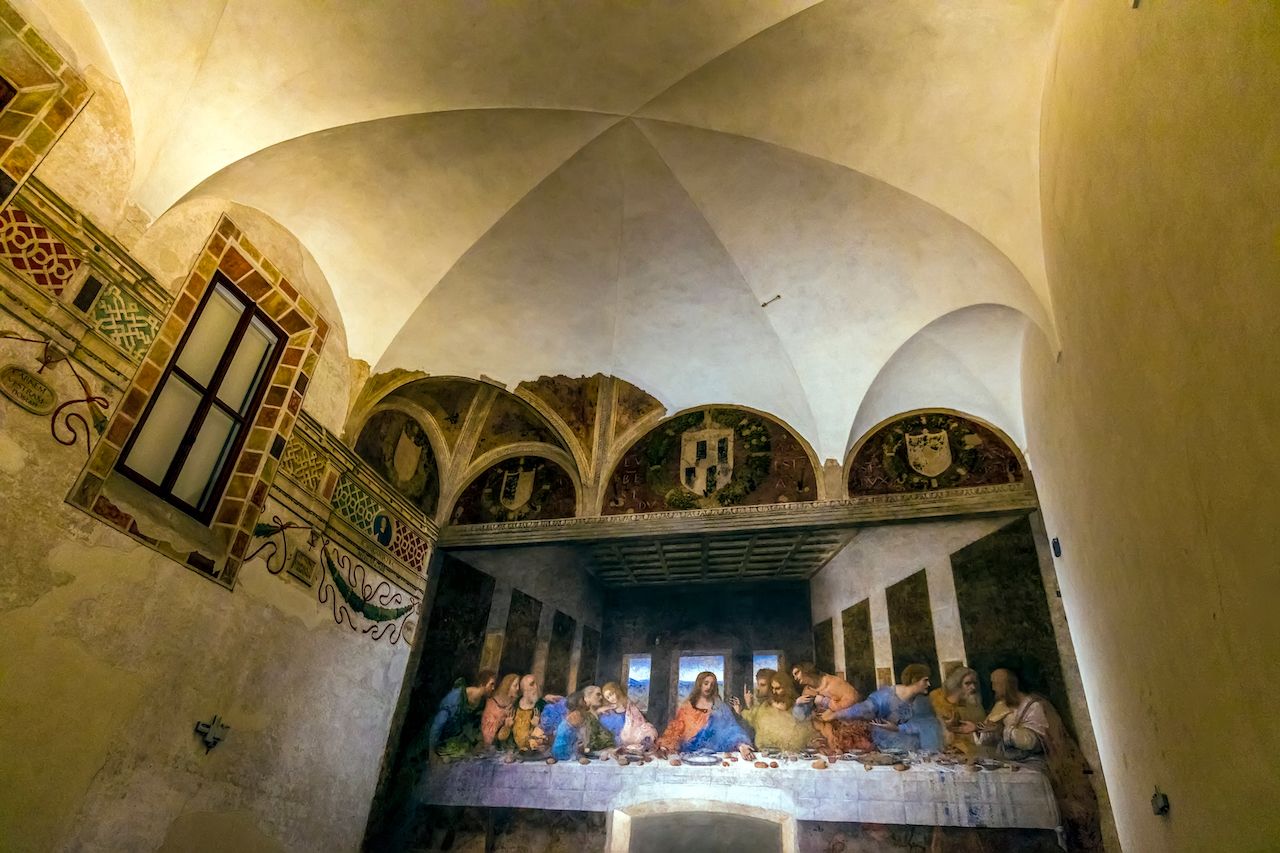
The Last Supper

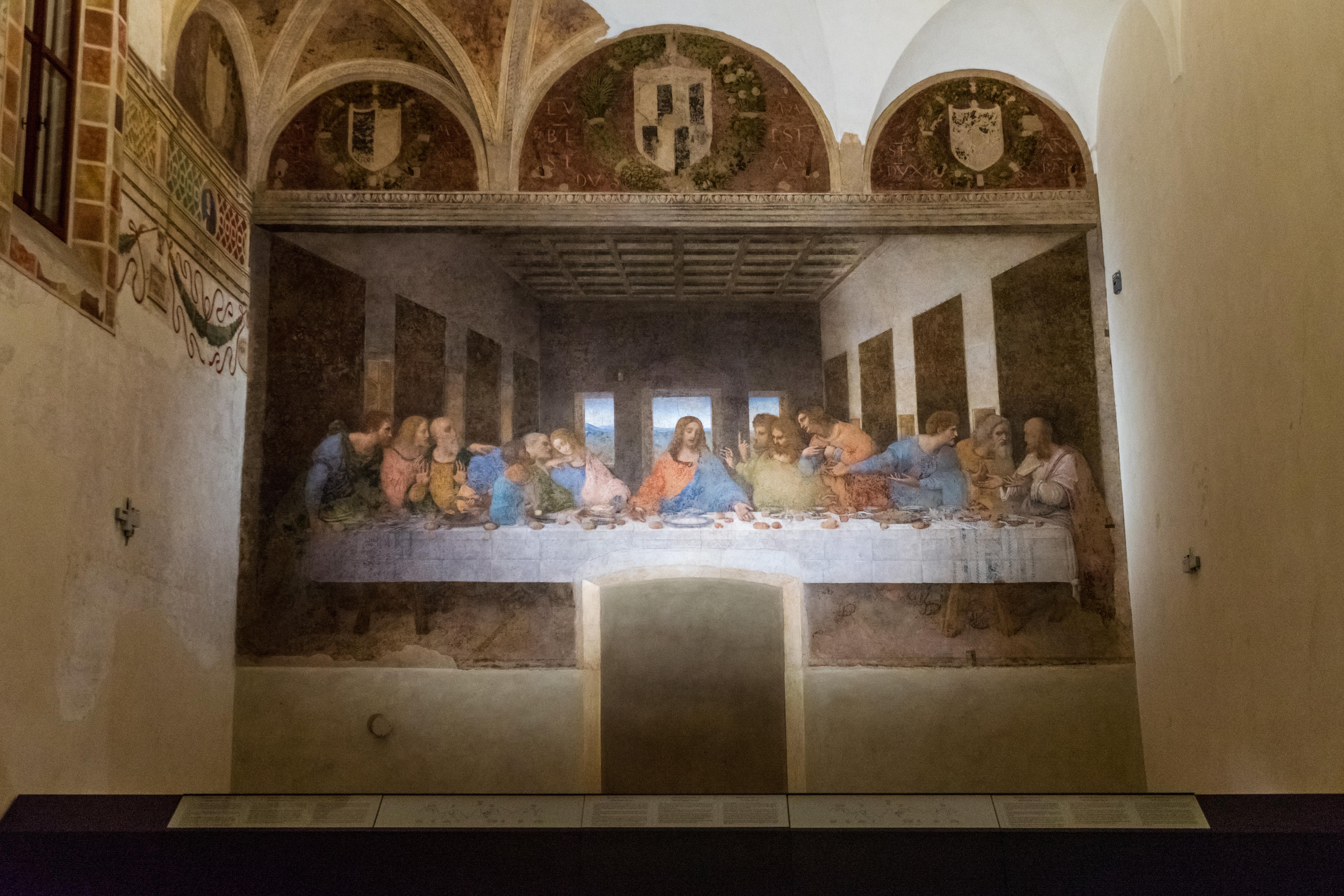
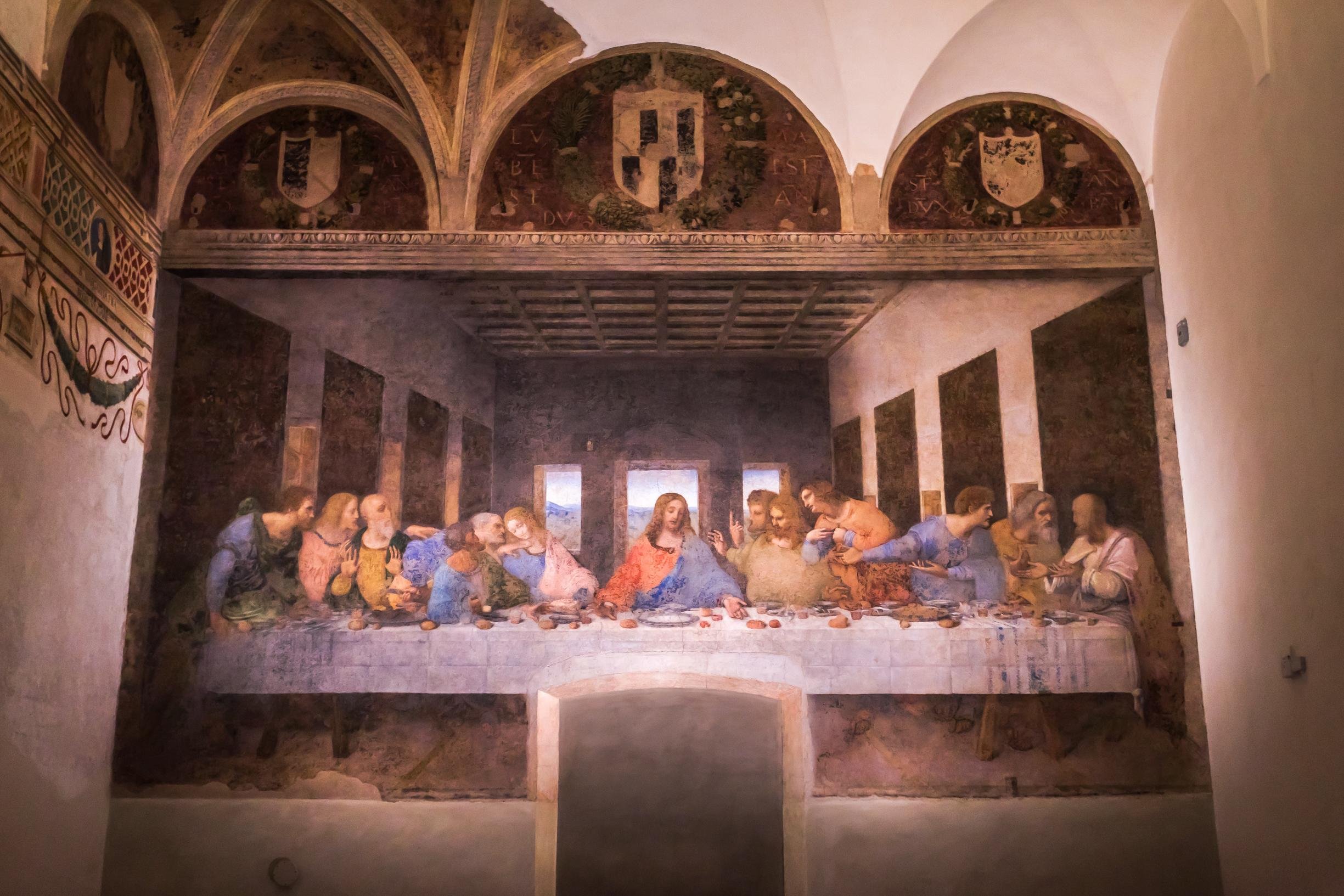
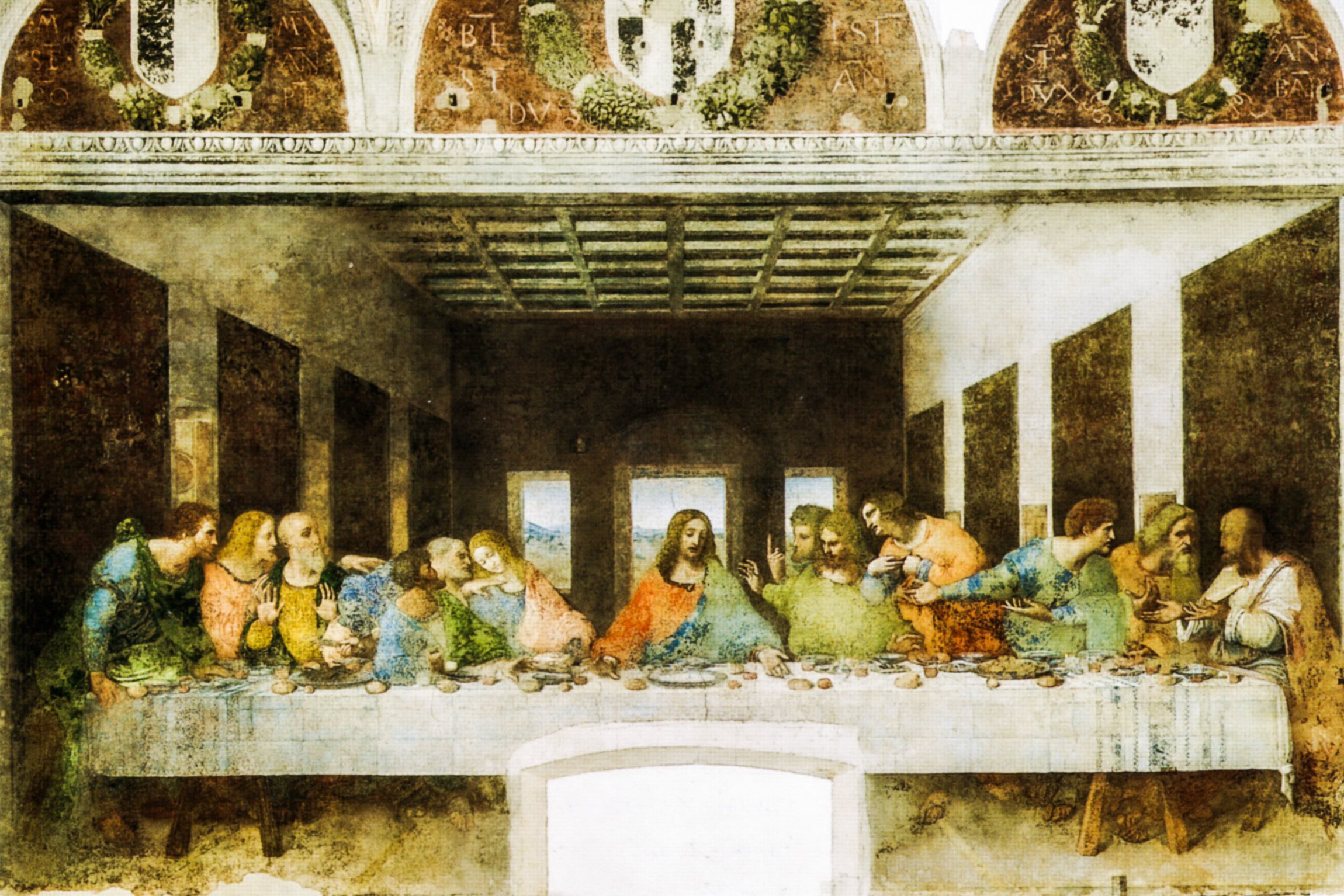
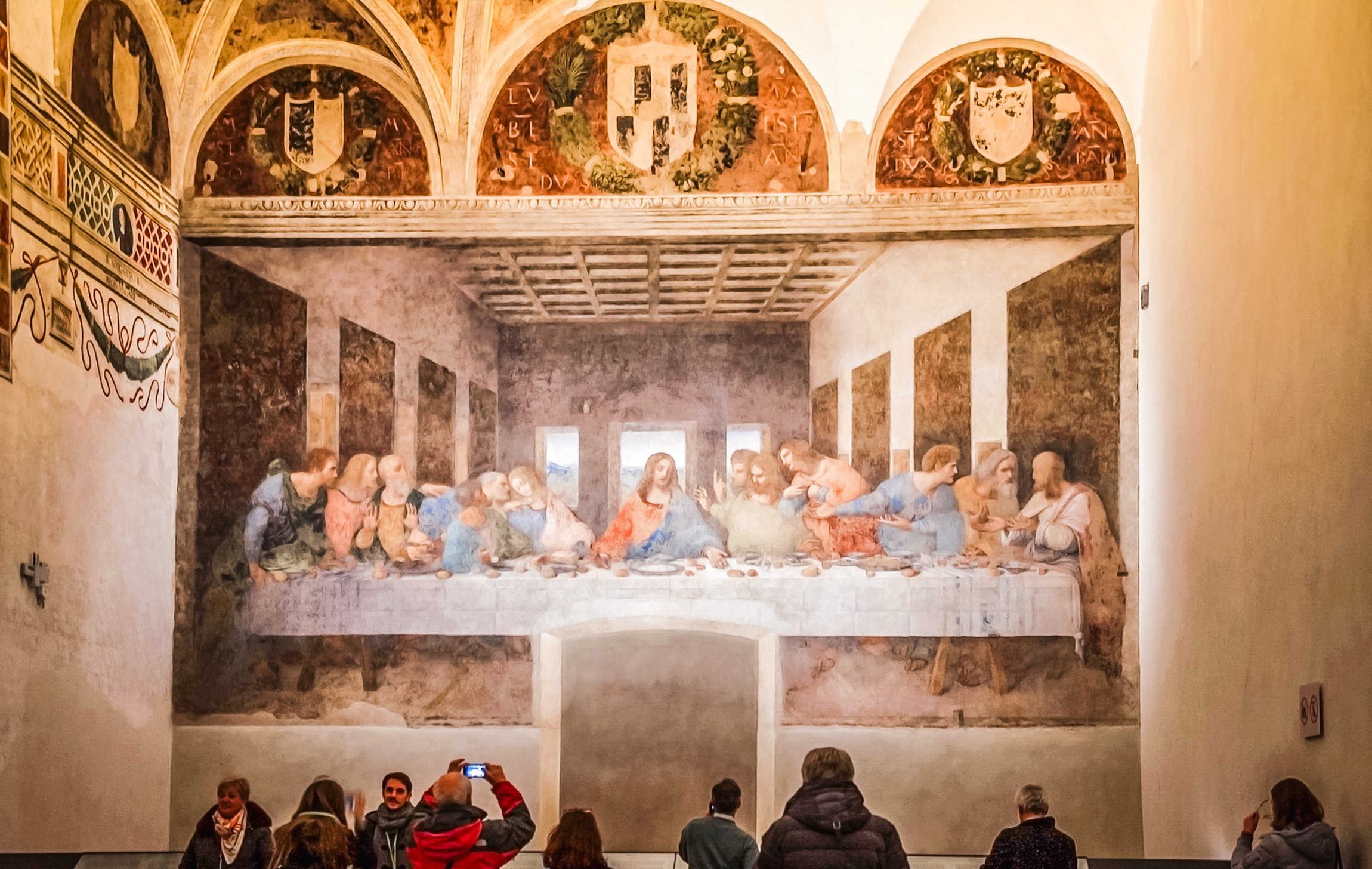
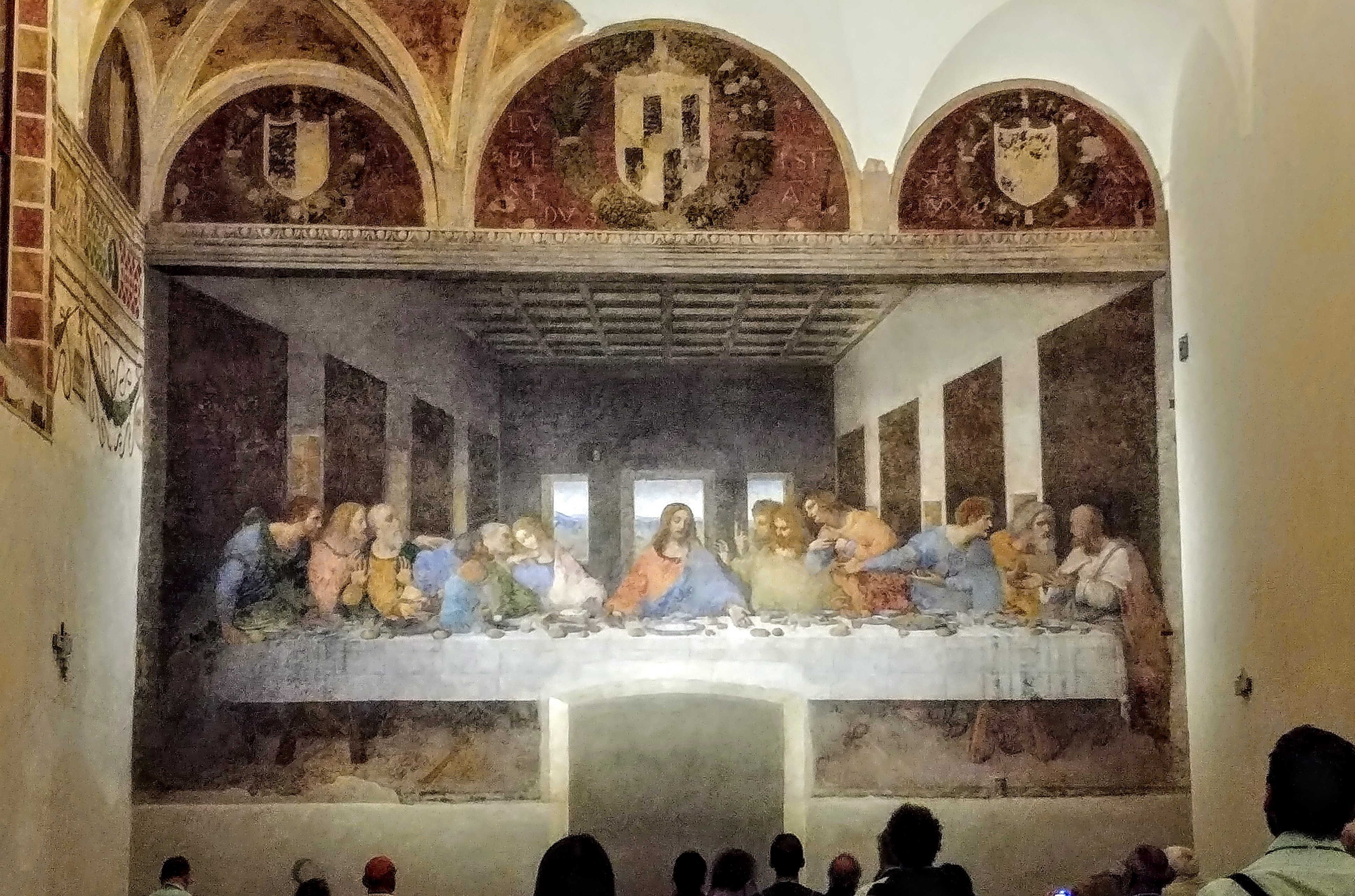
Leonardo da Vinci painted this mural on the refectory's north wall between roughly 1495 and 1498, using tempera rather than true fresco, a choice that has made conservation a centuries-long challenge. Groups of up to 40 visitors are admitted every 15 minutes to limit humidity and light exposure on the surface.

Crucifixion by Montorfano

Facing The Last Supper from the opposite wall is Giovanni Donato da Montorfano's 1495 fresco of the Crucifixion, painted in the same year using the traditional fresco technique rather than Leonardo's experimental tempera. It survives in notably better physical condition than its famous neighbor and is often ignored by visitors who never turn around.

Bramante's Tribune and Dome

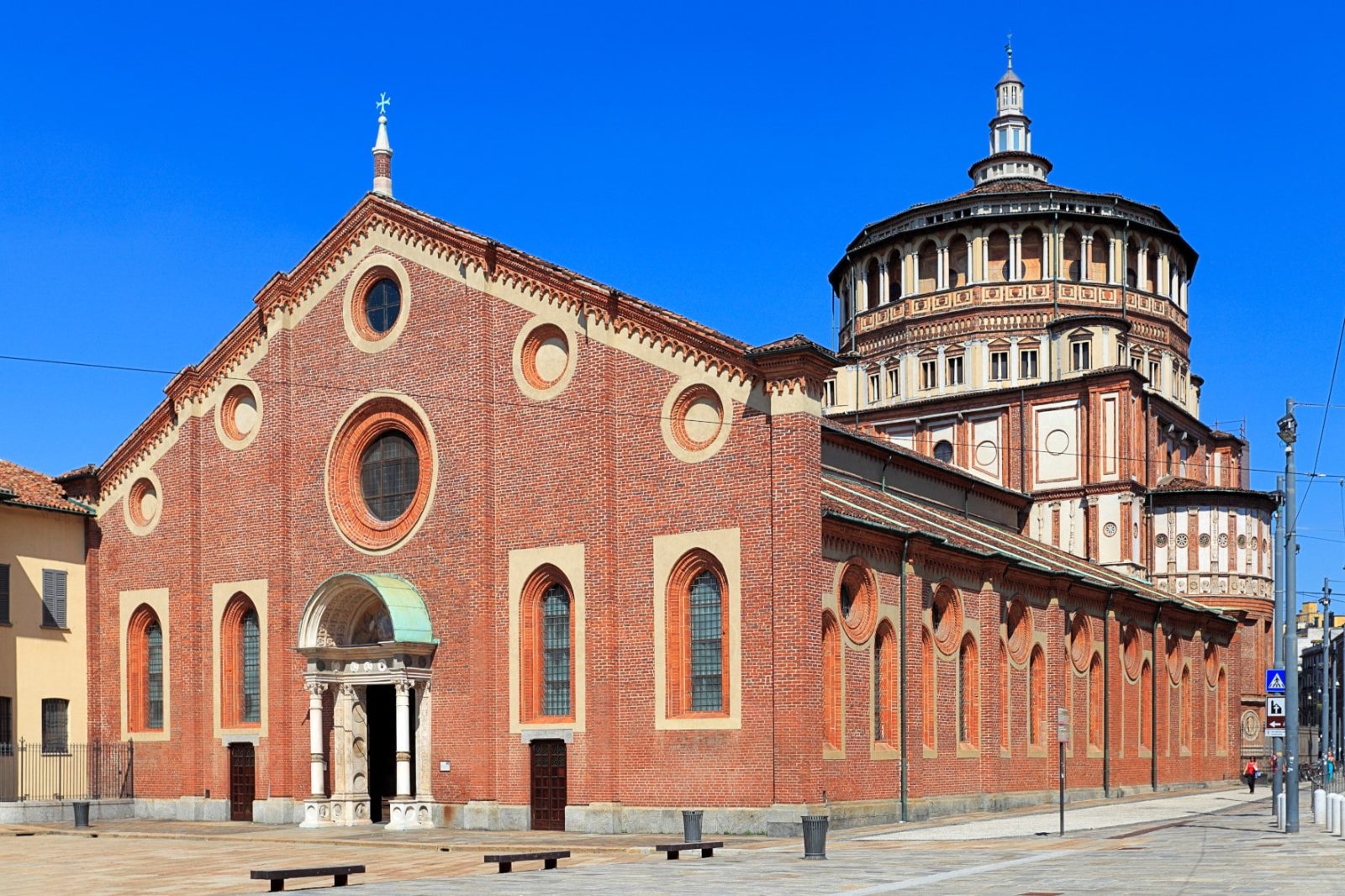
Architect Donato Bramante added the apse, choir, and octagonal dome starting around 1492, commissioned by Ludovico Sforza to transform the church into a Sforza family mausoleum. The dome's tiburio design marks an abrupt shift from the building's Gothic nave into full Renaissance geometry.

Cloister of the Frogs

This small quadrangular cloister, known in Italian as the Chiostro delle Rane, takes its name from bronze frog sculptures decorating its central fountain. Bramante designed it to connect the tribune to the sacristy, and it remains one of the quietest corners of the entire complex.

Gothic Nave

Completed around 1463 under earlier builders before Bramante's Renaissance additions, the nave and side aisles retain pointed Gothic arches and fresco-decorated chapels along the walls. The contrast between this Gothic body and Bramante's Renaissance apse is one of the church's most studied architectural features.

Old Sacristy

Reached through the Cloister of the Frogs, this sacristy contains carved wooden cupboard doors depicting biblical scenes and wall frescoes dating to the early 16th century, some possibly linked to Leonardo's workshop. It is typically open only on weekend afternoons, making it one of the complex's lesser-seen spaces.

The experience

What the visit is really like

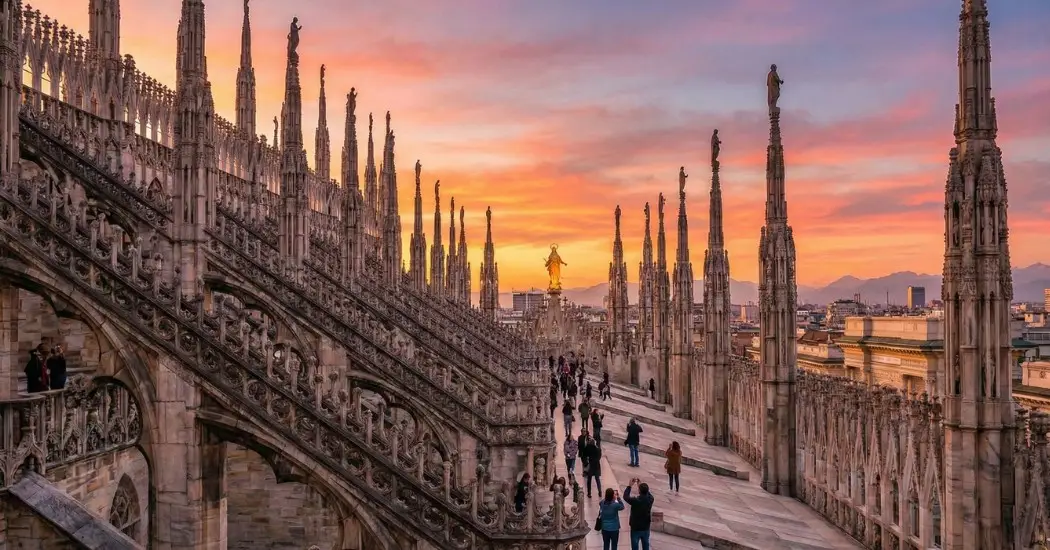
You arrive at Piazza Santa Maria delle Grazie 2 before your printed slot, because latecomers forfeit entry outright. A staff member checks your name against the timed reservation, then waves your group of no more than a couple dozen into the first of two glass antechambers. The doors seal behind you. Air hisses through the climate filters, dust and humidity stripped away, and you wait perhaps ninety seconds while the second door releases. Then you step into the refectory, and the wall is suddenly there — vast, pale, thirteen figures across a painted table. You have exactly fifteen minutes. You drift left toward the vanishing point behind Christ, tracing how the ceiling beams pull every line inward. You notice Judas clutching a purse, leaning back into shadow. On the opposite wall, Montorfano's Crucifixion glows in colours Leonardo's mural lost centuries ago. A soft chime signals the end. You exit through the far antechamber, blinking, and walk fifteen minutes east or catch a tram toward Piazza del Duomo. There the duomo and last supper combo completes itself: you ride the lift up, thread between marble pinnacles, and stand at the Madonnina's feet with the whole city spread below. Two masterpieces, one reservation, before noon.

Everything You Need to Know

Your complete experience guide

All the details about your upcoming adventure in one place

Your Duomo and Last Supper Combo in Milan

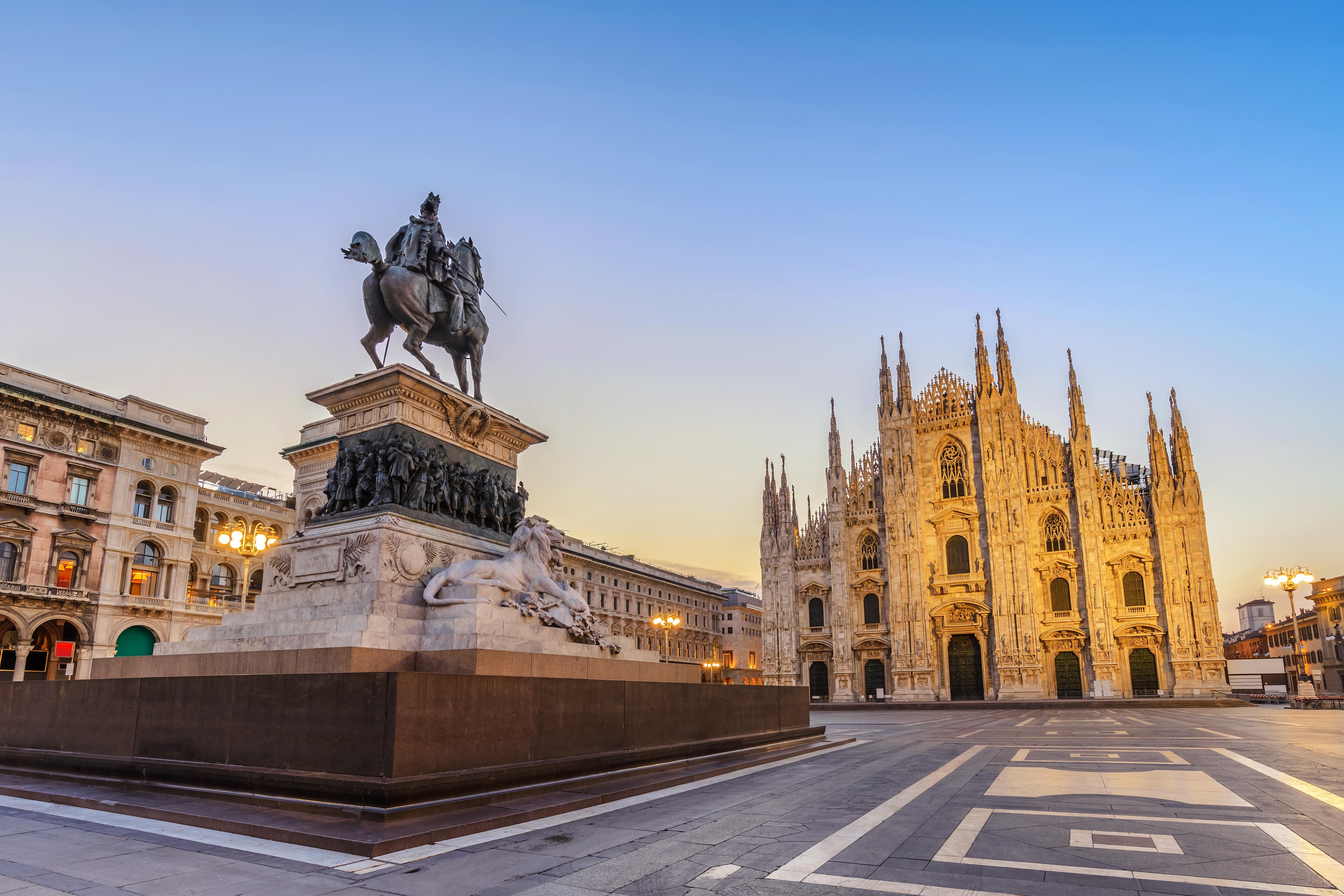
The duomo and last supper combo pairs two of the city's defining sites: Leonardo da Vinci's refectory mural inside Santa Maria delle Grazie, a UNESCO World Heritage site, and the marble-spired Milan Cathedral with its rooftop terraces. Guided duomo and last supper combo tours connect both landmarks with an art historian who explains the fresco's tempera technique, its restoration, and the Gothic architecture of the Piazza del Duomo. A skip-the-line Last Supper entry secures your timed viewing slot, since access to the mural is tightly limited each day.

Leonardo da Vinci painted The Last Supper directly onto a dry plaster wall, abandoning the durable fresco technique — and the mural began flaking within his own lifetime. That gamble, made between 1495 and 1498 in the refectory of Santa Maria delle Grazie, is why the work at Piazza Santa Maria delle Grazie 2 is guarded so fiercely today, admitting small groups on mandatory reservations rather than open crowds. The Dominican convent that houses the mural was rebuilt under Ludovico il Moro, the Sforza duke who commissioned Leonardo, and the church itself carries a Bramante-designed apse and cloister. A duomo and last supper combo threads these two poles of Milanese art together: the Gothic spires of the cathedral on Piazza del Duomo and the fragile Cenacolo Vinciano a short tram ride west. Visitors drawn to Milan landmarks find the pairing logical, since both sites anchor the city's Renaissance and medieval identity in a single itinerary. The refectory survived an Allied bomb in August 1943 that destroyed much of the surrounding cloister; sandbags and scaffolding had shielded the painted wall, and it emerged largely intact from the rubble. That near-loss shaped the conservation regime that governs entry now, with climate-controlled antechambers, timed fifteen-minute viewings, and strict group caps. The mural depicts the moment Christ announces his betrayal, each apostle rendered in a distinct gesture of shock, denial, or grief — a study in psychology as much as perspective, its vanishing point set behind Christ's temple. The cathedral offers the counterweight. Begun in 1386 and topped by the golden Madonnina in 1774, the Duomo di Milano is built from pink-veined Candoglia marble and bristles with some 3,400 statues across its terraces. Skip-the-line last supper access, when bundled with cathedral rooftop entry, lets a single morning span nearly four centuries of construction and one of the most-copied images in Western art. A duomo e cenacolo combo is not a modern marketing invention so much as an acknowledgement of how the two monuments have long defined Milan for travellers. UNESCO inscribed Santa Maria delle Grazie and its mural on the World Heritage list in 1980, formalising a status pilgrims and painters had granted it for centuries. The refectory's north wall holds Leonardo's work; the south wall carries Giovanni Donato da Montorfano's Crucifixion of 1495, often overlooked yet vivid beside its faded neighbour. Milan cathedral and last supper tour routes trace this contrast deliberately — one image preserved by pigment, one preserved by miracle and vigilance.

Leonardo painted onto dry plaster rather than wet, and the mural began flaking within his own lifetime.

Dress code

Santa Maria delle Grazie is an active place of worship, so shoulders and knees should be covered when entering the church itself; the refectory museum housing The Last Supper has no separate dress code, but modest dress is sensible for the whole visit since the church and refectory share one entrance sequence.

Bags & security

Visitors pass through an airport-style security check and climate-controlled airlocks before the 15-minute viewing slot; backpacks and large bags must be stored in the on-site lockers near the ticket office, and only small personal items may be carried into the refectory.

Photography

Photography, filming, and flash are all prohibited inside the refectory to protect Leonardo da Vinci's fragile tempera mural, and staff actively enforce this during each 15-minute slot; photos are permitted freely in the church nave, side chapels, and the Cloister of the Frogs.

Families & strollers

Children of any age may join the Last Supper viewing, but the room is silent, dim, and strictly timed to 15 minutes, which suits older children better than toddlers or infants who may need to be carried; strollers are not permitted inside the refectory and must be left with a companion or at the entrance.

Accessibility

The Cenacolo Vinciano entrance and viewing room are wheelchair accessible via a ramped route bypassing the security queue on request; visitors with mobility needs should mention this when booking so staff can coordinate the correct entry timing for their slot.

Food & drink

No food or drink of any kind, including bottled water, may be brought into the refectory or the security waiting area; anything consumable must be finished or discarded before the ticket-activation stage, since lockers are for bags, not for a quick snack break inside the queue zone.

Not allowed

× Large backpacks × Suitcases and rolling luggage × Food and drink × Flash photography equipment × Tripods × Selfie sticks × Umbrellas (open) × Sharp objects × Aerosols × Strollers inside the refectory × Loud audio devices × Flammable items

What to bring

✓ Printed or digital ticket ✓ Photo ID matching the ticket name ✓ Light layer for the climate-controlled airlock ✓ Small bag only ✓ Comfortable shoes for walking to the Duomo ✓ Water bottle to finish before security

Opening hours

Mon Closed

Weekly closure day

Closures & exceptions

  • ·Every Monday — Weekly closure

At a glance

Hours

Tue–Sun 08:15–19:00, closed Monday

Getting there

Public transport · 15-20 minutes from central Milan · Single ticket about 2.20 EUR

Take Metro Line 1 (red) to Conciliazione, a 5-minute walk, or Line 2 (green) to Cadorna FN, an 8-minute walk; trams 16 and 19 also stop near the church.

Cancellation policy

Cenacolo Vinciano tickets for the Last Supper viewing are non-refundable and cannot be rescheduled once purchased, so double-check your date and slot before paying the 15 EUR full-price adult fee. Third-party operators selling a duomo and last supper combo tour sometimes offer free cancellation up to 24 hours ahead — check the specific provider's terms at checkout rather than assuming the museum's no-refund rule applies.

Plan your time

How long do you need?

Recommended time

2-3 hours

The Last Supper viewing itself is fixed at 15 minutes inside the refectory, but once you factor in security checks and the waiting room, the museum portion runs closer to 30-45 minutes. Add travel to and from the Duomo, plus time inside the cathedral, and a duomo and last supper combo day realistically needs 2-3 hours total, more if you linger in Piazza del Duomo or explore the Cloister of the Frogs. Booking the 08:15-10:00 window keeps queues shortest, since crowds build steadily once tour groups arrive mid-morning. Subtract time if you skip the church interior; add it if you're pairing this with a broader skip-the-line Duomo tour of Milan landmarks.

Crowd levels through the day

Opening (08:15-09:00) Light
Mid-morning (09:00-10:00) Light-moderate
Late morning (10:00-12:30) Busy
Lunchtime (12:30-14:30) Fullest
Afternoon (14:30-16:30) Busy
Late afternoon (16:30-19:00) Moderate
Plan ahead

When to go — year at a glance

Weather · crowds · average price — dots go green to amber to red as each metric rises.

Spring

March to May brings mild 12-18°C weather and moderate crowds at both sites, well before the peak summer rush. Easter week is a notable exception with heavier demand for a duomo and last supper combo.

Insider tips

Helpful tips for your visit

Book weeks ahead

Cenacolo Vinciano tickets release on a quarterly schedule and sell out fast, so reserve your duomo and last supper combo slot as soon as your travel dates are fixed.

Where to meet

Meeting points

Cenacolo Vinciano ticket office

Piazza Santa Maria delle Grazie 2, 20123 Milano

Located beside the church entrance; arrive 30 minutes before your slot

Get directions
The story

The history behind the site

The story of the duomo and last supper combo site begins in 1463, when the Dominican order laid the foundations of Santa Maria delle Grazie. Guiniforte Solari directed the early Gothic church. Its brickwork and pointed forms belonged to a fading medieval Milan. The friars completed the nave in 1482. Their ambitions, however, soon met a greater patron. Ludovico Sforza, duke of Milan, claimed the church as a dynastic monument. From 1492 he reshaped it toward Renaissance ideals. Donato Bramante is credited with the vast tribune, the drum-crowned apse, and the ribbed cloister that still frame the complex. The duke intended the choir as a Sforza mausoleum. Political collapse in 1499 halted those funerary plans. What survives is a hybrid: Solari's Lombard Gothic nave joined to Bramante's luminous eastern geometry, a pairing that gives Milan landmarks their layered character. On the north refectory wall, Leonardo da Vinci painted the Last Supper between 1495 and 1498, again for Ludovico. He rejected true fresco. Instead he worked in tempera and oil on dry plaster, seeking subtler modelling of the apostles' gestures. The method failed almost at once. Flaking was recorded by 1517, and by the 1550s Vasari called the mural a ruin. Restorers, damp, and a doorway cut through Christ's feet in 1652 compounded the loss. Anyone weighing the cenacolo vinciano booking should know they view a fragile survivor. The refectory itself became a casualty of the twentieth century. On the night of 15 August 1943, Allied bombs struck the convent and collapsed the vault. The mural endured only because sandbags and scaffolding had been stacked against its wall. For months it stood open to the Milanese sky beneath a protective canopy. Postwar consolidation followed, then Pinin Brambilla Barcilon's exacting campaign from 1978 to 1999, which stripped centuries of overpaint. That work, together with UNESCO World Heritage listing in 1980, shaped the guarded viewing that duomo and last supper combo tours navigate today. What remains is authentic yet ghostly. Visitors on a Milan Last Supper tour see Leonardo's fading hand alongside Bramante's stone. The refectory guards both. Booking duomo and last supper combo tickets grants entry to a room that survived neglect and war, and the duomo and last supper combo tour rewards those who understand its scars.

1463

The Dominican order begins Santa Maria delle Grazie under architect Guiniforte Solari.

1492

Ludovico Sforza commissions Bramante to remodel the church as a Renaissance monument.

1495-98

Leonardo da Vinci paints the Last Supper on the refectory's north wall in tempera and oil.

1517

Flaking of the mural's fragile plaster surface is first recorded.

1652

A doorway is cut through the wall, destroying the lower section with Christ's feet.

1943

Allied bombing on 15 August collapses the refectory vault; sandbags spare the mural.

1980

The complex is inscribed on the UNESCO World Heritage list.

1978-99

Pinin Brambilla Barcilon leads the definitive restoration, removing centuries of overpaint.

Gallery

Moments from the experience

Food & drink

Where to eat nearby

There is no on-site restaurant at Santa Maria delle Grazie, so most visitors on a duomo and last supper combo route eat either right by the church or save their appetite for Piazza Duomo. Corso Magenta and the surrounding streets around Via Bernardino Luini cover quick coffee stops, sit-down trattorias, and a well-known pizzeria, while a classic panzerotti counter waits near the cathedral end of Milan landmarks tours.

Caffè La Grazie

Café directly across from the church

Espresso, pastries, and simple panini a minute's walk from the entrance. Busiest right after morning viewing slots let out; fine for a five-minute coffee, not a sit-down meal.

La Vecchia Latteria

€€

Canteen-style vegetarian, since 1885

An old-school Milanese institution serving baked vegetable dishes and the hearty Misto Forno sampler. No reservations taken, so it fills up fast at lunch — go right at opening or plan a later stop.

Da Zero

€€

Neapolitan pizzeria, short walk

Wood-fired Neapolitan pies just behind Corso Magenta, popular enough that a wait is normal on weekend evenings. Good option if the duomo and last supper combo tour leaves you with a free evening nearby.

Trattoria La Colonna

€€

Trattoria, 8 min walk

Milanese classics like ossobuco and risotto, plus pumpkin ravioli for vegetarians. Can get crowded during peak tourist season, but the wait is generally worth it for a proper sit-down meal.

Luini

Panzerotti counter near the Duomo

Fried or baked panzerotti stuffed with tomato and mozzarella, a Milanese landmark since 1888. Takeaway only with no seating, so it works best as a fast bite while walking the duomo and last supper combo tours toward the cathedral.

Customer Reviews

What travelers say

Real experiences from real travelers

4.5
Based on undefined reviews
1 ★ 520
2 ★ 410
3 ★ 900
4 ★ 2600
5 ★ 12400
H
Hannah M.
United States · 2026-06-14

Two icons one morning

Booking the duomo and last supper combo meant we saw both without scrambling for separate reservations, which is nearly impossible in summer. We started at Santa Maria delle Grazie at 9am when the refectory was cool and quiet, then walked toward the cathedral. The Leonardo mural is smaller and more faded than photos suggest, but standing in that hushed room was the highlight.

L
Lorenzo B.
Italy · 2026-05-28

Vale la pena assoluto

Il tour del Cenacolo e Duomo è stato organizzato benissimo, con la guida che spiegava il refettorio e Bramante. The fifteen-minute viewing window for the mural goes fast, so listen to the guide beforehand. Warm morning, marble glowing, and no chaos.

S
Sophie K.
Germany · 2026-04-11

Smooth but rushed

The skip-the-line last supper access was the real reason to book this, since individual tickets sell out weeks ahead. Our slot for the refectory felt short at fifteen minutes but the guide used the walk over to the cathedral well. The rooftop terrace among the spires at midday was the part my kids loved most.

D
Diego R.
Spain · 2026-07-02

Milan landmarks done right

We combined both Milan landmarks in one guided visit and it removed all the guesswork about timing between the two sites. Leonardo's fresco in the old Dominican refectory, then the Gothic pinnacles of the cathedral an hour later. Bring water, July heat on the piazza is real.

A
Amelia T.
United Kingdom · 2026-03-19

Worth the early start

Our guide met us near the Bramante apse and walked us through the perspective tricks in the mural before we entered. The duomo and last supper combo tour then flowed straight into the cathedral with terrace access included. Grey drizzle that morning made the refectory feel even more still and reverent.

K
Kenji S.
Japan · 2026-01-22

Refectory silence

Standing before Il Cenacolo in the quiet refectory of Santa Maria delle Grazie was unexpectedly moving, the light soft and the room almost empty at our slot. Later the Madonnina glinted gold above the duomo spires. The combined booking saved us from two separate ticket lotteries.

B
Beatriz A.
Brazil · 2025-11-08

Good value pairing

The Milan cathedral tour portion included the rooftop, which I did not expect, and the marble up close is covered in carvings. Our fifteen minutes with the Leonardo mural passed quickly but the guide framed it well. Book the duomo and last supper combo tickets early because slots vanish.

M
Marcus V.
Netherlands · 2026-06-30

Seamless logistics

Everything from the refectory entry to the cathedral terrace was handled, so we just followed our guide across the district. The faded Last Supper against that vast wall stays with you, and the UNESCO significance was well explained. Late June sun made the spires almost white.

C
Chloe D.
France · 2026-02-17

Leonardo and Gothic marble

Nous avons adoré the duomo and last supper combo tours, un vrai gain de temps entre les deux sites. The Dominican refectory first, hushed and dim, then the soaring nave and stained glass of the cathedral. Comfortable shoes help with the terrace stairs.

R
Ryan P.
Australia · 2025-12-05

Best way to see both

Cold clear December morning, the piazza almost empty, and our combined ticket meant no stress over separate Cenacolo bookings. Bramante's church and Leonardo's mural, then the cathedral spires against a pale sky. The guide's context on the refectory made the short viewing count.

FAQ

Frequently asked questions

Everything you need to know for your journey

Around the corner

Nearby landmarks worth a detour

Duomo di Milano

15 minutes on foot

church

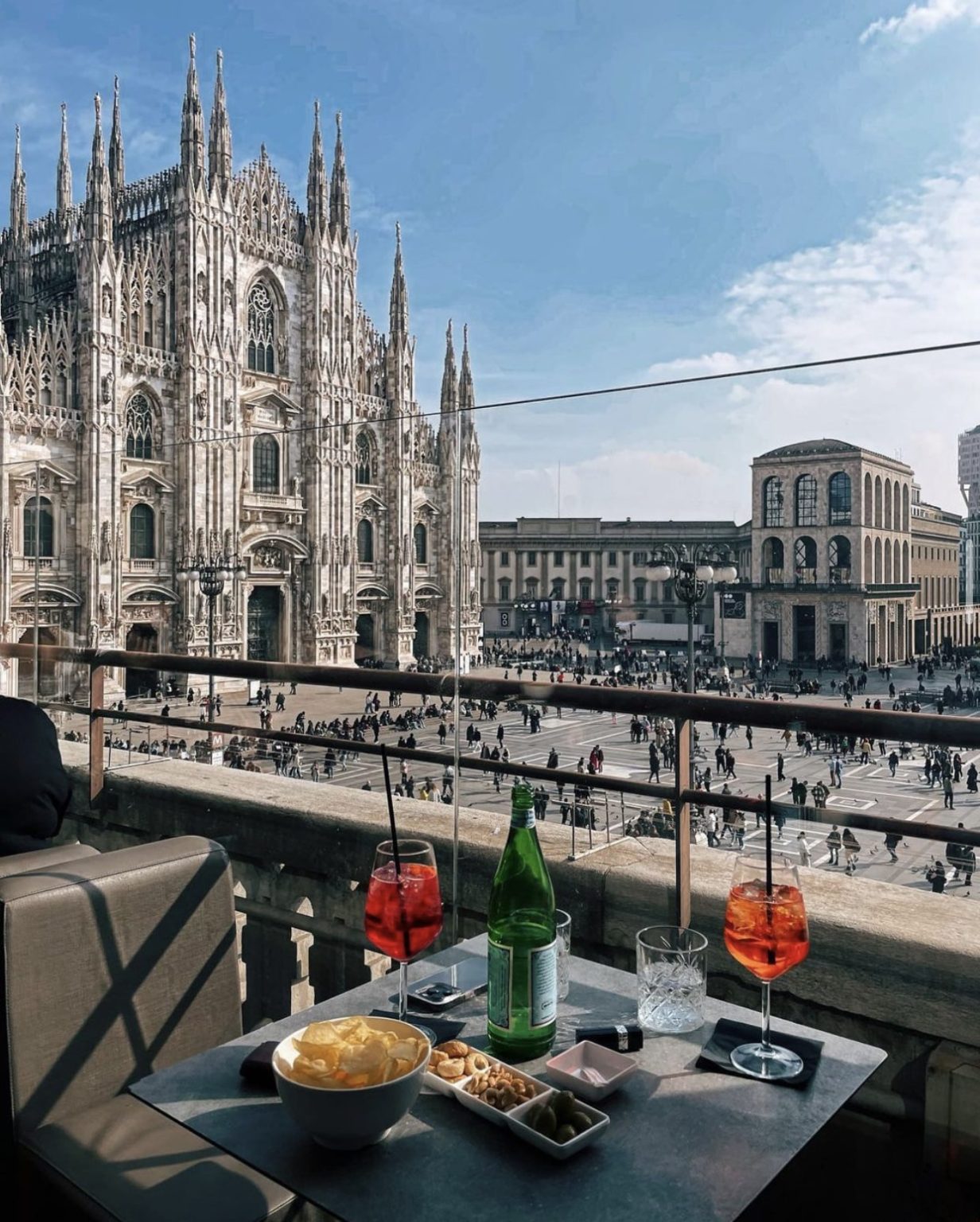
Milan's Gothic cathedral with rooftop terraces among 135 marble spires, reached from Santa Maria delle Grazie via Corso Magenta. The nave and terraces form the other half of most duomo and last supper combo itineraries.

Where to stay

Where to stay nearby

Magenta district

5-10 minutes

district

A residential, leafy area around Corso Magenta favored for its calm streets and proximity to both Santa Maria delle Grazie and the metro.

Ready for Adventure?

Join thousands of happy travelers who have discovered this incredible experience

Book Your Experience Now